
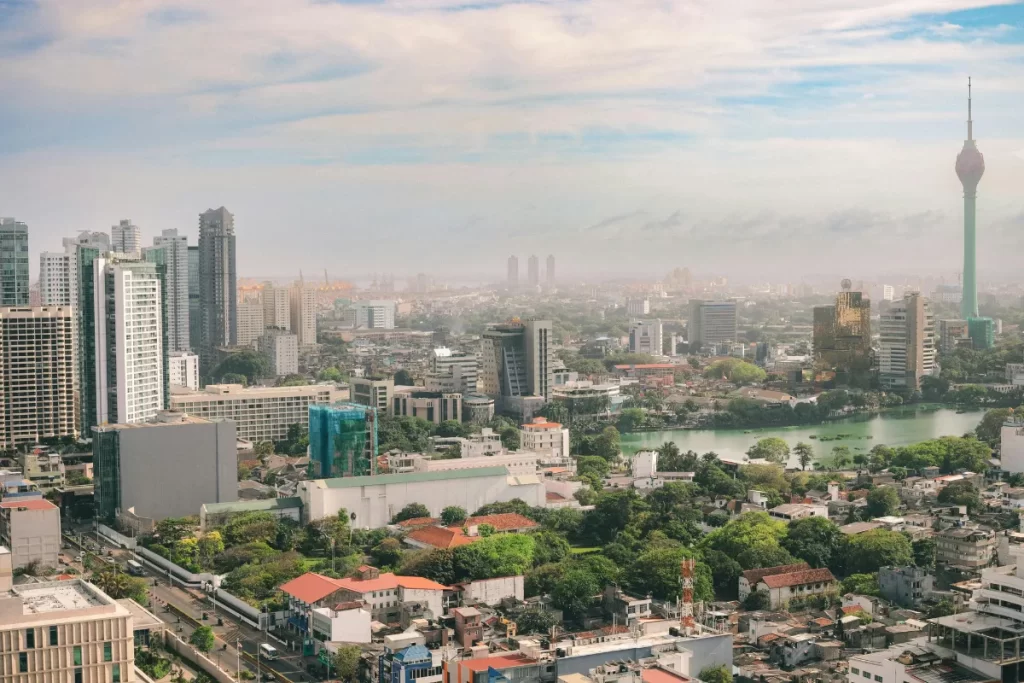
Most visitors treat Colombo as a layover between the airport and Kandy or Ella, and that’s a genuine mistake. Sri Lanka’s commercial capital sits on the western coast around a natural harbor that’s been drawing traders for centuries, and the result is a city that’s one of the most religiously mixed in the country, Buddhist temples, mosques, and kovils sit within a few streets of each other in the old town. Colonial-era buildings from three different empires stand next to a 350-metre glass tower, and a beach promenade fills with kite flyers at sunset a few blocks from a UNESCO-adjacent fort district. This guide covers what you actually need to know before you go, what to see, where to eat, and where to stay, organized by neighborhood so you’re not crossing the city back and forth.
This guide covers what you actually need: the logistics worth sorting before you land, the neighborhoods and sights worth your time, where to eat across every budget, and an honest answer to the safety question every visitor eventually asks.
Things to Know Before You Go
Little groundwork before you land makes the first day in Colombo far less stressful than winging it.
Visas and Entry Requirements

Most nationalities need an Electronic Travel Authorization (ETA), applied for online before you fly. Apply with enough lead time that a rejected or delayed application doesn’t catch you off guard at check-in.
Staying Connected

Dialog, Mobitel, Hutch, and Airtel are the four main providers, and a tourist SIM card is easy to pick up at the airport arrivals hall or at any phone shop in the city. See our full guide on buying a SIM card in Sri Lanka for current plans and pricing.
Currency and Money
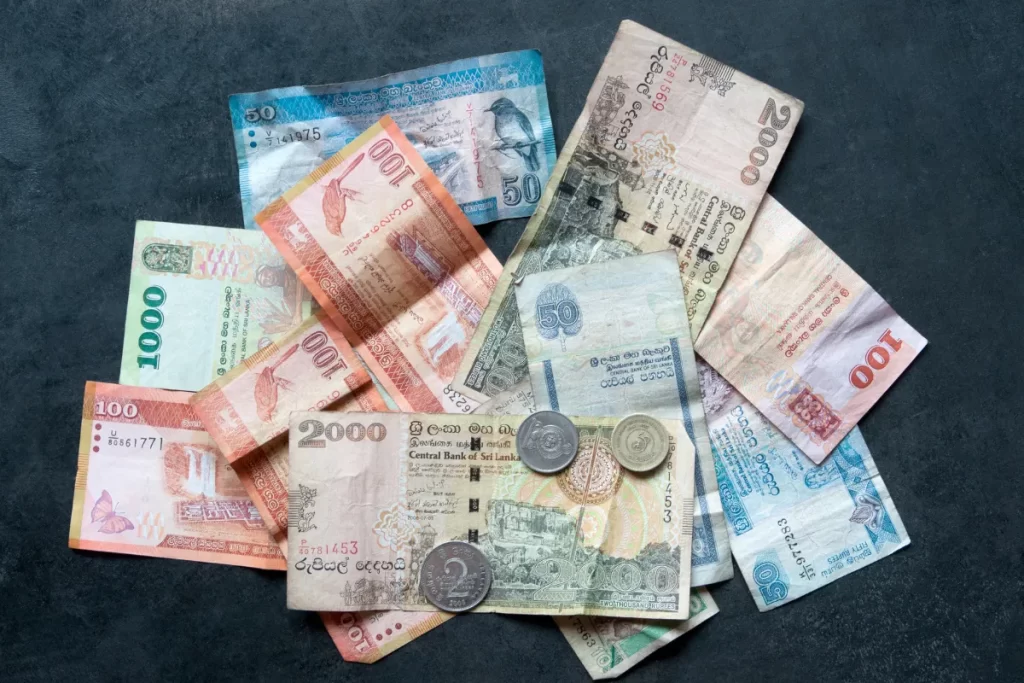
The Sri Lankan rupee (LKR) is the currency you’ll need day to day. Cards are widely accepted at hotels, malls, and larger restaurants, but smaller eateries, tuk-tuks, and markets are still mostly cash, so carry rupees for anything off the main tourist strip.
(Read More About – Can You Use US Dollars or Euros in Sri Lanka? Here’s What You Need to Know)
Best Time to Visit Colombo
December through March or April is the most reliable dry window, with manageable heat in the 27 to 31°C range and mostly sunny skies. The southwest monsoon runs May to September, bringing heavy rain and high humidity, though mornings and evenings often still clear up enough for sightseeing. October and November sit in between, with unpredictable weather and the occasional thunderstorm.
If festivals matter to your trip, the Navam Perahera in February brings a major night procession and illuminated displays around Gangaramaya Temple, Vesak in May fills the streets and the shores of Beira Lake with handmade paper lanterns, and Deepavali, usually October or November, lights up the city’s Hindu neighborhoods. Mid-April, around Sinhala and Tamil New Year, is the opposite, much of the city empties out as residents head to their hometowns, which makes for an oddly quiet, low-energy Colombo if you happen to be here then.
How Many Days Do You Need in Colombo
Two to three days covers the city properly, enough time for the colonial core, a temple or two, the Lotus Tower and Port City, and a proper meal or two without rushing. If you’re tight on time, a single well-planned day can still hit the highlights, see our suggested one-day route further down.
How to Get to (and Around) Colombo
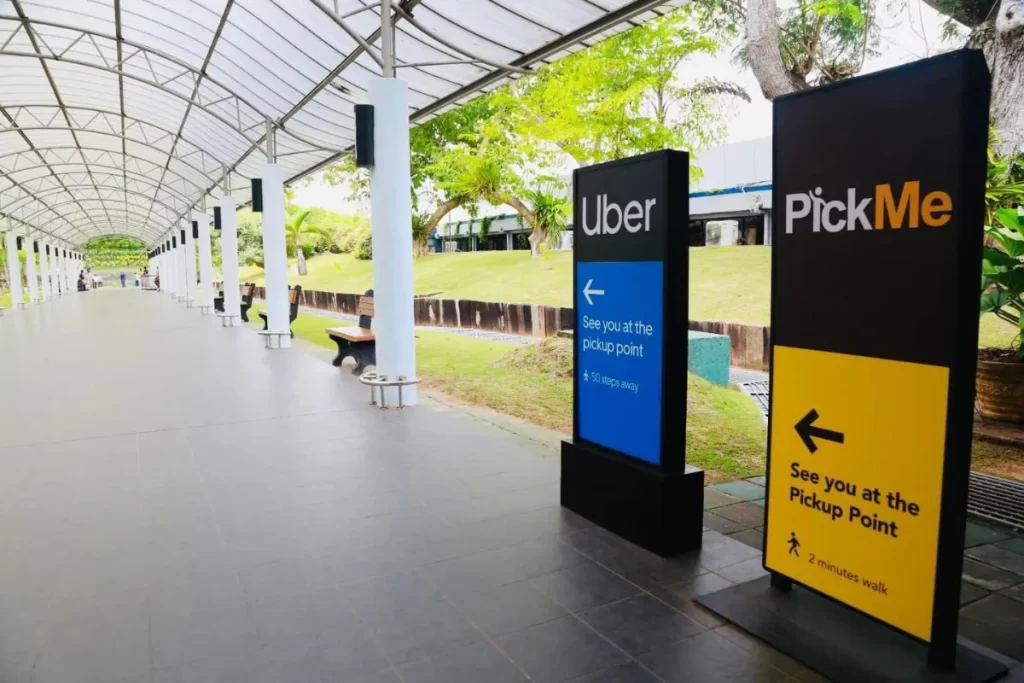
Bandaranaike International Airport (BIA) is in Katunayake, roughly 32 km north of the city center. Here’s how to get in:
| Method | Time | Approximate Cost |
|---|---|---|
| PickMe / Uber via expressway | 40 to 90 minutes, traffic dependent | ~LKR 4,000 to 7,000 ($12 to $21), more during surge pricing |
| Pre-paid airport taxi counter | 40 to 90 minutes | ~LKR 6,000 to 9,000 |
| Airport Express Bus (No. 187) | About 1 to 1.5 hours | ~LKR 250 to 300, plus a small luggage surcharge on bigger bags |
PickMe is the dominant ride-hailing app locally, with Uber also operating, and PickMe’s tuk-tuk feature is worth knowing about for short hops around the city, it’s the easiest way to get a fair, metered tuk-tuk fare without haggling. The 187 bus runs from outside Arrivals roughly 6:00 AM to 8:00 PM to Pettah Central Bus Station, and it’s the budget option if you’re not in a hurry.
Inside the city, tuk-tuks and PickMe cover most short trips, figure on roughly LKR 150 per kilometer through the app, which works out to around LKR 600 for a 7 km ride, though always confirm the fare upfront with an unmetered street tuk-tuk. Colombo also recently rolled out Lanka Metro Transit (LMT), a government-backed network of air-conditioned, low-floor buses that began pilot operations in April 2026, connecting Makumbura, Colombo Fort, and Pettah with cashless payment through the LMT GO app. It’s a genuinely useful option if your route lines up, worth checking since it’s new enough that most guidebooks haven’t caught up to it yet. If you’re renting a tuk-tuk or scooter yourself, you’ll need a Sri Lankan Recognition Permit, available at the airport on arrival, through the Automobile Association of Ceylon, or via rental providers. Tuk-tuks are capped at 40 km/h and are not permitted on the expressways. See our full guide on getting around Sri Lanka for more on trains, buses, and intercity travel from Colombo Fort Railway Station, Colombo’s main hub for trains south to Galle and Matara, east to Kandy and Ella, and north to Jaffna.
Top Things to Do and See in Colombo
Colombo’s sights cluster naturally into a few themes, which makes it easy to build a day around whatever interests you most.
Dive into History and Architecture
Colombo’s layered colonial history is easiest to see in the Fort and Pettah districts. The Dutch Hospital complex, a restored 1681 VOC medical facility, is now a courtyard of restaurants and shops and a good orientation point to start from. Nearby, the Chatham Street Clock Tower, built in 1857 and originally doubling as a lighthouse, and the Old Parliament Building, a 1930s Neo-Baroque structure, round out the colonial core. The National Museum of Colombo, a white 1877 colonial mansion, houses the regalia of the last Kandyan kings, including the throne and crown, repatriated by the British government, genuinely worth the visit if you care about Sri Lankan history at all.
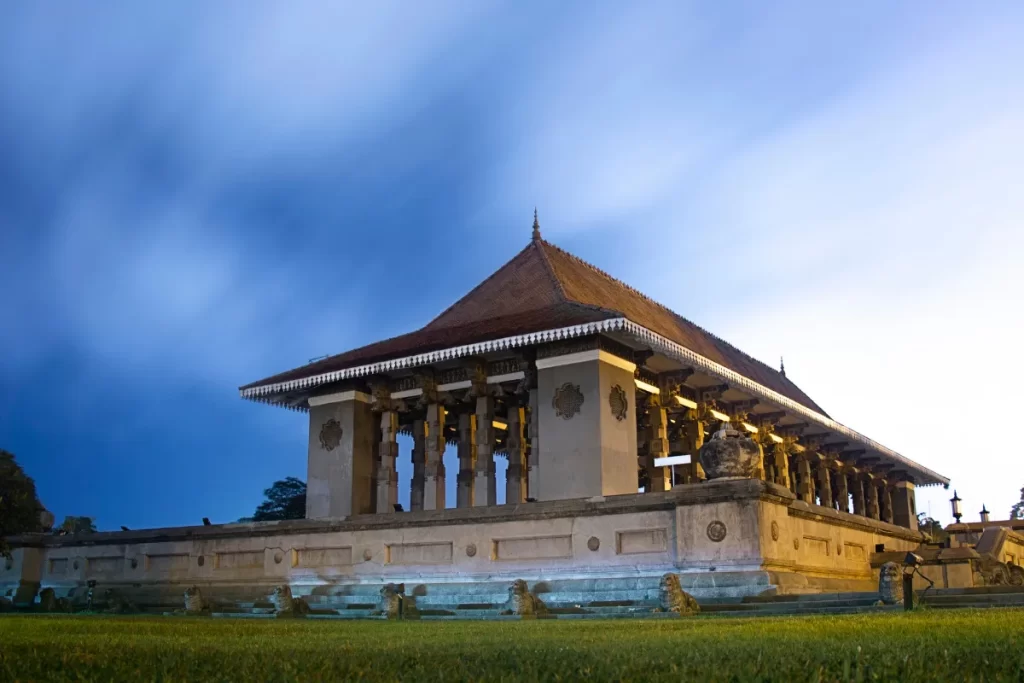
Independence Memorial Hall, an open-air monument marking the end of British rule in 1948, sits on landscaped grounds nearby.
The New Colombo: Lotus Tower and Port City
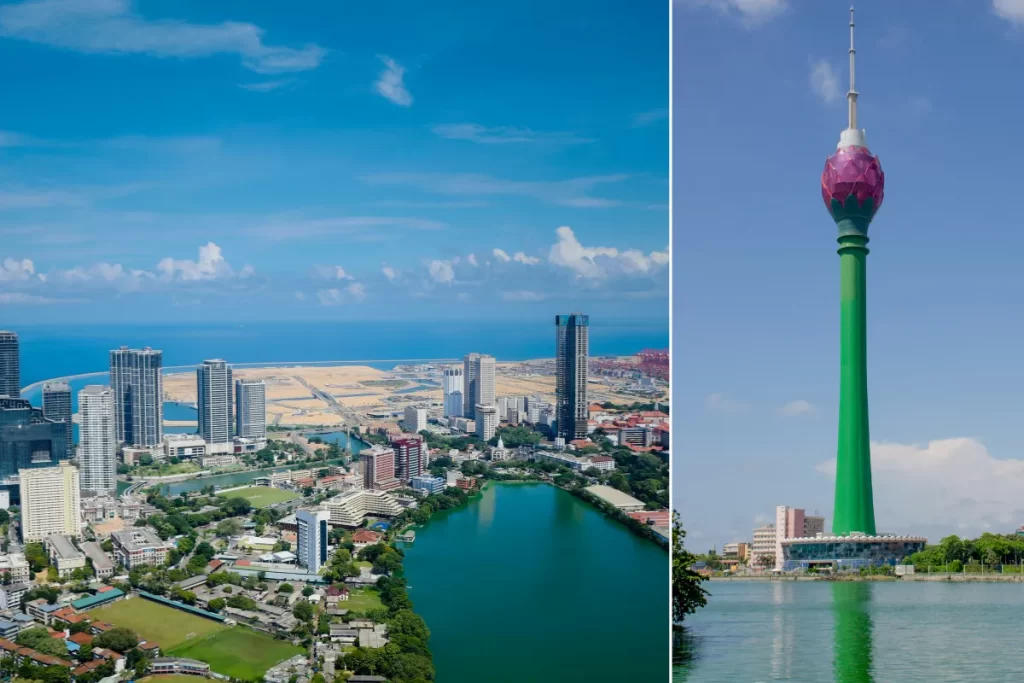
Lotus Tower stands at roughly 350 metres and is the tallest self-supporting structure in South Asia, the only taller tower in the region uses guy-wire support. It has observation decks and a small telecom museum, and Blue Orbit, Sri Lanka’s first revolving restaurant, sits partway up the tower for a slow 360-degree view over the city while you eat. Port City, a roughly 2 square kilometer land reclamation project off the coast, is still a work in progress as a neighborhood, but its Artificial Beach and marina promenade are already open and worth a look if you want to see where Colombo’s waterfront is headed next.
Spiritual Colombo: Temples, Kovils, and Mosques
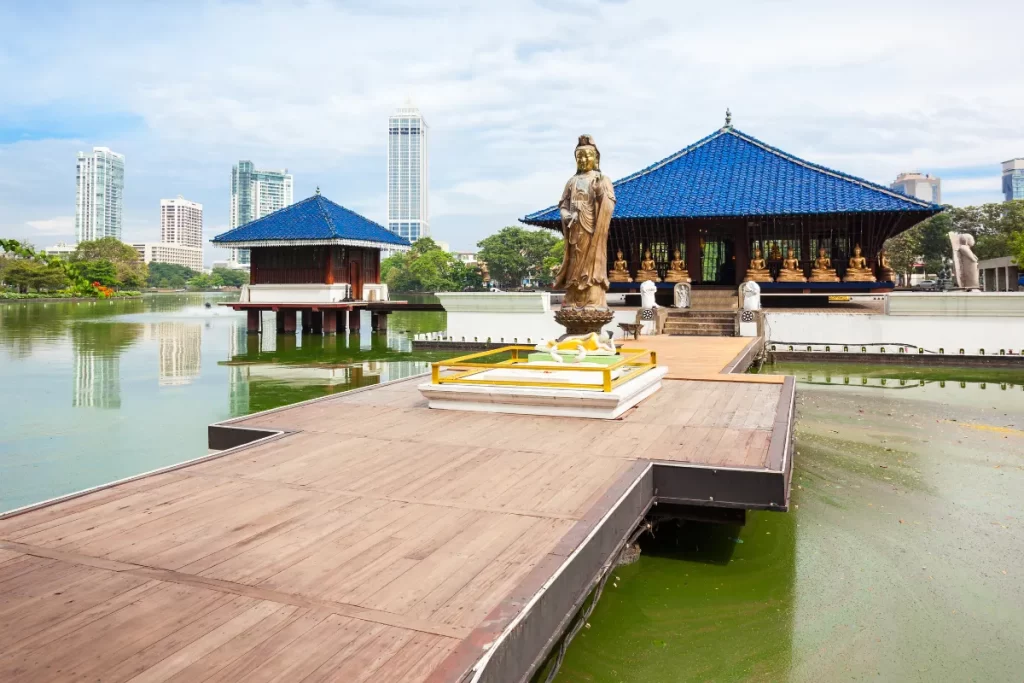
One thing worth knowing upfront: Colombo is genuinely one of Sri Lanka’s most religiously mixed cities, closer to an even split between its communities than the country as a whole. The most recent city-level census data puts Colombo at roughly 31% Buddhist, 31% Muslim, 23% Hindu, and 15% Christian, a very different picture from Sri Lanka’s national figures, which run heavily Buddhist-majority. That mix is exactly what makes a walk through the old town interesting, you’ll pass a temple, a mosque, and a kovil within a few blocks of each other.
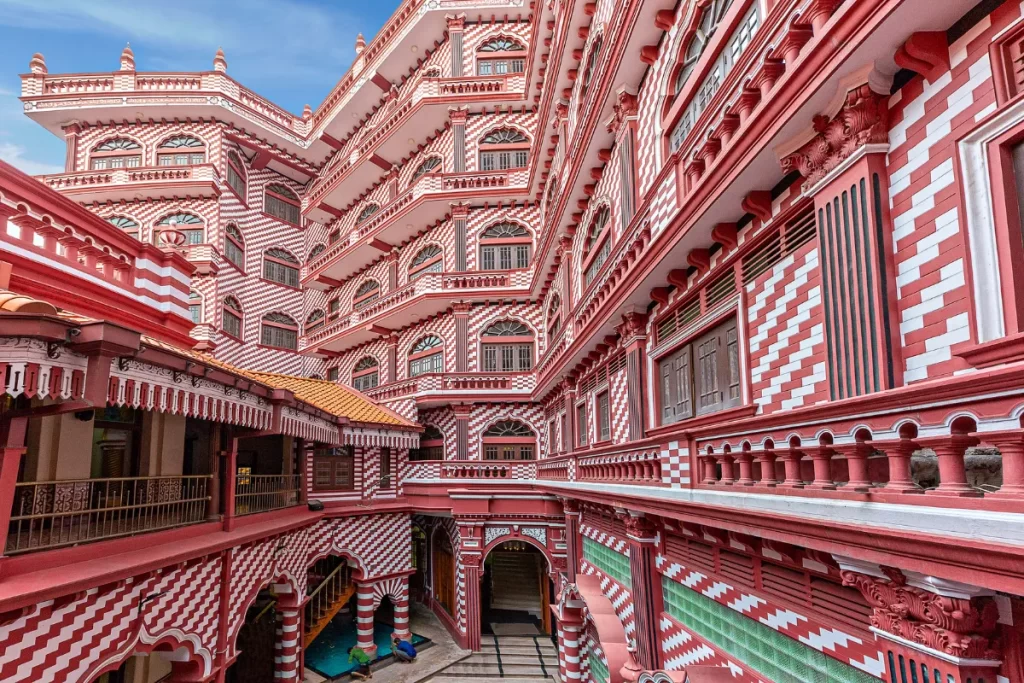
Gangaramaya Temple, a 19th-century Buddhist complex with a Bodhi tree, a white stupa, and a museum of donated artifacts, is the city’s best-known temple. Right next to it, the Geoffrey Bawa-designed Seema Malaka, a 1976 meditation temple built out over Beira Lake, is one of the more photogenic religious sites in the city and a good example of Bawa’s tropical modernist style. In Pettah, the Jami Ul-Alfar Mosque, the candy-striped red-and-white “Red Mosque,” was built in 1908 to 1909 and remains one of the most photographed buildings in the city. The Sri Kailawasanathan Swami Devasthanam and the older Kathiresan Kovils sit a short walk away, part of the same historic trading district.
Bustling Markets and Sunset Views
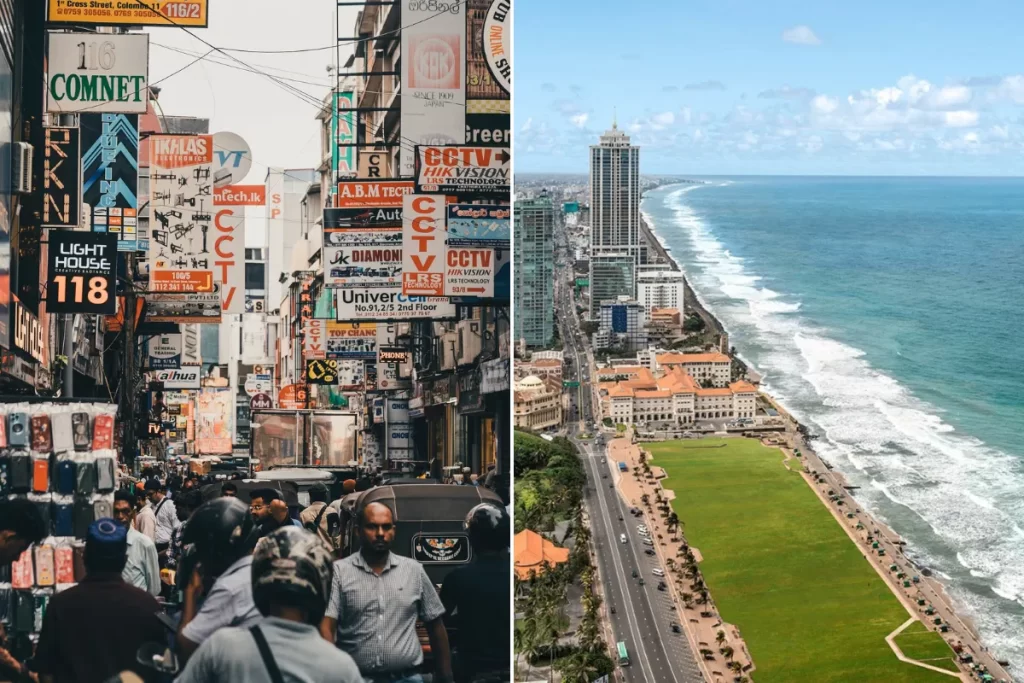
Pettah is Colombo’s old trading quarter, a dense grid of streets where each block specializes in a category of goods, electronics on one, textiles on another, spices and jewelry further along. It’s chaotic in the best way and worth an hour or two of just wandering. For sunset, Galle Face Green, a 12-acre oceanfront promenade first laid out in 1859, is where the whole city seems to show up with kites, street food, and a blanket on the grass. If you’re after the famous evening flag-lowering ceremony, that’s actually a tradition of the neighboring Galle Face Hotel rather than the park itself, worth knowing so you’re standing in the right spot at the right time.
If You Only Have One Day in Colombo
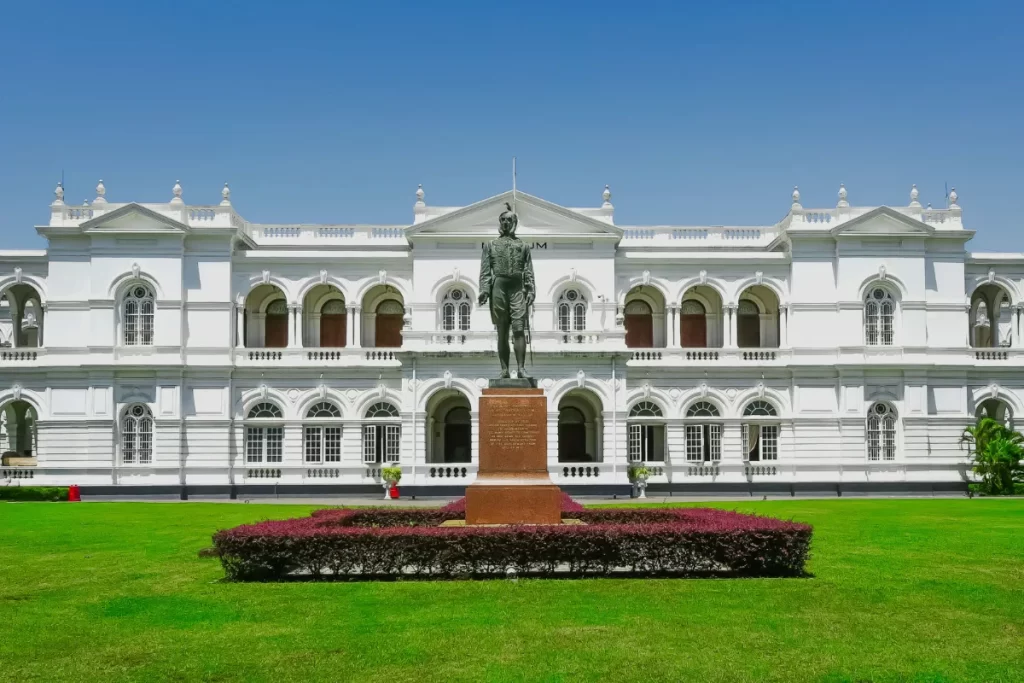
Start at the Dutch Hospital and Fort district in the morning, walk through Pettah’s markets and past the Red Mosque before the midday heat sets in, grab lunch at a local rice and curry spot, spend the afternoon at the National Museum or Gangaramaya Temple, then finish at Galle Face Green for sunset and street food. It’s a full day, but a genuinely satisfying one.
Where to Eat in Colombo: From Street Food to Fine Dining
Colombo’s food scene covers everything from a rupee-cheap curry at a roadside stall to a reservation-only tasting menu, often within a few blocks of each other.
Street Food and Local Eats
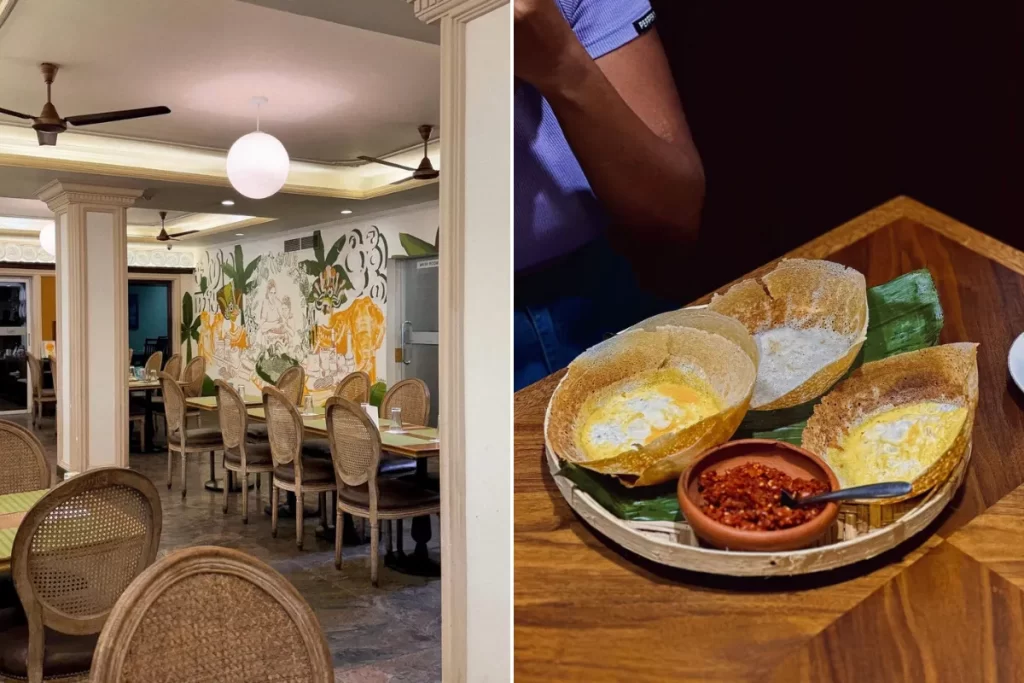
Galle Face Green’s beachfront stalls are the classic starting point, isso wade (prawn and lentil fritters), manioc chips, and achcharu (Sri Lanka’s pickled fruit snack). The Aluthkade Street Food Market on Abdul Hameed Street, in the city’s predominantly Muslim quarter, comes alive in the evening with kottu, bamboo biryani, and fried chicken. For a proper sit-down version of Sri Lankan rice and curry, Upali’s and Kolomba Kade are both well-regarded, and if you want kottu roti late at night, Hotel de Pilawoos is the name locals mention first. See our guide to Colombo’s best local food for more, and our vegetarian and vegan dining guide if that’s a priority.
High-End and Iconic Dining
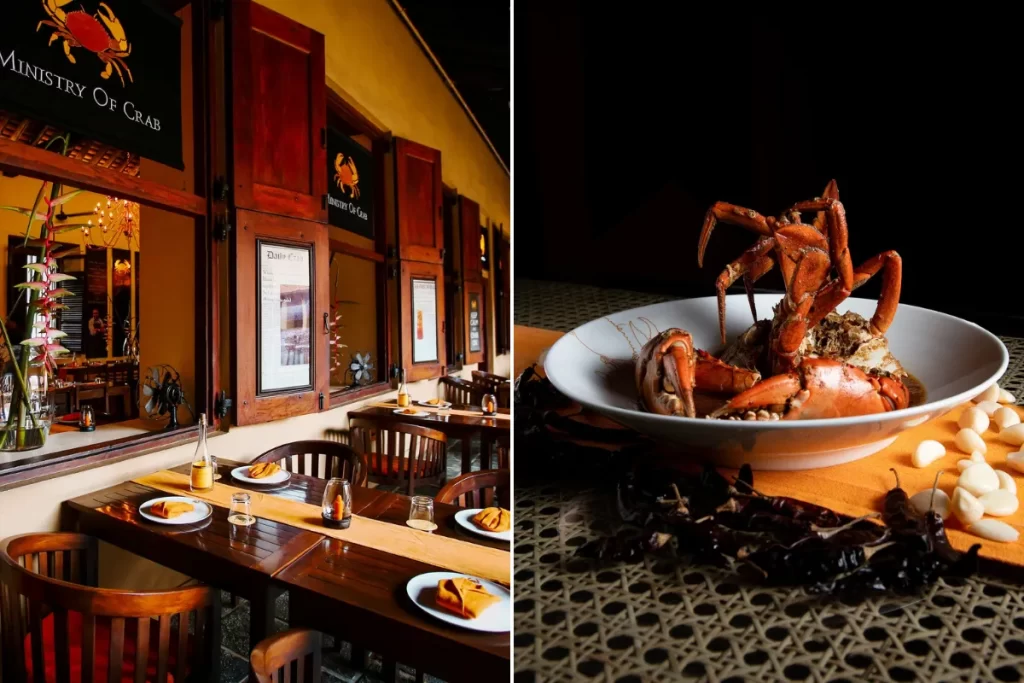
Ministry of Crab, set inside the Old Dutch Hospital, is the name every visitor hears before they even land, famous for its lagoon crabs, including the massive “Crabzilla” at up to 2 kg, and it genuinely lives up to the reputation, though book ahead. Palmyrah is a strong pick for northern, Jaffna-style Sri Lankan cuisine, a different flavor profile from the south-coast curries most visitors try first. The Dutch Burgher Union serves a genuinely distinct, old-world Burgher cuisine you won’t find described elsewhere, and The Gallery Cafe, set inside Geoffrey Bawa’s former architectural office, pairs excellent desserts with one of the most atmospheric courtyard settings in the city. For something more theatrical, Nuga Gama at Cinnamon Grand serves a traditional village-style buffet under a 200-year-old banyan tree. See our guide to Colombo’s best high-end restaurants for a fuller list.
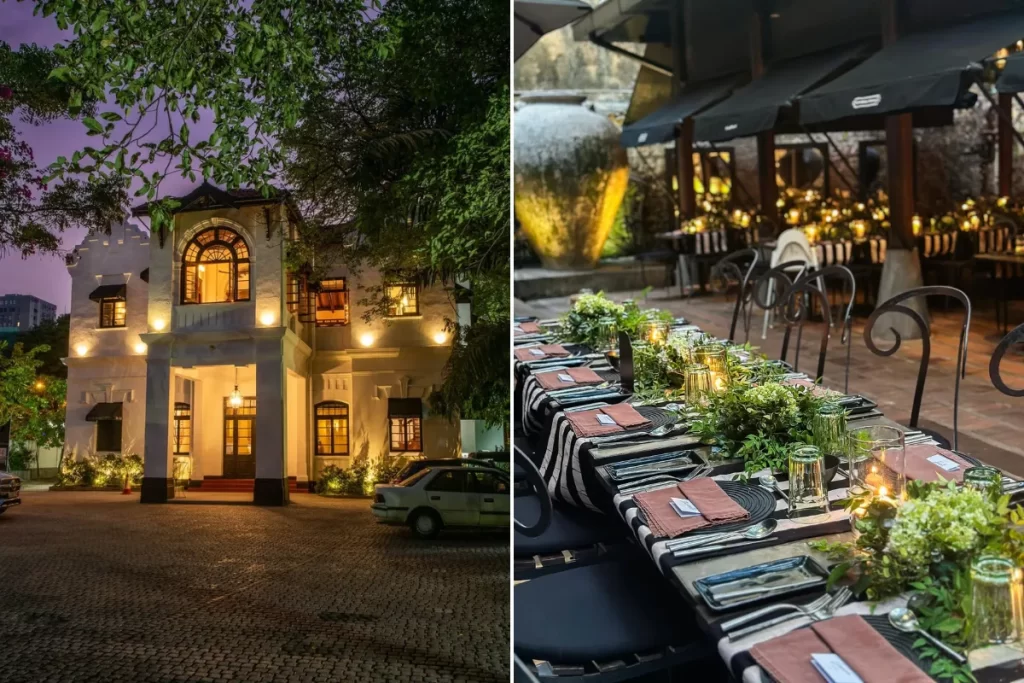
For tea and coffee, t-Lounge by Dilmah has locations across the city serving tea-based mocktails and infusions, Barefoot Garden Cafe is known for Sunday afternoon live jazz, and Seed Cafe, Whight & Co, and Cafe Kumbuk are all solid picks for a proper specialty coffee. On the rooftop and nightlife side, Blue Orbit’s revolving view is the standout, Virticle by Jetwing claims the highest rooftop bar in the city, and Cloud Red, Ward 7, and 41 Sugar are the names that come up most often for an evening out.
Where to Shop in Colombo
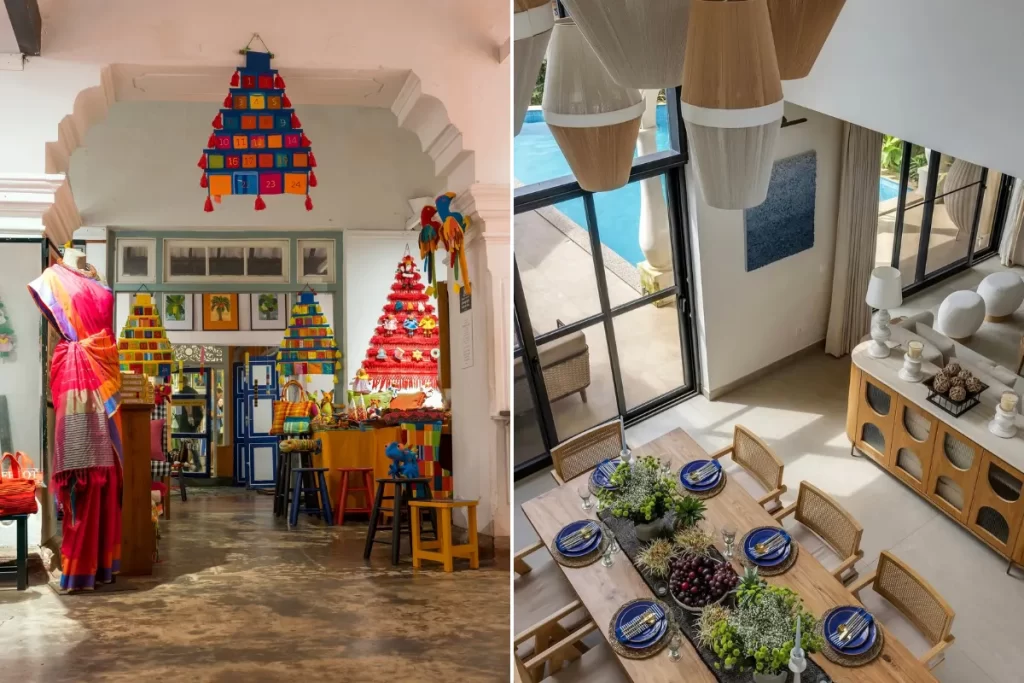
The Saturday Good Market at Racecourse is a weekly ethical market for organic produce, natural cosmetics, and handmade crafts, a nice change of pace from the malls. Barefoot on Galle Road is the city’s best-known shop for handloomed textiles, sarongs, and Sri Lankan books, and Paradise Road is the pick for ceramics and higher-end home decor. For air-conditioned mall shopping, One Galle Face Mall, Colombo City Centre, Havelock City Mall, and Crescat Boulevard cover the modern retail side of things. See our full Colombo shopping guide for more detail on each.
Where to Stay in Colombo: A Neighborhood Guide
Which part of Colombo suits you depends heavily on what you want your mornings and evenings to look like.
Colombo 1 (Fort)
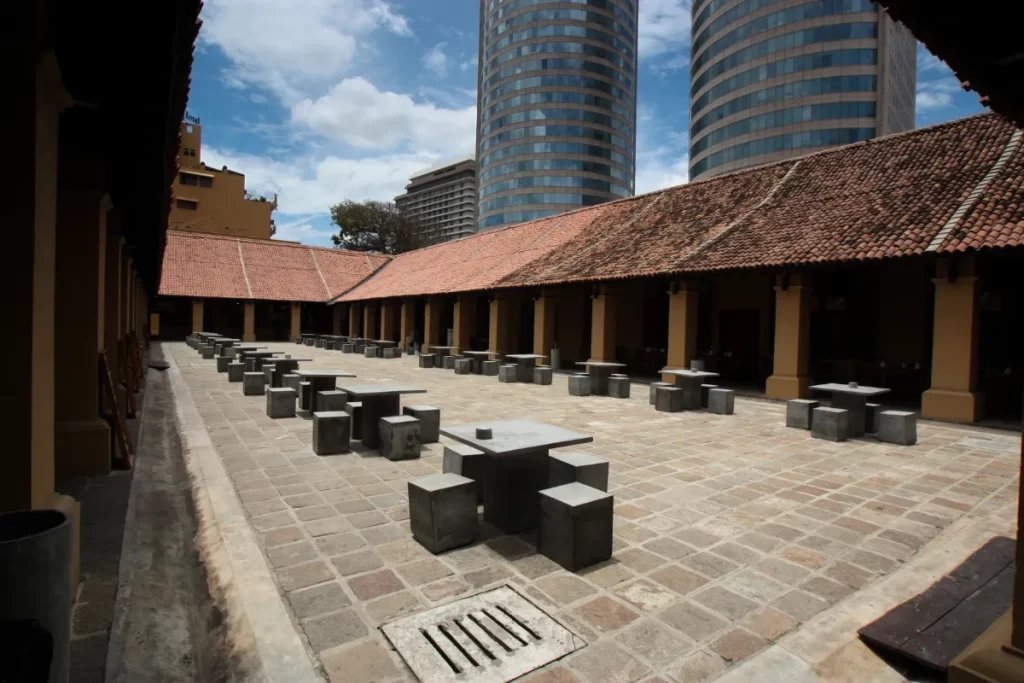
The Fort area puts you closest to the colonial sights, the Dutch Hospital, and the railway station, with Fairway Colombo and CityRest Fort Hostel both centrally located here on the budget-to-mid side.
Colombo 7 (Cinnamon Gardens)
The leafier, more residential embassy district, home to Jetwing Colombo Seven with its rooftop infinity pool, and a cluster of quieter boutique guesthouses, including Srilax and Colombo Villa, around Independence Avenue.
Colombo 3 (Kollupitiya) and Galle Face

This is the seafront strip and the city’s top address for luxury, the Shangri-La at One Galle Face, the historic Galle Face Hotel with its oceanfront Firebeach patio and sunset flag ceremony, and Cinnamon Grand all sit here. Expect $130 to $200 or more a night for this tier. Boutique and mid-range options nearby include Marino Beach Colombo in Colombo 4, generally $50 to $150 a night, and Moss Colombo, a well-regarded hotel-hostel hybrid with private rooms and dorms, further toward the budget end. For hostels under about $40 a night, Alma Boutique Hostel and Drop Inn Hostels in Colombo 4 are both solid choices. These price bands shift with season and demand, so treat them as a general guide rather than a locked-in quote.
Is Colombo Safe for Tourists?

Yes, generally, including at night in the main tourist areas like Fort, Galle Face, and Cinnamon Gardens. Normal city precautions apply, keep an eye on bags in crowded markets like Pettah, agree on tuk-tuk fares upfront, and stick to bottled or filtered water. Sri Lanka’s tourist police hotline is there specifically for visitors if you run into trouble.
Leaving Colombo: What Comes Next
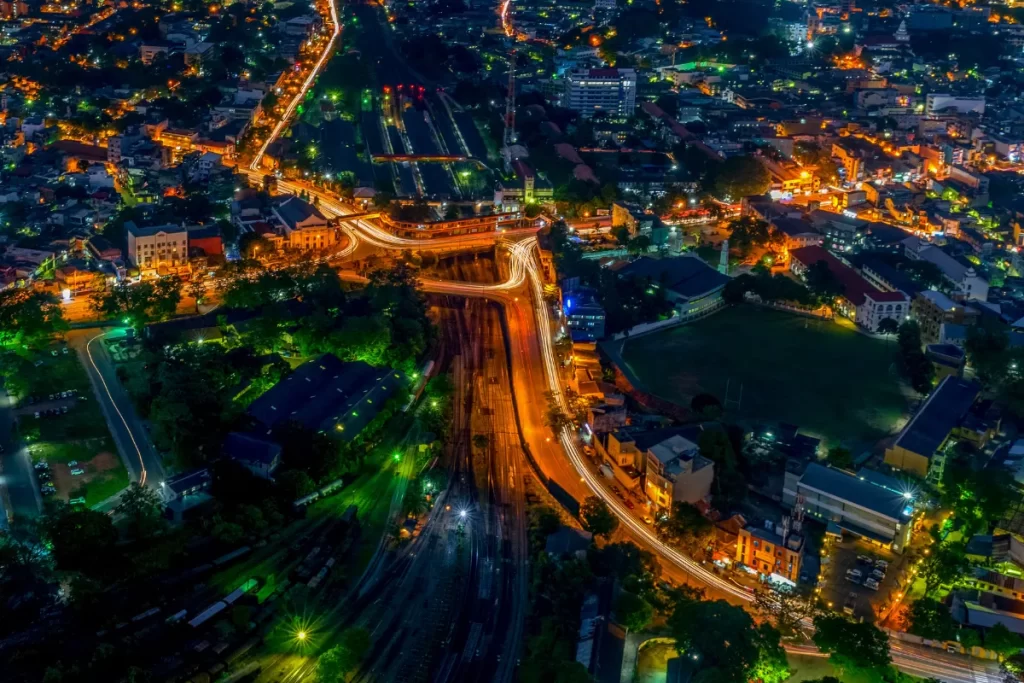
Most itineraries use Colombo as the gateway rather than the destination, which is fair enough once you’ve given it its due two or three days. From here, Kandy is the classic next stop for the hill country and cultural triangle, while Galle and the south coast beaches are a couple of hours away by expressway or train. If you only have a weekend to spare before flying out, a few good beaches sit within an hour or two of the city, worth a look if you want sand without a long drive.
Colombo Travel Guide: Frequently Asked Questions
Is Colombo worth visiting, or should I skip straight to the beaches?
It’s worth visiting. Most itineraries give it half a day on the way through, and it genuinely deserves two to three, especially for the history, food, and the religious mix you won’t see spelled out quite the same way anywhere else on the island.
How many days do you need in Colombo?
Two to three days covers it well. One day works if you’re tight on time and plan it efficiently.
What is the best time of year to visit Colombo?
December through March or April, the driest and sunniest stretch of the year.
Is Colombo safe for tourists, including at night?
Generally yes, especially in the main tourist districts. Use normal city precautions around bags, fares, and water.
Do I need a visa to visit Colombo?
Most nationalities need an Electronic Travel Authorization, applied for online ahead of your trip.
How do I get from Colombo airport to the city?
Taxi or PickMe takes roughly 40 to 90 minutes depending on traffic, or the 187 Airport Express Bus is the budget option at around an hour to 90 minutes.
Is tap water safe to drink in Colombo?
Stick to bottled or filtered water to be safe.
What currency is used in Colombo, and can I pay by card?
The Sri Lankan rupee. Cards work at hotels, malls, and larger restaurants, but cash is still useful for tuk-tuks, markets, and smaller eateries.
Is Colombo expensive to visit?
It can go either way. Street food and local guesthouses are genuinely cheap, while the seafront luxury hotels and fine dining push well past $100 a day if that’s what you’re after.

11 Comments