Step off the main road near Kudawa or Deniyaya and the air changes first. It thickens, cools slightly under the canopy, and carries a constant hum of insects that never quite stops. Water drips from broad leaves long after the last shower has passed, and somewhere above, a bird call repeats itself twice before falling silent. This is Sinharaja, Sri Lanka’s last substantial stretch of primary tropical rainforest, and one of the few UNESCO World Heritage Sites on the island that isn’t built from stone.
Sinharaja was designated a Biosphere Reserve in 1978 and added to the UNESCO World Heritage list a decade later. That recognition reflects how rare this ecosystem has become. Sri Lanka lost most of its original rainforest cover to agriculture and logging over the past two centuries, and Sinharaja is largely what remains. Walking through it feels less like ticking off a tourist stop and more like stepping into an older, wetter version of the island that has mostly disappeared everywhere else.
This guide covers what actually matters before you go: which entrance suits your route, what wildlife you can realistically expect to see, how to deal with leeches without letting them ruin your day, and the logistics that shorter guides tend to skip.
Why Sinharaja Belongs on Your Sri Lanka Itinerary
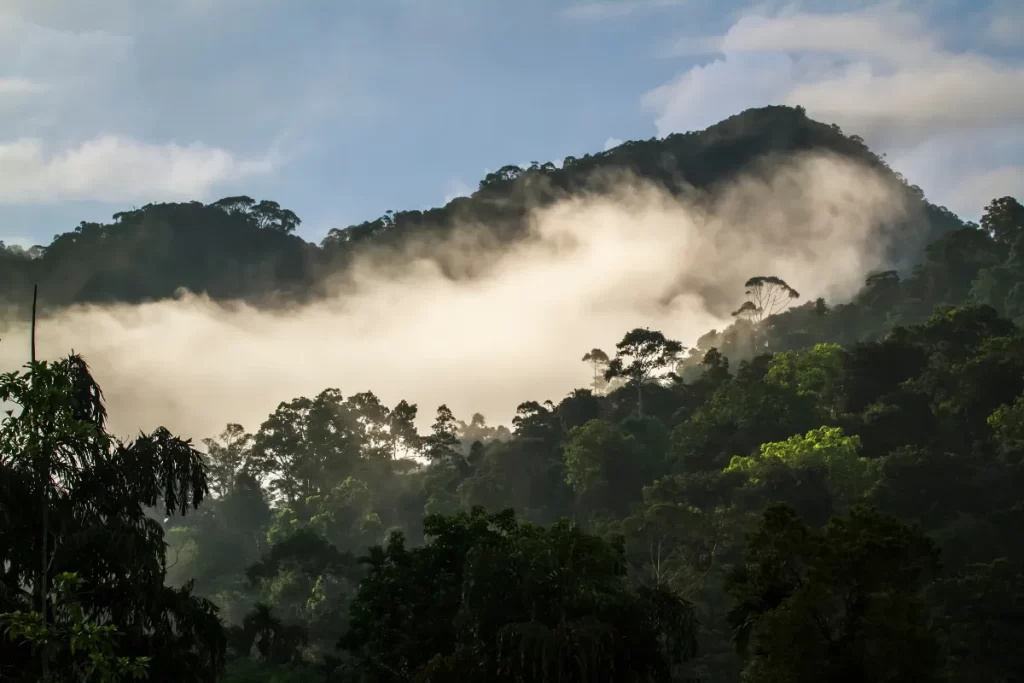
If Yala National Park is Sri Lanka’s answer to an African safari, all open grassland and jeep tracks, Sinharaja is its opposite. There are no vehicles here. You walk, on marked trails, through dense forest where visibility rarely stretches more than a few metres in any direction. It is slower, muddier, and far more immersive than a jeep safari, and that trade-off is exactly the point.
Sinharaja holds one of the highest concentrations of endemic species anywhere in Sri Lanka. Estimates vary depending on the source, but a commonly cited figure puts endemic tree species at around 60 percent of the forest’s flora, with a large share of the resident birds, mammals, and reptiles found nowhere else on the planet. Whether the exact number lands at 50 percent or higher, the pattern holds: much of what you encounter here simply doesn’t exist outside this forest.
If you’re building a broader wildlife itinerary around the island, pairing a Sinharaja trek with a jeep safari gives you a genuinely different picture of Sri Lanka’s ecosystems in the same trip.
Which Sinharaja Entrance Should You Choose?
This is where most first-time visitors get stuck, and it’s worth sorting out before you book anything. Sinharaja has multiple access points, and picking the wrong one can add hours to your travel day.
Kudawa / Weddagala Entrance (North)
Kudawa is the entrance most visitors use, largely because it’s the most straightforward option coming from Colombo or Ratnapura. It has the most established infrastructure around it, including the main Forest Department office, and it suits general first-time trekking well. If your Sri Lanka trip is centred on the west and south-west, this is usually the path of least resistance.
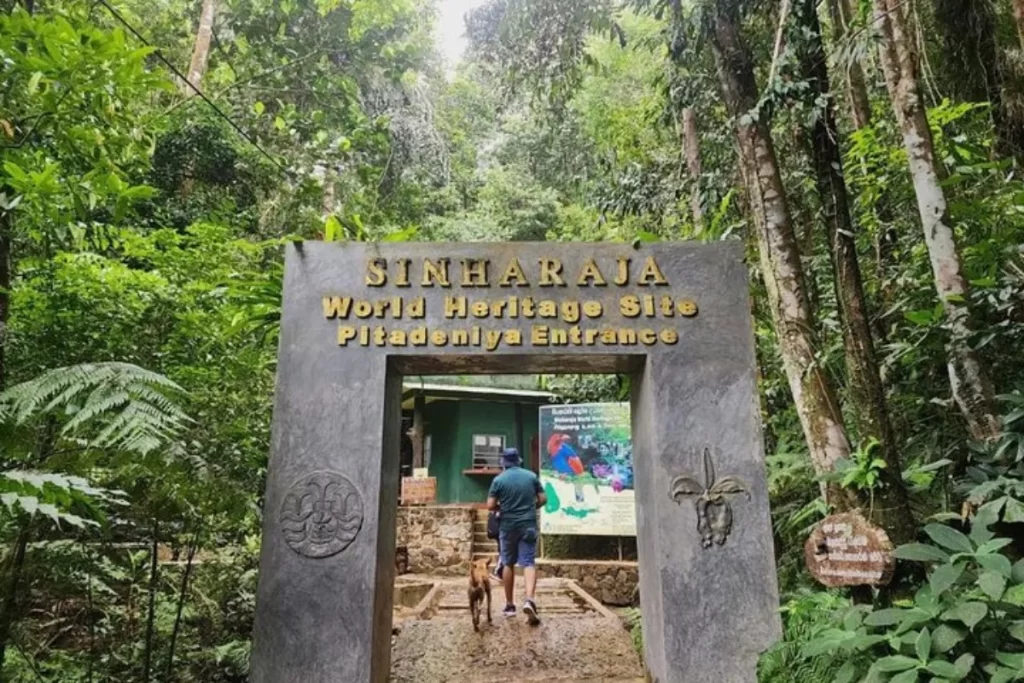
Pitadeniya / Deniyaya Entrance (South)
Pitadeniya sits on the opposite side of the reserve and works best for anyone approaching from the south coast, Galle, Mirissa, or Tangalle. The nearby town of Deniyaya has a decent spread of eco-lodges and homestays, and this entrance also gives you easier access to Kekuna Ella waterfall. Several travellers who’ve documented their own Sinharaja trips specifically chose this route for the combination of good local guides and swimmable waterfalls nearby.
Lankagama Entrance
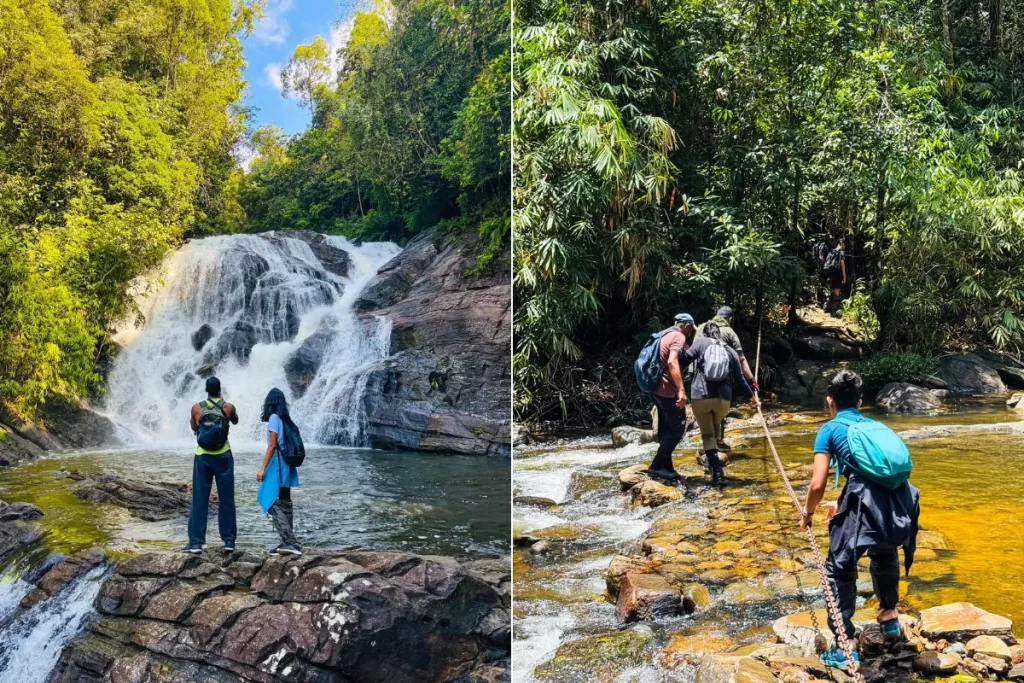
Lankagama is the pick for waterfall enthusiasts. Depending on the trail and season, hikers entering from here can pass close to several waterfalls in a single outing, which makes it worth the slightly longer approach if that’s your priority.
Kurulugala Entrance
Kurulugala sits at a higher elevation and sees noticeably fewer visitors, which makes it the quiet favourite among serious birdwatchers. If you’re chasing specific endemic species and want to avoid trekking alongside other tour groups, this entrance rewards the extra effort to reach it.
Best Trekking Routes and Trails
Trail difficulty in Sinharaja varies more than most first-timers expect, so it helps to match the route to your fitness level and how much time you actually have.
- First-time or short on time: Kudawa to Moulawella (roughly 3 km) or the Wathurawa trail (roughly 2.5 km), both manageable in a few hours.
- Intermediate: Pitadeniya to Pathan Oya (around 10 km) or Neluwa to Kosmulla (around 10 km), the latter ending at Duvili Ella waterfall.
- Experienced hikers: Kudawa to Sinhagala Peak (roughly 8 km of steep, sustained climbing) or the full Sinhagala Trail (around 14 km), which is a genuine full-day undertaking.
Beyond daytime trekking, many guides also offer night walks aimed at herping, the practice of searching for frogs, geckos, and other nocturnal species that simply don’t show themselves during the day. Dawn birdwatching walks are a separate add-on worth arranging in advance if that’s your main interest, since the best sightings tend to cluster in the first couple of hours after sunrise.
Wildlife in Sinharaja: What Will You Actually See?
Managing expectations matters here. Sinharaja is not a place where animals parade past you on cue, and any guide who promises guaranteed sightings of a specific species is overselling it. What you can expect is a genuinely high density of species activity, especially if you go out with a guide who knows the calls and the seasonal patterns.
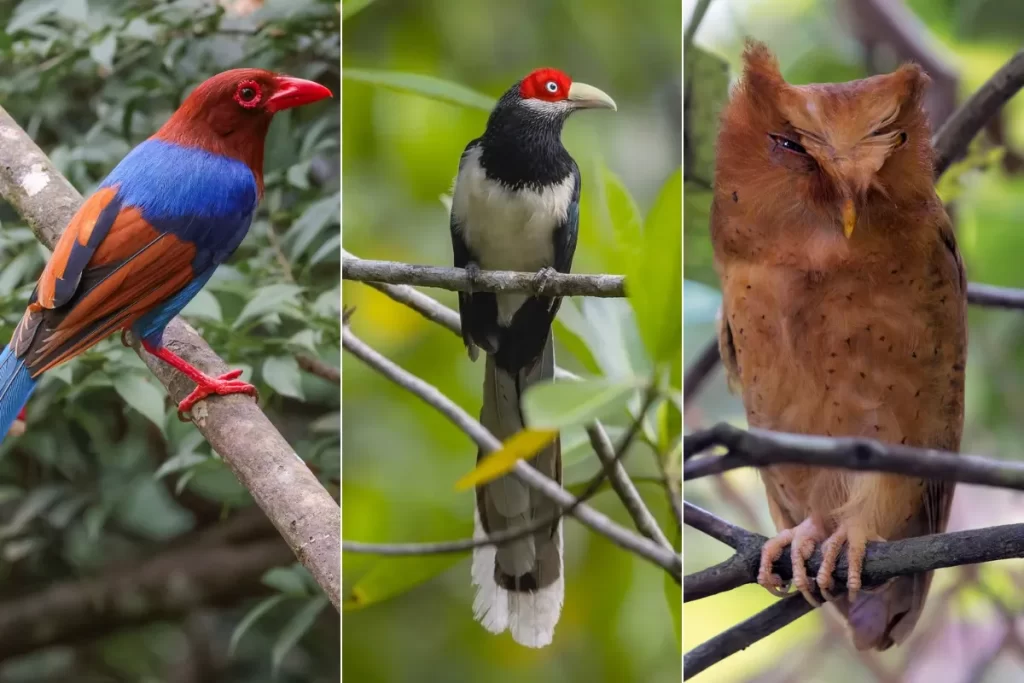
- Birds are the main draw for a lot of visitors, and Sinharaja is one of the best places on the island to encounter mixed-species foraging flocks, groups of different bird species that move and hunt together through the canopy. Keep an eye out for the Sri Lanka Blue Magpie, the Red-faced Malkoha, the Orange-billed Babbler, and the Greater Racket-tailed Drongo. The elusive Serendib Scops Owl is also found here, though spotting one usually requires a guide who specifically knows its roosting habits.
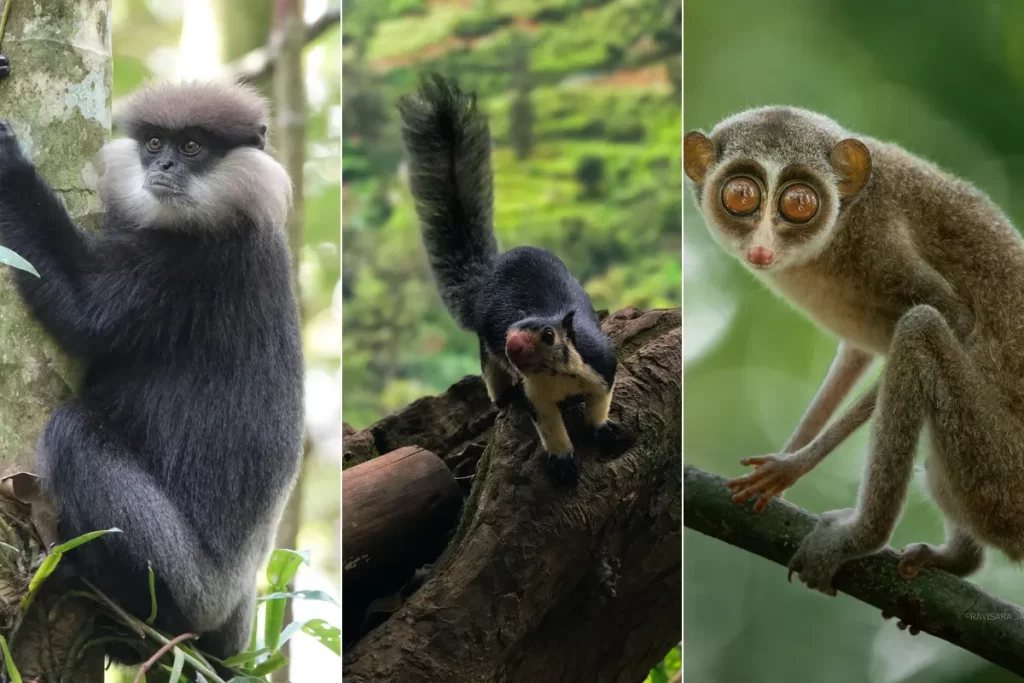
- Mammals are trickier. The Purple-faced Langur and the Sri Lankan Giant Squirrel are both reasonably common and often spotted moving through the upper canopy. The Red Slender Loris is nocturnal and far harder to find. Leopards do pass through Sinharaja, but sightings are rare enough that they shouldn’t factor into your expectations at all.
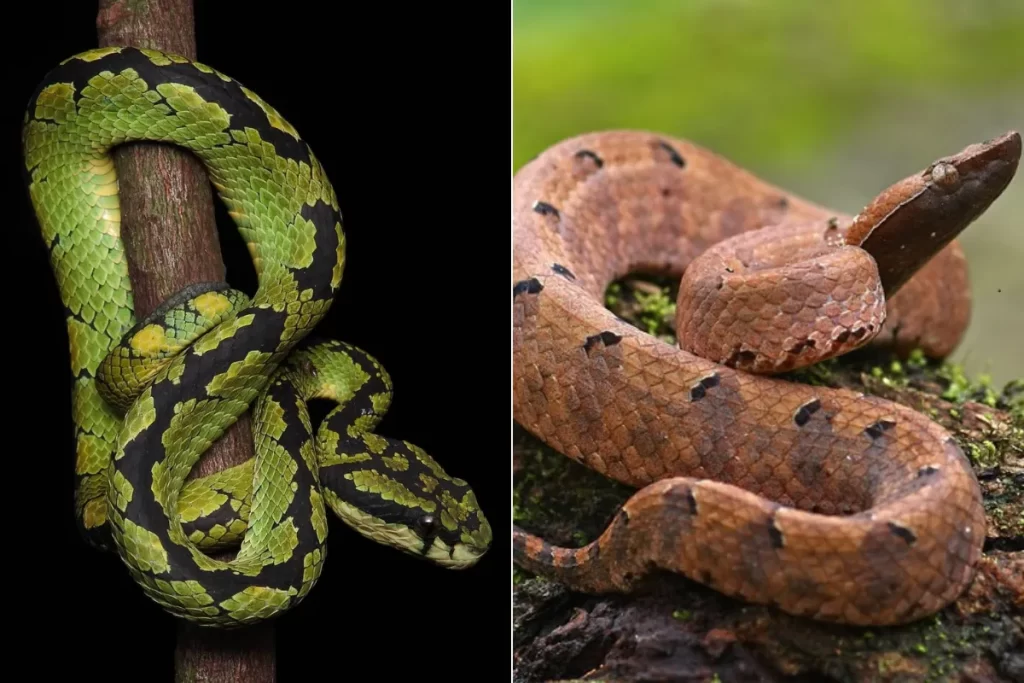
- Reptiles and amphibians round out the picture, and this is where night walks earn their keep. The Green Pit Viper and Hump-nosed Viper both live here, along with the endemic Kangaroo Lizard and a wide range of tree frogs that become far more active after dark.
Surviving the Jungle: How to Deal with Leeches
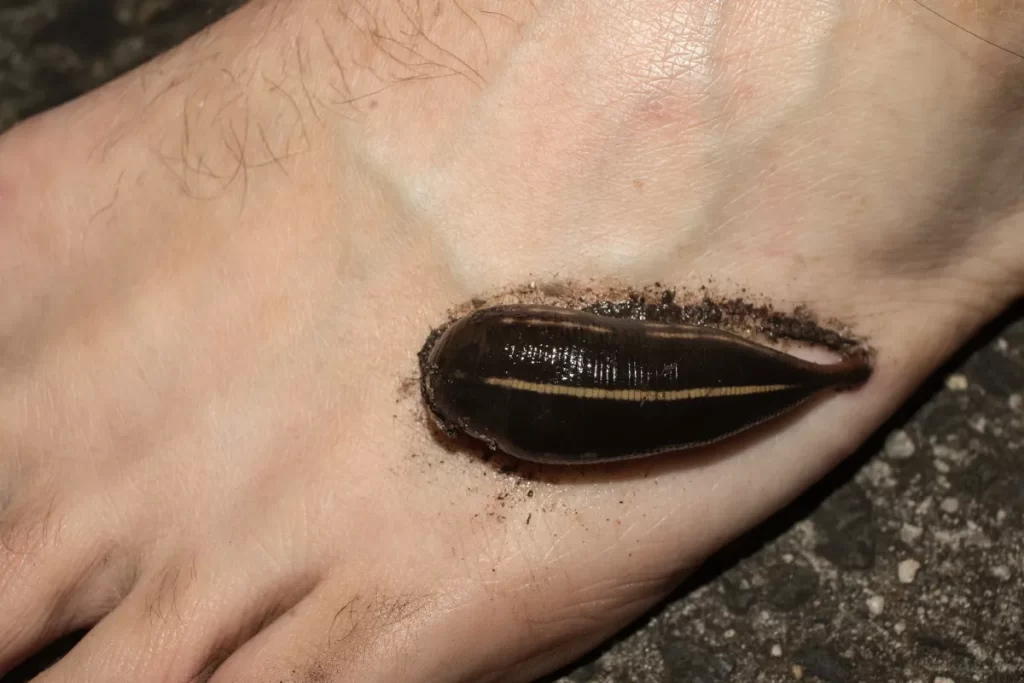
No honest guide to Sinharaja skips this part, so here it is directly. Leeches are a normal part of trekking through this forest, particularly during the wetter months from roughly May through October. They aren’t dangerous, but they catch people off guard, and a bit of preparation makes the whole experience far less stressful.
Prevention:
- Wear leech socks, tall socks treated or layered to keep leeches from reaching skin. Many lodges and guides can provide or sell these locally.
- Tuck your trousers into your socks rather than leaving fabric loose.
- A light application of insect or leech repellent around ankles and boot openings adds another layer of protection.
If one attaches anyway:
- Do not pull it off by force. This can leave part of the bite site irritated and increases the chance of infection.
- A pinch of salt, a dab of soap, or a splash of diluted tobacco water will usually make it release on its own within moments.
- The bite itself is generally painless and stops bleeding within a short while; a bit of mild itching afterward is normal and passes.
Most visitors who arrive prepared barely notice the leeches after the first encounter. It’s the surprise, not the leech itself, that tends to unsettle people.
Practical Information and Logistics
Best Time to Visit
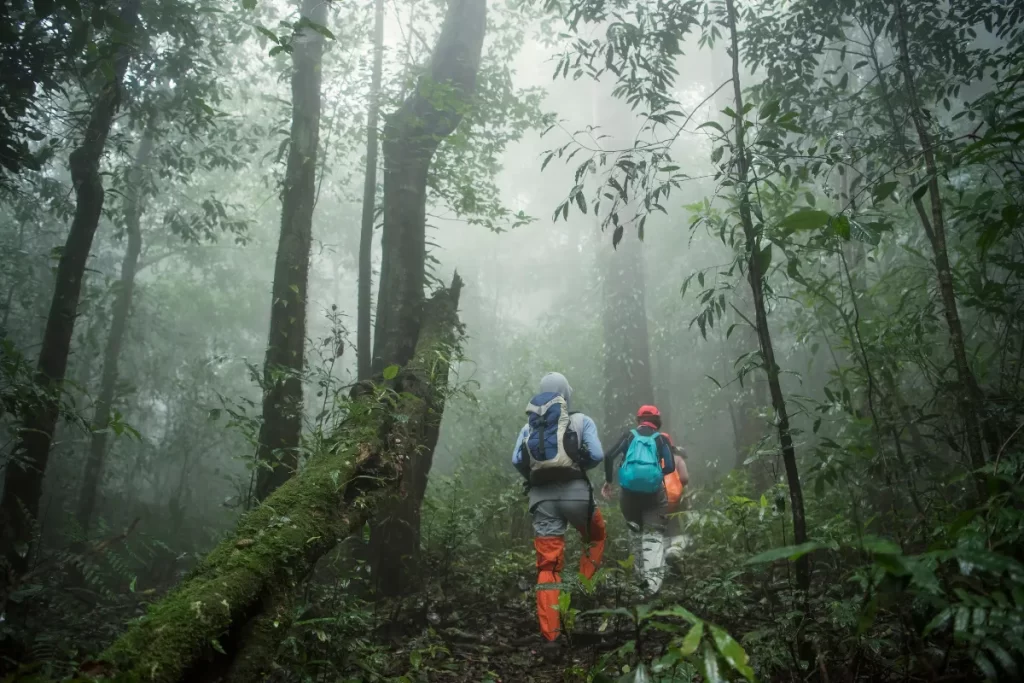
The drier stretches, roughly December through April and again in August and September, offer the most comfortable trekking conditions and the lowest leech activity. The wetter months bring fewer crowds and a noticeably greener forest, but also muddier trails and more leeches. Neither season is wrong, it depends on what you’re optimising for.
How to Get There
From Colombo, the typical route is a bus to Ratnapura, followed by a connecting bus or tuk-tuk toward Kalawana, then a shorter tuk-tuk ride to the Kudawa entrance. From the south coast, travellers usually take a bus toward Matara or Galle, continue on to Deniyaya, then arrange a tuk-tuk for the final stretch to the Pitadeniya entrance. Hiring a private car or driver for the day is slower to arrange but removes most of the guesswork, particularly if you’re short on time or travelling with a group.
Entry Fees and Guide Costs
Pricing at Sinharaja is one of those details that shifts more often than most travel guides admit, and published figures vary noticeably depending on the source and when they were last updated. As a general reference point, foreign adult entry has recently sat somewhere in the range of 1,200 to 3,800 LKR, and a registered guide typically adds another 5,000 to 9,000 LKR depending on the length and type of trek. A guide is required to enter the forest at every entrance, so factor that into your budget regardless of which route you take. Because rates do change, it’s worth confirming the current figures at the gate or with your accommodation before you go, rather than relying on any single number you read in advance, including this one.
What to Pack for Your Trek
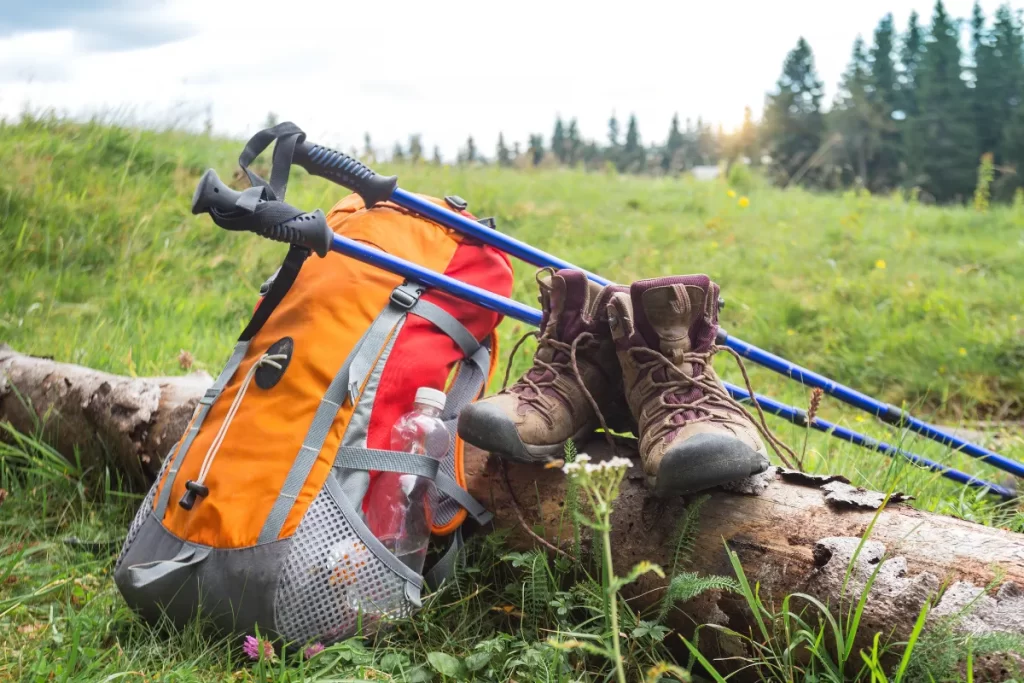
- Breathable, light-coloured clothing that covers arms and legs
- Sturdy closed shoes or rubber trekking boots
- Leech socks (or plan to buy them locally at the entrance)
- A lightweight raincoat, since forest weather shifts quickly
- Swimwear if your route passes a waterfall
- Binoculars, ideally 8×42, if birdwatching is a priority
- A reusable water bottle
- A camera with a telephoto lens for wildlife shots from a distance
Responsible Travel in Sinharaja
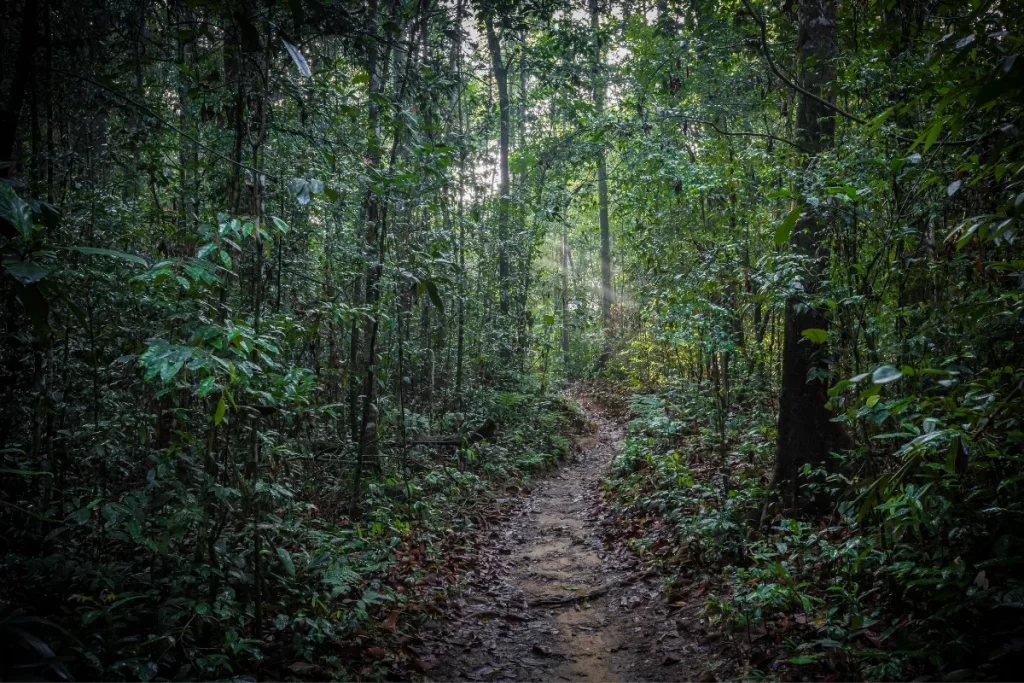
Sinharaja survives because of consistent, deliberate protection, and that only works if visitors treat it with the same care locals and conservationists do. Stay on marked trails rather than cutting through undergrowth. Carry out everything you carry in, including small items like fruit peels. Keep noise to a minimum, since much of the wildlife here responds to sound long before it’s visible. And resist the urge to feed or approach animals, no matter how used to visitors some of them appear to be.
Sinharaja rewards patience more than almost anywhere else on the island. Go in with realistic expectations, the right footwear, and a guide who knows the forest well, and it tends to deliver something most travellers don’t get anywhere else in Sri Lanka: a rainforest that still feels genuinely wild.
FAQs About Visiting Sinharaja Forest Reserve
How many days do I need for Sinharaja?
A single day is enough to cover one of the shorter trails and get a genuine feel for the forest, and most visitors on a tight itinerary do exactly that. If birdwatching is your main reason for coming, two to three days gives you a much better chance at the early morning and late afternoon windows when activity peaks, since a lot of the more interesting sightings simply don’t happen on a rushed midday walk.
Is Sinharaja safe for solo travellers?
Yes, largely because a registered guide is required to enter regardless of group size, so solo travellers are never actually walking the trails alone. The bigger practical concerns are footing on wet trails and leeches rather than anything related to personal safety, and a decent guide manages both without much fuss.
Are there accommodations near the forest?
Both main entrances have reasonable options nearby. Around Deniyaya and Pitadeniya, you’ll find a mix of eco-lodges and homestays, several run by families with genuine long-term ties to the forest and its conservation. Kudawa has fewer options directly on-site but is within easy reach of guesthouses in the surrounding area. Booking a night or two near your chosen entrance is generally simpler than trying to day-trip from further afield.
Do I really need a guide, or can I trek Sinharaja alone?
A guide is required at every entrance, so this isn’t really optional. In practice this works in your favour. Trails aren’t always clearly marked, wildlife is far easier to spot with someone who knows what to listen for, and guides are typically arranged easily at the entrance gate or through your accommodation with little advance notice needed.
What's the best entrance for someone who only has one day?
Kudawa tends to be the most efficient choice for a single-day visit if you’re coming from Colombo or Ratnapura, mainly because of shorter trails and more established infrastructure right at the gate. If you’re already based on the south coast, Pitadeniya offers a similarly compact option without backtracking north.
Will I definitely see leopards or elephants in Sinharaja?
Almost certainly not, and it’s worth setting that expectation early. Both species do pass through the reserve occasionally, but sightings are rare enough that they shouldn’t be a reason to visit. Sinharaja’s real strength is birds, endemic flora, and smaller wildlife, not large mammal encounters, which is more the domain of parks like Yala.