
Sri Lanka is a solid choice for a first solo trip, including for women traveling alone. Violent crime against tourists is rare, locals are generally welcoming, and the country is compact enough to combine hill country, beaches, ancient cities, and wildlife in one trip. A tourist ETA (electronic visa) is required for almost everyone before arrival, and many nationalities now get it free for a 30-day stay. Budget travelers can get by on around $30 a day using dorms, buses, and local food, while the best time to visit depends on which coast you plan to spend most of your time on. This guide covers safety, budgeting, the best solo-friendly towns, and a sample itinerary.
Is Sri Lanka Safe for Solo Travelers?
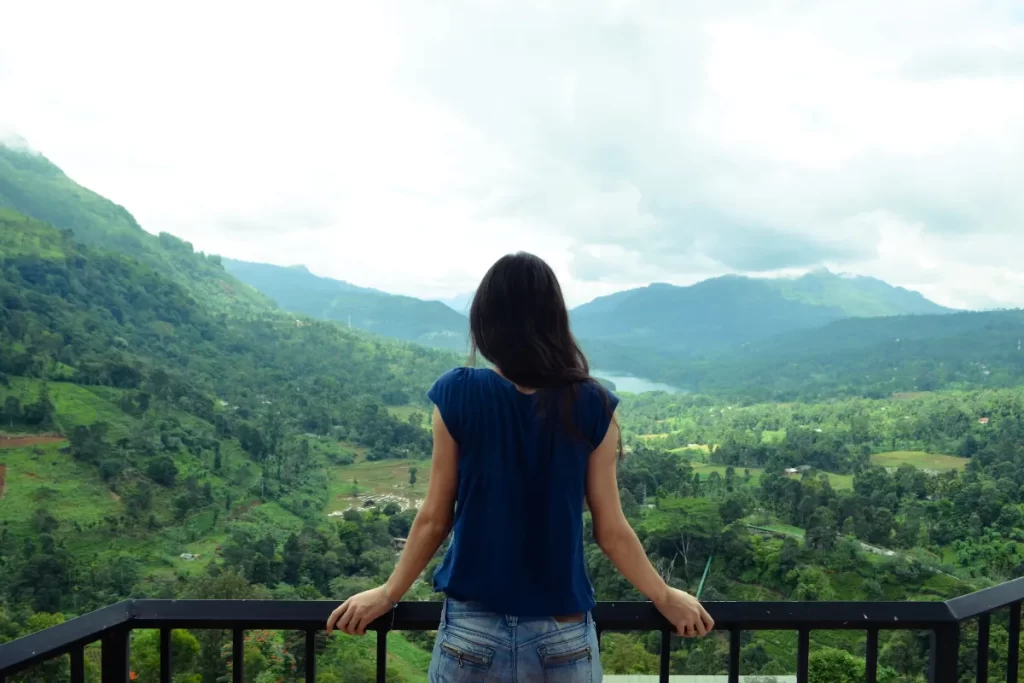
Yes, generally. Sri Lanka has low rates of violent crime against tourists, and solo female travelers visit regularly without serious incident. The usual precautions still apply: watch for pickpocketing in crowded areas, agree on tuk-tuk fares before you get in, and expect some overcharging attempts, especially at tourist sites. None of this is unique to Sri Lanka.
One thing that catches first-timers off guard is staring, especially in rural areas and smaller towns. It is almost always curiosity rather than hostility. A smile back is usually met with a smile, not a further stare-down. If it makes you uncomfortable, it is fine to just carry on and not engage.
Practical Safety Tips
These are simple habits that make solo travel here, especially for women, noticeably smoother:
- Act like you know where you’re going. Confidence deters most unwanted attention on its own.
- Don’t volunteer that you’re traveling alone or where you’re staying. A line like “my friends are meeting me here soon” is a quick, low-drama way to close an unwanted conversation.
- Use a neutral profile photo on WhatsApp. Drivers and hosts will see it, and a plain photo draws less attention than a personal one.
- Skip real-time location posts on social media. Share the highlights after you’ve left, not while you’re still there.
- In tuk-tuks, sit diagonally behind the driver rather than directly behind or beside them. It gives you a clearer view of the road and the driver.
- Keep emergency numbers saved and consider carrying a small whistle, more as a confidence boost than anything you’ll likely need.
- Never accept a drink from a stranger, and be cautious with local arrack. It has a high alcohol content and is often poured without much measuring.
- Avoid walking alone through deserted areas after dark, the same rule that applies almost anywhere in the world.
Dress Code and Local Etiquette
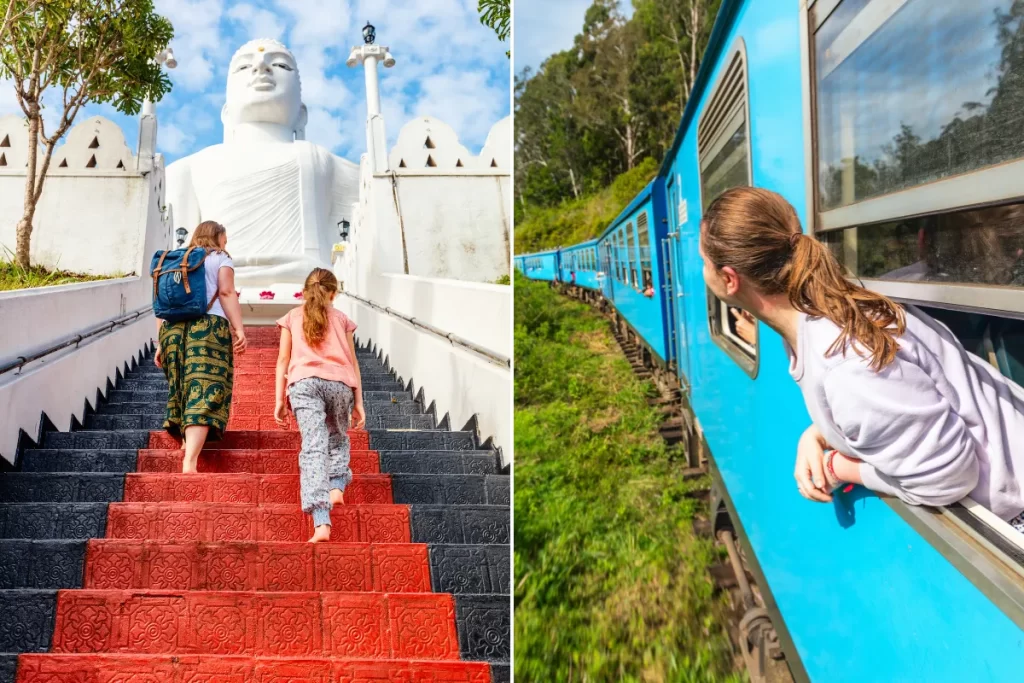
Sri Lanka is a conservative country, and how you dress affects how smoothly your trip goes. At temples, cover your shoulders and knees, and remove your shoes and any hat before entering. In rural and inland towns, modest clothing is appreciated even outside religious sites. Beach towns are far more relaxed about this. Read more about Sri Lanka Dos and Don’ts.
A few etiquette notes that go a long way: use your right hand to give or receive things, avoid public displays of affection, and greet people with a smile or a small nod rather than assuming a handshake is expected.
Health and Practical Safety
- Tap water is not drinkable. Stick to bottled or filtered water throughout your trip.
- Street dogs are usually calm, but keep your distance rather than petting them. Rabies is present in Sri Lanka, and any bite or scratch needs prompt medical attention.
- Don’t hold food visibly near monkeys, particularly around temples and forested areas. They will take it, sometimes aggressively.
Weather and Best Time to Visit
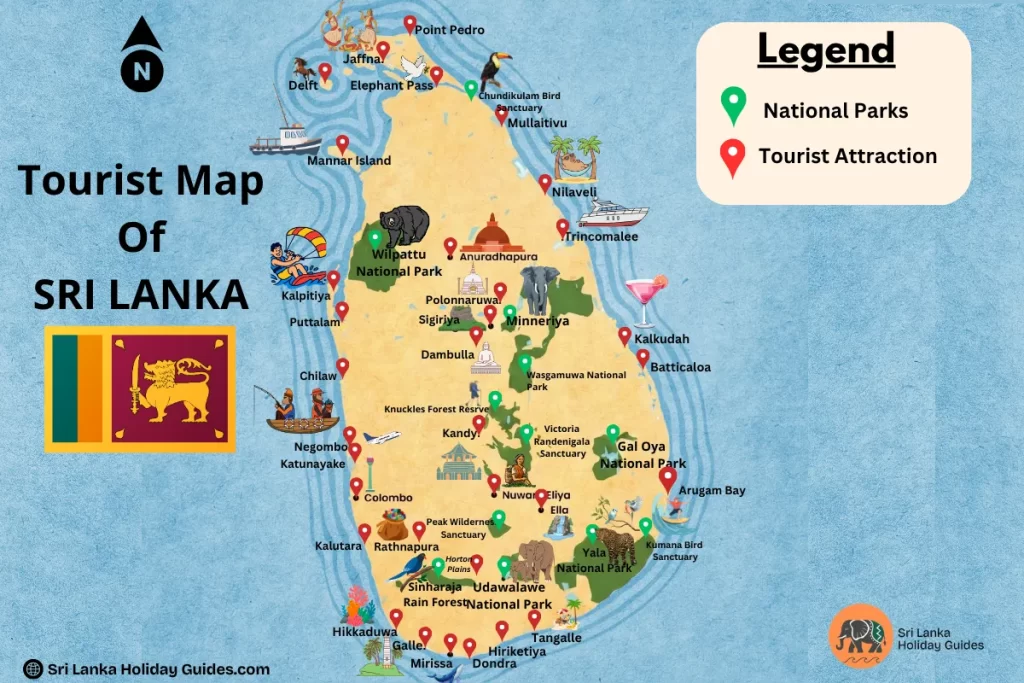
Sri Lanka has two monsoons that hit opposite sides of the island at different times, which is why “best time to visit” depends heavily on where you’re going.
- Southwest and hill country (Colombo, Galle, the south coast, Kandy, Ella, Nuwara Eliya): Driest and sunniest from November to April. The southwest monsoon brings rain from around May to September.
- Northeast and east coast (Trincomalee, Nilaveli, Arugam Bay): Best window is roughly May to September, opposite the west coast. The northeast monsoon brings rain from around October to January.
Temperatures average around 27 to 28°C year-round in the lowlands. Hill country towns like Ella and Nuwara Eliya run noticeably cooler, so pack a light layer if you’re heading up there.
If your route mixes coasts, as many solo trips do, expect at least a few rainy days somewhere along the way. That’s normal, not a sign you picked the wrong month.
Visas, Money, SIM Cards and Plugs
Visa

Almost every visitor needs an Electronic Travel Authorization (ETA) before arrival, applied for online at the official site. Since May 2026, nationals of 40 countries, including the UK, most of the EU, the US, Canada, Australia, India, and several others, get the tourist ETA free for a 30-day stay with double entry. Travelers from other countries still pay a processing fee, roughly $50 USD, for the same 30-day validity. Extensions are possible through the Department of Immigration in Colombo. Check the official ETA site for your specific nationality before you book flights, since this list can change.
Money

The exchange rate has hovered around 300 to 320 LKR per US dollar recently, but check the current rate before you travel since it does move. Wise, Revolut, and similar travel cards are widely accepted at hotels and larger restaurants, and ATMs are common in towns and cities. Carry some cash for tuk-tuks, small cafés, and rural areas where cards aren’t an option.
Connectivity

Wi-Fi can be unstable outside major hotels, with occasional power cuts. A local SIM from Dialog or Mobitel is cheap and easy to pick up at the airport, or you can set up an eSIM with a provider like Airalo, Holafly, or Saily before you leave home.
Plugs
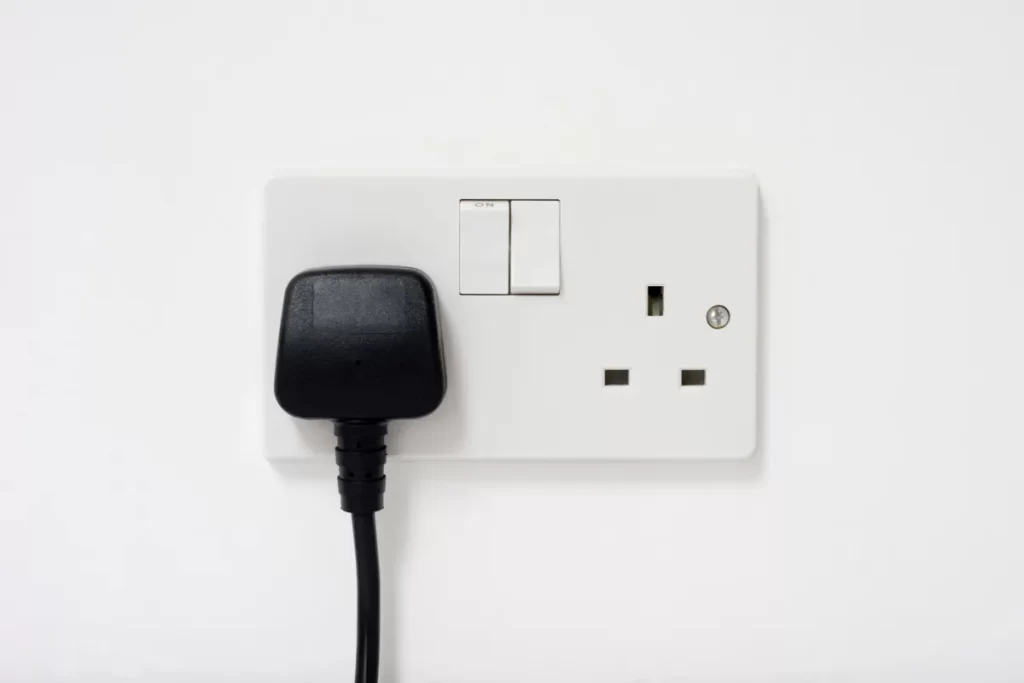
Sri Lanka mainly uses type D and type G sockets, with type M occasionally showing up in older buildings. A universal travel adapter covers all three. Voltage is 230V, 50Hz, so most phone and laptop chargers work fine; check the label on anything else before plugging it in.
Daily Budget for Solo Travelers
Sri Lanka is affordable by most standards, and a rough daily budget of $30 USD or less is workable if you stick to dorms, public transport, and local food. Comfort costs more, but not dramatically more than in most of Southeast Asia.
| Item | Typical cost |
|---|---|
| Dorm bed | 2,500+ LKR (roughly $8 to $15) |
| Budget hotel room | 4,000+ LKR (roughly $15 to $45) |
| Mid-range hotel | $60 to $180 per night |
| Luxury resort | $200 to $600+ per night |
| Local restaurant meal | 800 to 1,500 LKR |
| Upscale dining | 3,000+ LKR |
| Colombo to Galle bus | 400 to 1,000 LKR (roughly $1.50 to $3.50) |
| Kandy to Ella train | Roughly 400 LKR for unreserved third class up to 7,000+ LKR for a first class observation seat |
| Dambulla Cave Temple entry | Around 2,000 LKR (roughly $6) |
Getting Around in Sri Lanka

- Trains: The scenic option for long routes like Kandy to Ella or Colombo to Badulla. Book reserved seats in advance in peak season, since second and first class sell out weeks ahead.
- Buses: The cheapest way to cover medium and long distances, though often crowded.
- Tuk-tuks and scooters: Best for short hops. Agree on the fare before you start if the meter isn’t running, or use PickMe or Uber in cities and larger towns for fixed, fairer pricing.
- Private cars and transfers: Worth prebooking for airport pickups or long transfers, through your accommodation or a service like Welcome Pickups, for reliability more than cost savings.
Read more – Best Ways to Travel Around Sri Lanka: Trains, Tuk-Tuks, and Everything in Between
Top Spots for Short Solo Adventures
Sigiriya Rock Fortress

Climb the 1,200 steps past frescoes and water gardens to stand on a flat summit with sweeping jungle views. Go early in the morning when it’s cooler and crowds are lighter.
The Cultural Triangle
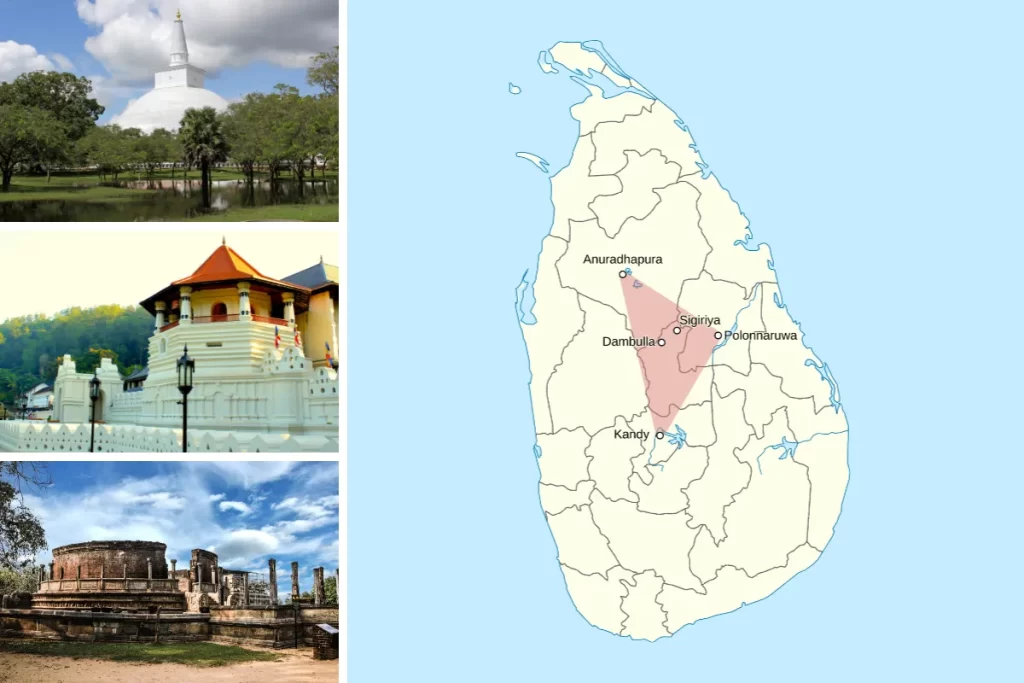
Sigiriya sits inside the wider Cultural Triangle, alongside Anuradhapura, Polonnaruwa, and the Dambulla Cave Temple, home to five caves and around 150 Buddha statues. It’s easy to combine two or three of these into one multi-day loop if ancient history is your thing.
Ella in the Hill Country

A traveler’s favorite. You can hike Little Adam’s Peak, watch trains cross the Nine Arch Bridge, or sip tea with mountain views. The Kandy to Ella train ride alone makes this worth your time.
Galle and Its Fort

Cobblestone lanes, Dutch-era walls, and cafés perfect for solo downtime. Wander the ramparts at dusk and then tuk-tuk to Unawatuna or Hiriketiya for beaches.
Nuwara Eliya

Known as “Little England,” it has cool air, colonial bungalows, and tea estates. Great if you need a change from coastal heat.
Arugam Bay (in season)

On the east coast, this is surf country. You don’t have to be a surfer to enjoy it—yoga retreats, beach cafés, and a laid-back social scene make it easy to meet others.
Coastal Towns with Solo-Friendly Vibes
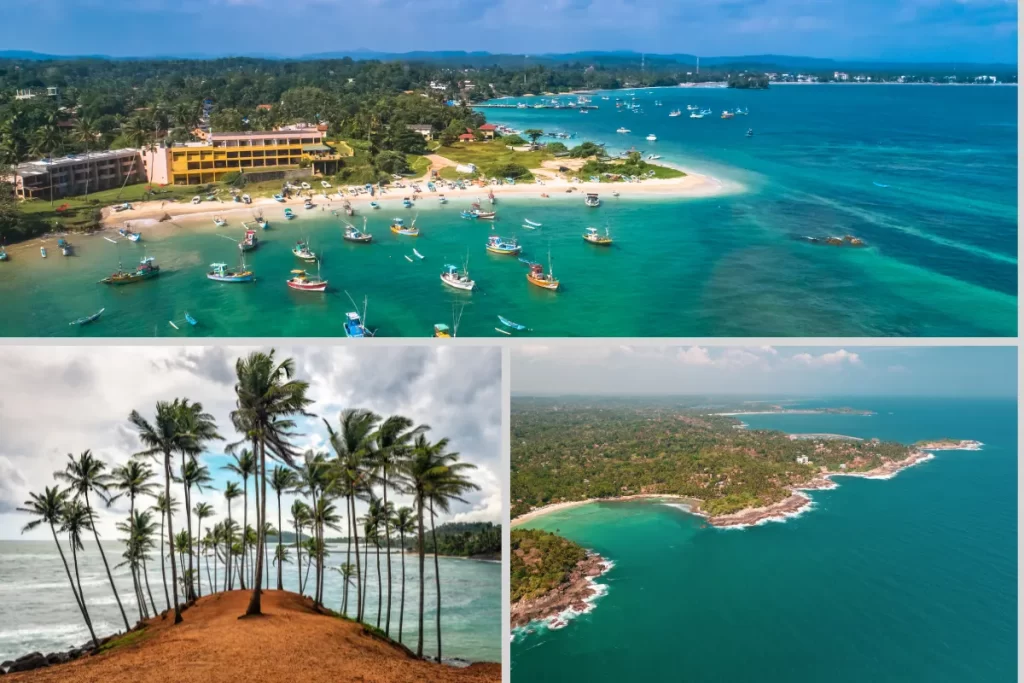
- Weligama: Calm bay, beginner surf schools, safe nightlife.
- Mirissa: Coconut Tree Hill, whale-watching tours, livelier evenings but still relaxed.
- Hiriketiya: Small cove with a friendly surf scene and mellow evenings.
- Ahangama & Midigama: Quieter, design-led towns further along the coast, popular with intermediate surfers and digital nomads. Boutique stays like Animals Boutique Hotel and Soul & Surf Ahangama anchor the scene.
Even if you’re not surfing, these towns work well as bases for beaches, food, and easy socializing. (Read More – 15 Best Beaches in Sri Lanka: Coastal Guide)
Where to Go If You Want Peace and Seclusion

- Kandalama: Balloon rides, birdsong, and lake views.
- Komari and Panama: Remote beach cabanas on the east coast, with wide open skies. Good if you want space to think and reset.
- Nilaveli: Quiet stretches of sand well north of Trincomalee, with far fewer visitors than the south coast.
National Parks and Safaris

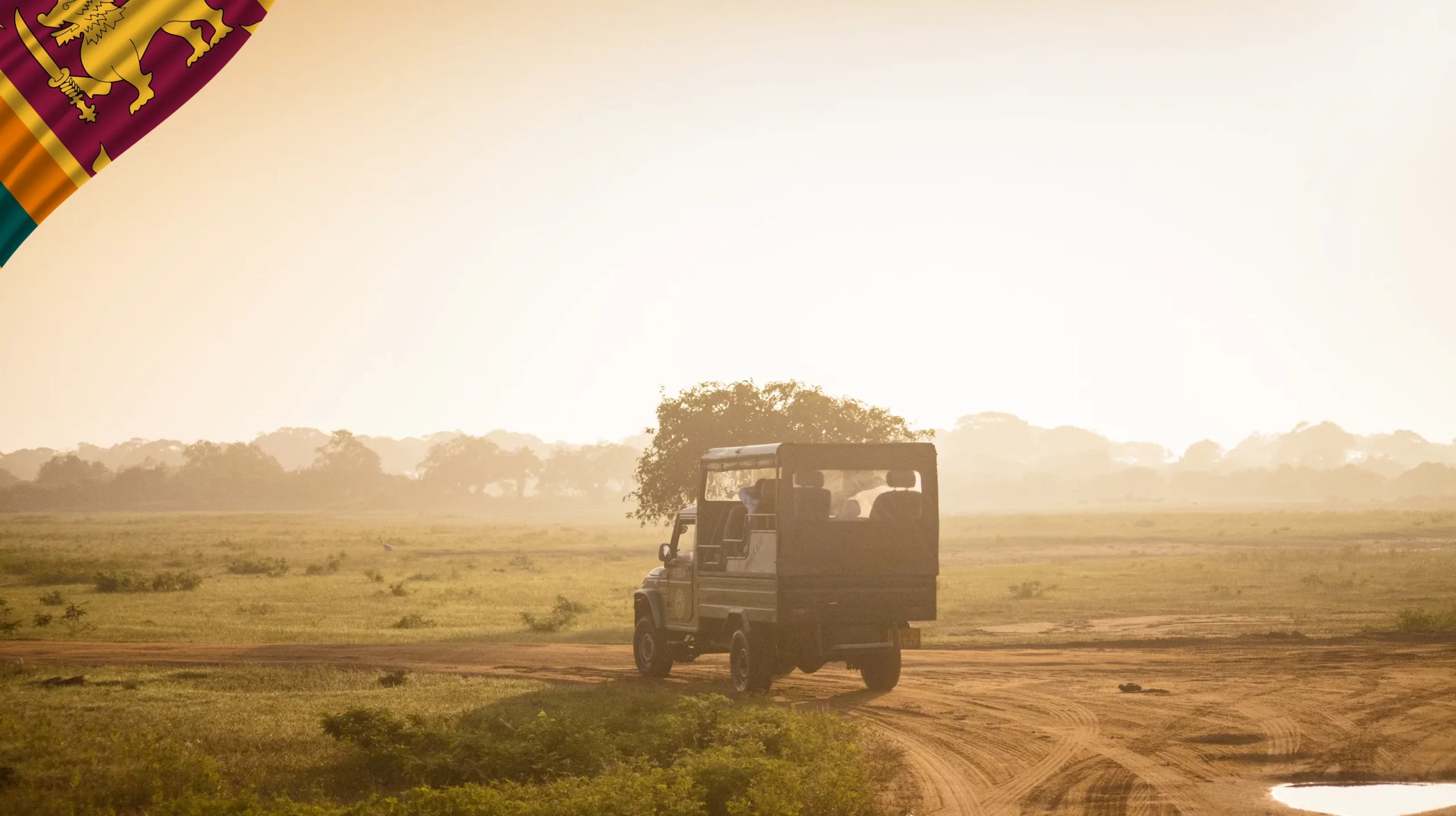
Wildlife is an easy way to add a shared, memorable day to an otherwise solo trip, since safaris are almost always done in a shared jeep.
- Yala: Leopards, sloth bears, and crocodiles, and the most visited park, which means more jeeps in peak season.
- Udawalawe: Close to a guaranteed sighting of elephant herds, and generally easier to plan around than Yala.
- Wilpattu: Similar wildlife to Yala with noticeably fewer crowds.
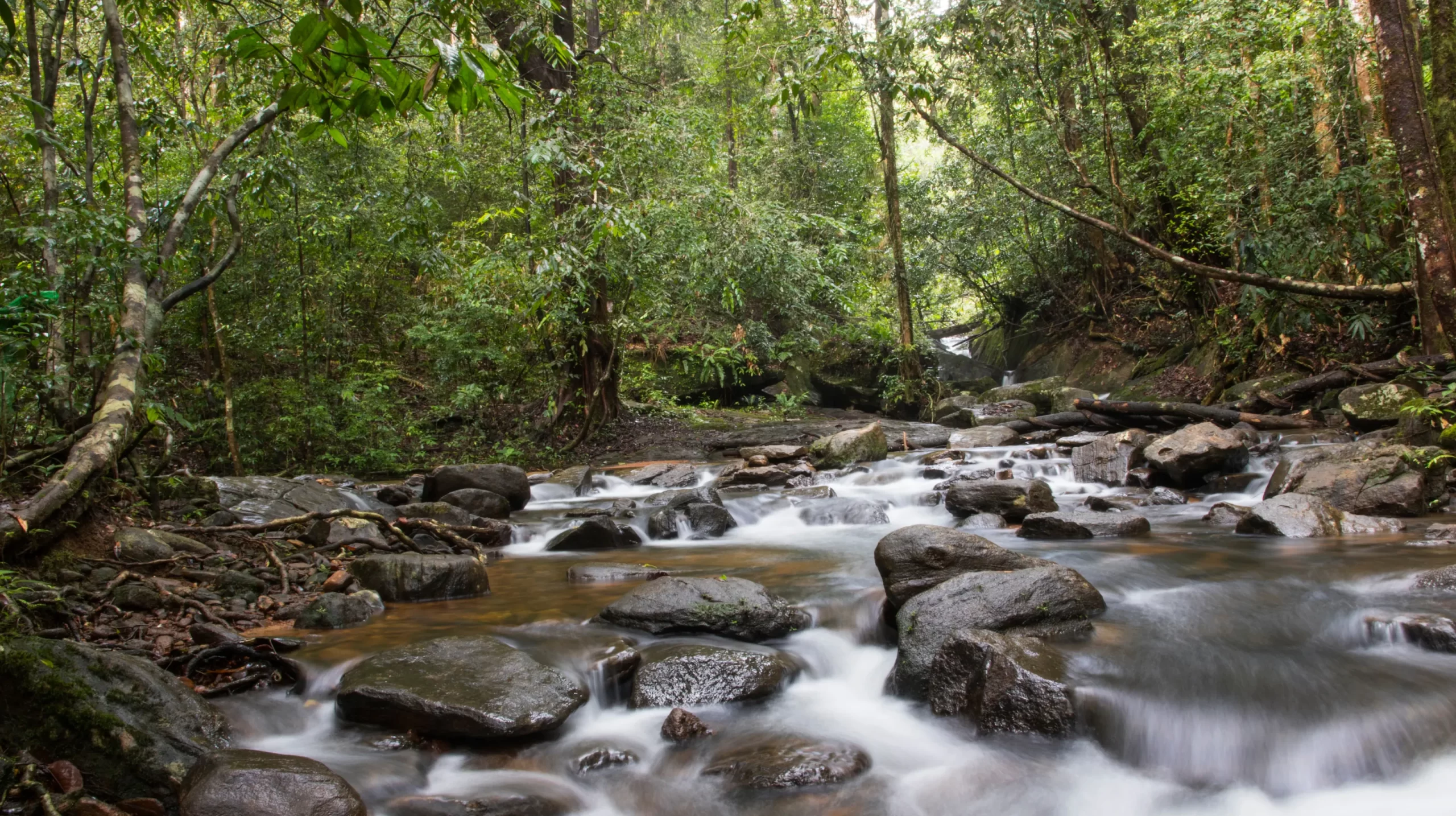
- Horton Plains: A cooler, high-altitude hike rather than a jeep safari, ending at the cliff edge known as World’s End.
Local Culture and Food to Try
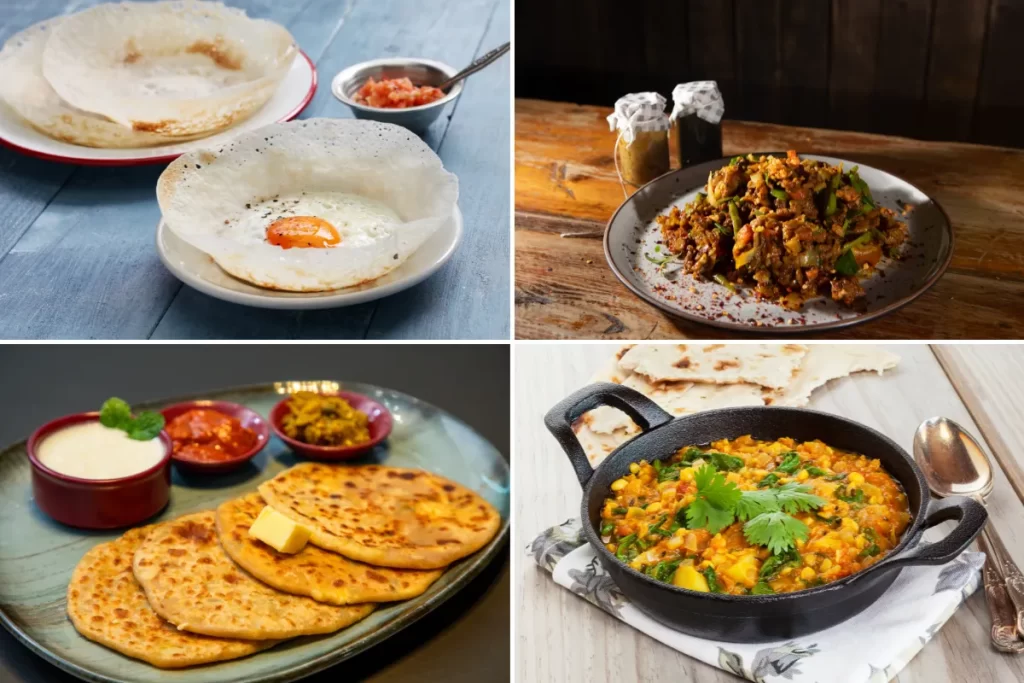
Eating is one of the easiest ways to feel connected on a solo trip, and Sri Lankan food is a big part of the appeal.
- Hoppers (appa): Bowl-shaped, fermented rice and coconut milk pancakes, plain, with an egg, or sweet.
- Kottu: Chopped roti stir-fried with vegetables, meat, and spices, cooked loudly on a hot griddle.
- Roti: Flatbread served sweet or savory, sold everywhere from street stalls to hotel restaurants.
- Dhal curry (parippu): A staple lentil curry cooked in coconut milk, usually part of any rice and curry plate.
If your trip lines up with Vesak in May, worth knowing about: streets fill with colorful lanterns, and community stalls called dansal hand out free food to anyone passing by. It’s a genuinely welcoming, easy event to stumble into as a solo traveler.
Read More – Colombo’s Best Local Food: Where to Find Beef Curry with Hoppers (Plus What to Order and When).
Solo-Friendly Neighborhoods in Colombo
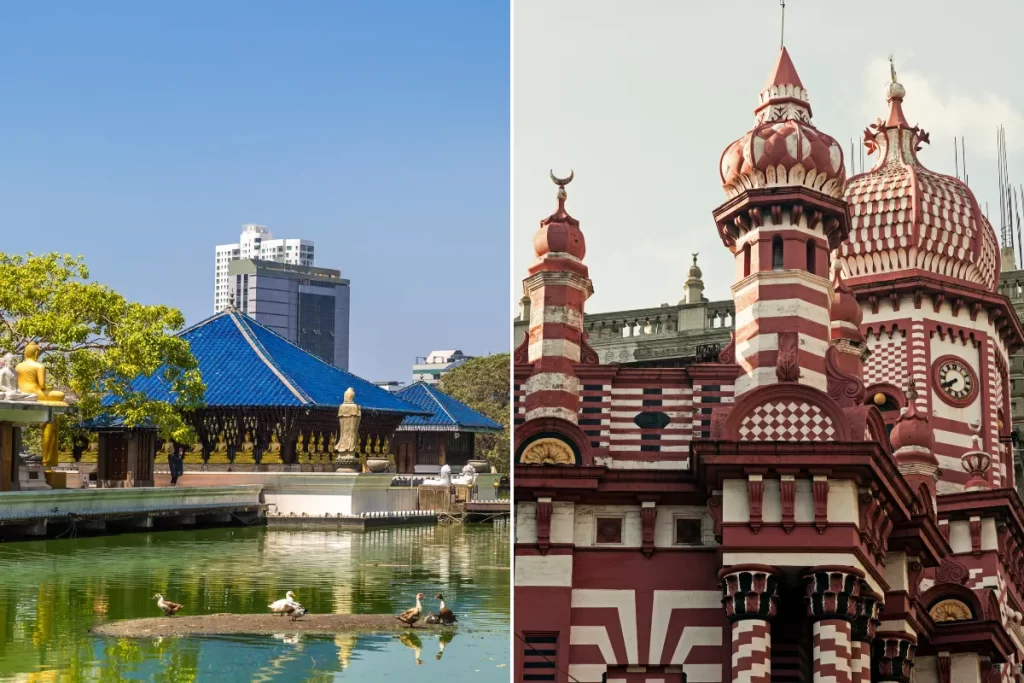
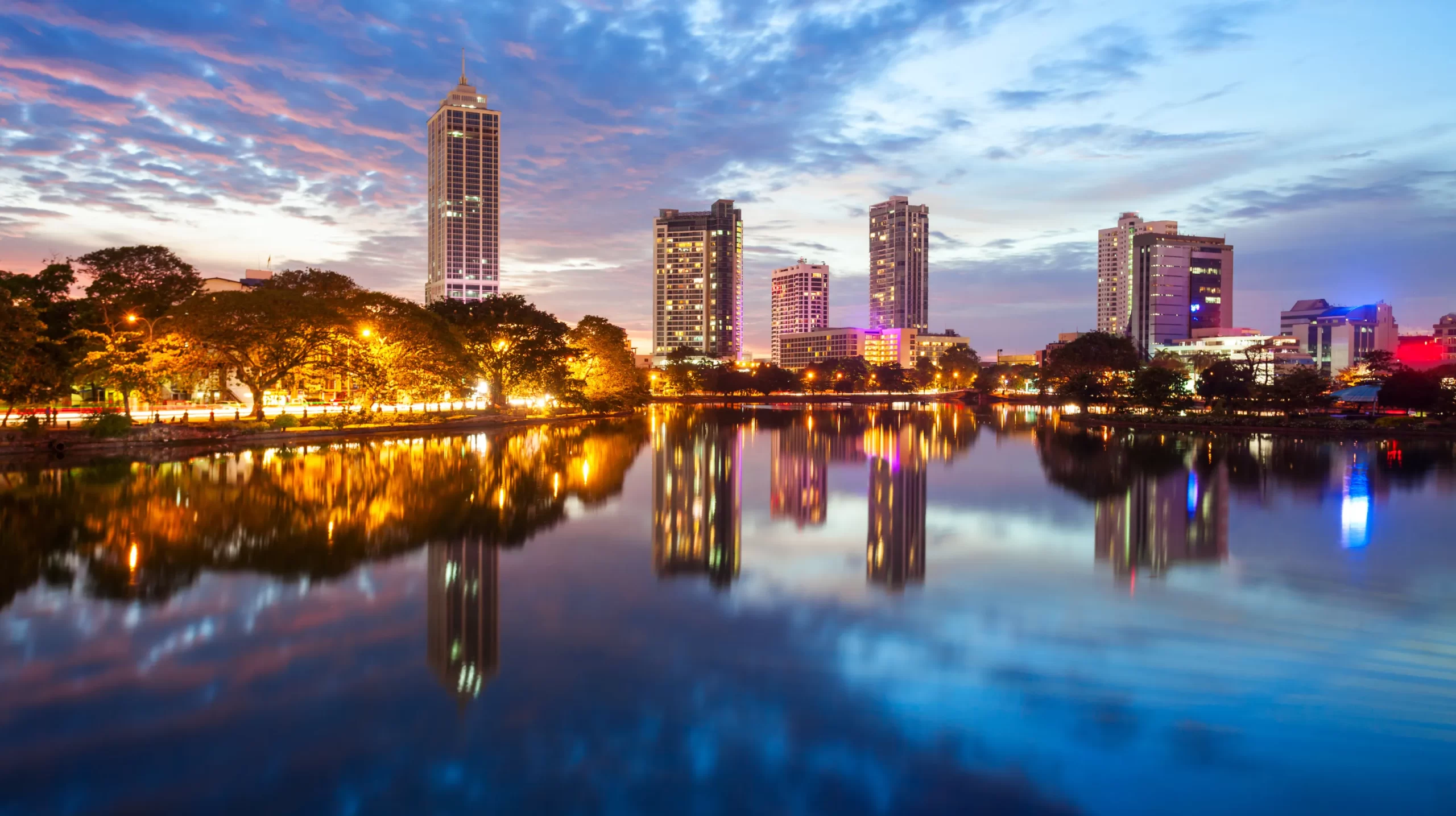
For a soft landing near Bandaranaike International Airport, Colombo and Negombo both work well. In Colombo, solo travelers tend to find these neighborhoods easiest: Fort, Slave Island, Kollupitiya, and around Independence Square. They’re central, well-lit, and close to cafés. Worth seeing while you’re there: Gangaramaya Temple, the Seema Malakaya meditation center, Jami Ul-Alfar Mosque, and Pettah Market.
How to Make Solo Travel Social

- Stay in hostels or small guesthouses. They’re naturally social, and owners often connect you with group tours or day trips.
- Join a cooking class or a safari tour. Udawalawe safaris and Mirissa whale-watching trips are easy, shared experiences.
- Say yes to small invites. Locals are curious and friendly, and sometimes a smile leads to tea or an temple tour.
(Read more – Accommodation in Sri Lanka: Where to Stay on Your Journey)
Quick 5-Day Solo Itinerary
- Day 1 to 2: Colombo. Explore Fort, Galle Face, and the café scene.
- Day 3: Train to Kandy, visit the Temple of the Sacred Tooth Relic.
- Day 4: Scenic train to Ella, hike Little Adam’s Peak.
- Day 5: Head south to Galle Fort for sunset on the ramparts.
Swap Ella for Mirissa or Weligama if you’d rather have more beach time than hills. If you have longer, 7 to 10 days lets you add the Cultural Triangle or a safari without rushing the rest.
Final Word: Let the Island Guide You

Solo travel in Sri Lanka rewards a loose plan more than a tight one. Some days you’ll be on a misty veranda with a cup of tea, others watching fishermen haul in nets at sunrise. Decide early whether you’re leaning toward surf towns or hill country, book your first guesthouse, and let the rest of the route fill in as you go.
FAQs: Solo Travel in Sri Lanka
Is Sri Lanka safe for solo travelers?
Yes, generally. Violent crime against tourists is rare. Standard precautions apply: dress modestly at temples, use PickMe or Uber for tuk-tuks and taxis where available, avoid walking alone in deserted areas after dark, and trust your instincts if a situation feels off.
Do I need a visa for Sri Lanka?
Yes, almost everyone needs an Electronic Travel Authorization (ETA) before arrival. Nationals of 40 countries get it free for 30 days as of May 2026; other nationalities pay a processing fee of roughly $50 for the same validity. Apply online before you travel.
How much does a solo trip to Sri Lanka cost per day?
Around $30 USD is workable using dorms, buses, and local food. Add more for private rooms, trains booked in advance, and the occasional upscale meal.
Is Sri Lanka good for a first solo trip?
Yes. It offers a mix of safe, easy-to-navigate cities, social surf towns, and peaceful, remote spots, which makes it easy to travel at your own pace without overplanning.
What are the best places to visit solo in Sri Lanka?
Sigiriya, Ella, Galle, Nuwara Eliya, and Arugam Bay in season are strong picks, along with the wider Cultural Triangle if you enjoy ancient history.
Which places are best for meeting other travelers?
The coastal surf towns: Weligama, Mirissa, Hiriketiya, and Ahangama. They have hostels, surf schools, and beach cafés where meeting people happens naturally.
Where can I go for peace and quiet as a solo traveler?
Kandalama, Komari, Panama, and Nilaveli offer remote beaches, nature, and a slower pace.
How can I get around safely in Sri Lanka?
Use PickMe or Uber in cities, take trains for scenic, affordable travel between major towns, and use tuk-tuks for short hops, agreeing on the fare upfront if unmetered.
What should I wear as a solo traveler in Sri Lanka?
Dress modestly, especially at temples and in smaller inland towns. Cover your shoulders and knees, and remove shoes and hats before entering religious sites.
What's the best time of year to visit?
It depends on your route. November to April is best for the southwest coast and hill country. May to September is best for the northeast and east coast, including Trincomalee and Arugam Bay.
What should I know about money and SIM cards before I arrive?
Bring a travel card like Wise or Revolut plus some cash. Pick up a local SIM from Dialog or Mobitel at the airport, or set up an eSIM before you leave home, since Wi-Fi can be unreliable outside larger hotels.
How many days are enough for a solo trip to Sri Lanka?
Five to ten days works well. Even a short five-day trip can cover Colombo, Kandy, Ella, and Galle, giving you a mix of culture, nature, and coast.
Is it easy to make friends while traveling solo in Sri Lanka?
Yes. Staying in hostels or guesthouses, joining tours, or taking a cooking class all make it easy to meet other travelers and locals.

2 Comments