Trincomalee sits on Sri Lanka’s northeast coast around a natural deep-water harbor covering 1,630 hectares, one of the largest in the world, which is the entire reason anyone ever fought over this stretch of coastline. The Portuguese built the first fort here in 1624, using stones torn down from the ancient Koneswaram Temple to do it. The Dutch took it in 1639 and expanded it again in 1665. The British held it from 1796 until 1948. That’s three empires fighting over one harbor, and the city that grew up around it is still a genuine mix of Tamil, Sinhala, and Muslim communities, with active Hindu temples, Buddhist viharayas, mosques, and churches all within walking distance of each other. Compared to the south coast, which has been developed hard over the last decade, Trincomalee still feels unhurried and a little rough around the edges, in a good way: broad white-sand beaches, clear water, and a lot fewer people on them.
This guide keeps things simple. You’ll know when to go, where to stay, what to do, and how to plan without stress. No rushing. Just clear choices and calm days by the sea.
Is Trincomalee Worth Visiting?

Yes, if you go at the right time of year, which for Trincomalee is the opposite half of the calendar to the south and west coasts. This is a place that rewards patience and a loose schedule: it suits people who want to snorkel over a reef shark, watch a blue whale from a small boat, or just sit on an empty beach rather than people chasing nightlife. If you’re after beach clubs, a packed social scene, and reliable infrastructure, the south coast still does that better. Trincomalee does calm, clear water and genuine quiet better than almost anywhere else in the country.
Where Is Trincomalee & How to Get There

Trincomalee is roughly 257 to 266 km from Colombo, depending on which route you take, on Sri Lanka’s northeast coast. It’s a long way from the airport and from the south coast circuit, which is exactly why it’s stayed less developed, and why it’s worth budgeting a proper travel day to get there rather than squeezing it into a side trip.
Getting to Trincomalee

| From | Method | Time & Cost |
|---|---|---|
| Colombo | Private car | 5 to 6 hours via Dambulla and Habarana |
| Colombo | Local/night bus (Bus 49) | ~7 hours; day buses ~1,150 – 2.600 LKR, private night buses leave Colombo Fort around 11:00 PM |
| Colombo | Overnight train | ~8 hours; departs Colombo Fort around 21:30 |
| Colombo | Cinnamon Air flight | 45 to 60 minutes; seasonal daily schedule, departure time shifts through the year, check the current timetable before booking |
| Dambulla | Direct local bus | ~3.5 hours (~1000 LKR / 110 km) |
| Sigiriya | Bus to Inamaluwa Junction, then Bus 49 | ~3.5 hours total private car ~3 hours |
| Anuradhapura | Bus or private car | 3 to 3.5 hours (~110 km) |
| Jaffna | Direct bus | 5 to 7 hours (~2000 LKR / 240 km) |
| Arugam Bay | Private car via Ampara | 4 to 5 hours |
Worth knowing on the flight: Cinnamon Air’s Colombo–Trincomalee route runs daily through most of the year but the schedule is genuinely seasonal, departure times shift by month and there’s a short window in July/August where the flight is quoted at both 30 and 45 minutes depending on the source, so confirm the current flight time and fare directly with Cinnamon Air rather than relying on an old screenshot.
Best Time to Visit Trincomalee (This Matters)

Timing is the key to enjoying Trincomalee.
Best Months
April to September is the dry season on the east coast, and it’s the window that makes Trincomalee worth the trip: hot, dry days, calm seas, and the best underwater visibility of the year.
Peak Conditions
May through August or September is the most reliable stretch for calm water, snorkeling, scuba diving, and offshore whale sightings. April tends to be the hottest month, with daytime temperatures peaking around 33°C.
Months to Avoid
The northeast monsoon runs from October or November through January, bringing heavy rain, rough seas, murky water, and regularly canceled boat trips to Pigeon Island. If snorkeling or whale watching is the point of your trip, don’t book this window and hope for the best, plan around April to September instead.
Trincomalee Beaches: Where to Stay and Swim
Each beach area has its own personality.
Nilaveli Beach

Nilaveli sits 12 to 20 km north of town, a 4 km stretch of quiet white sand, palm trees, and shallow turquoise water that’s genuinely calm enough for families. It’s also the main departure point for boat trips to Pigeon Island, so if snorkeling is the priority, this is where to base yourself.
Uppuveli Beach

Uppuveli is closer to town, about 5 to 6 km north, and functions as Trincomalee’s social hub: dive operators, beachfront cafes, bars, and calmer golden sand than Nilaveli’s brighter white. Most of the backpacker and mid-range accommodation clusters here, and it’s the better pick if you want a bit of a scene in the evenings without losing the beach.
Marble Beach

Marble Beach is 12 km south of town, inside a protected bay run by the Sri Lanka Air Force. Clean white sand, clear water, and good for swimming and snorkeling, but access and facilities are more limited than at Uppuveli or Nilaveli since it sits within a military-controlled area.
Dutch Bay

Dutch Bay is the town beach, right below Fort Frederick. It’s convenient if you’re staying in town or killing time before a fort visit, but it’s not in the same league as Nilaveli or Uppuveli for swimming, think of it as a scenic stop rather than a beach day.
Snorkeling & Diving in Trincomalee
This is Trincomalee’s highlight.
Pigeon Island National Park

Pigeon Island is a marine national park about 1 km off the Nilaveli coast, a 10 to 15 minute boat ride out. It’s the main reason people come to this side of the island: shallow-water blacktip reef sharks (small, generally non-aggressive, and genuinely thrilling to snorkel next to), green and hawksbill turtles, and coral reefs you can reach without diving gear.
On cost: boat hire runs roughly LKR 15,000 for a 6 to 8 seat boat, split among however many people are on it, so figure somewhere around $8 to $10 per person if you fill the boat, plus the park’s own entrance fee. As of the 2025 fee schedule, foreign adults pay USD 25 and foreign children (6 to 12) pay USD 15, both before an 18% tax, so budget closer to $29 to $30 per adult once that’s added. Fees do get revised, so treat these as a close estimate rather than gospel and confirm at the park gate. Rules at the park ban chemical sunscreen (bring reef-safe), and visitor trampling has already damaged shallow coral sections, so stay off anything you can stand on rather than swim over.
Best Time for Snorkeling

May through September gives the calmest seas and clearest water. Outside that window, especially October through January, boat trips to Pigeon Island are frequently canceled outright when the sea is too rough to cross.
Diving in Trincomalee

Dive operators along Uppuveli and Nilaveli run PADI beginner courses (3+ days) and guided dives to Pigeon Island, Swami Rock, Pigeon Rock, and the HMS Hermes shipwreck, one of the more significant WWII wreck dives in the region. Expect to pay 45 to 115 USD (roughly LKR 16,500 to 37,500) depending on the site and whether it’s a single dive or a course.
Whale & Dolphin Watching
This part genuinely deserves more attention than most Trincomalee guides give it, since it’s one of the better blue whale watching spots on the island outside Mirissa. The season runs roughly April or May through September, overlapping with the dry season, and boats head 6 to 8 nautical miles (30 to 40 km) offshore to look for blue whales, sperm whales, fin whales, Bryde’s whales, and spinner dolphins. Shared tours run about 30 to 45 USD (LKR 10,000 to 14,500) per person. Sightings aren’t guaranteed on any whale watching trip anywhere, but the calm-water window here lines up well with the rest of the dry-season activities, so it’s easy to bundle into the same few days as Pigeon Island.
Other Things to Do in Trincomalee
When you want a break from the beach, there’s just enough to explore.
Fort Frederick

Built by the Portuguese in 1624 with stones from the original Koneswaram Temple, then rebuilt by the Dutch in 1665. It’s still an active military base for the Sri Lanka Army’s Elite Gajaba Regiment, but it stays open to pedestrians for free. Walk through for the old colonial ramparts, cannons, Wellesley House, and the free-roaming spotted deer that wander the grounds.
Koneswaram Temple

Koneswaram (Thirukoneswaram Kovil) sits on Swami Rock headland, 120 m above sea level, a major Hindu pilgrimage site dedicated to Lord Shiva. The original “Temple of a Thousand Columns” was destroyed by the Portuguese in 1624, using its stones for Fort Frederick; what stands now was rebuilt between 1952 and 1963. The cliffside views over the bay are worth the trip on their own, and there’s Lover’s Leap, a dramatic cliff tied to the local legend of Francina van Rhede. Entry is free, but modest dress covering shoulders and knees is mandatory, bring something to cover up if you’re in beachwear.
Gokanna Raja Maha Viharaya

An ancient Buddhist temple near the Koneswaram and Fort Frederick complex, a much quieter stop than the Hindu temple next door. Worth a short visit if you’re already up at Swami Rock rather than a destination on its own.
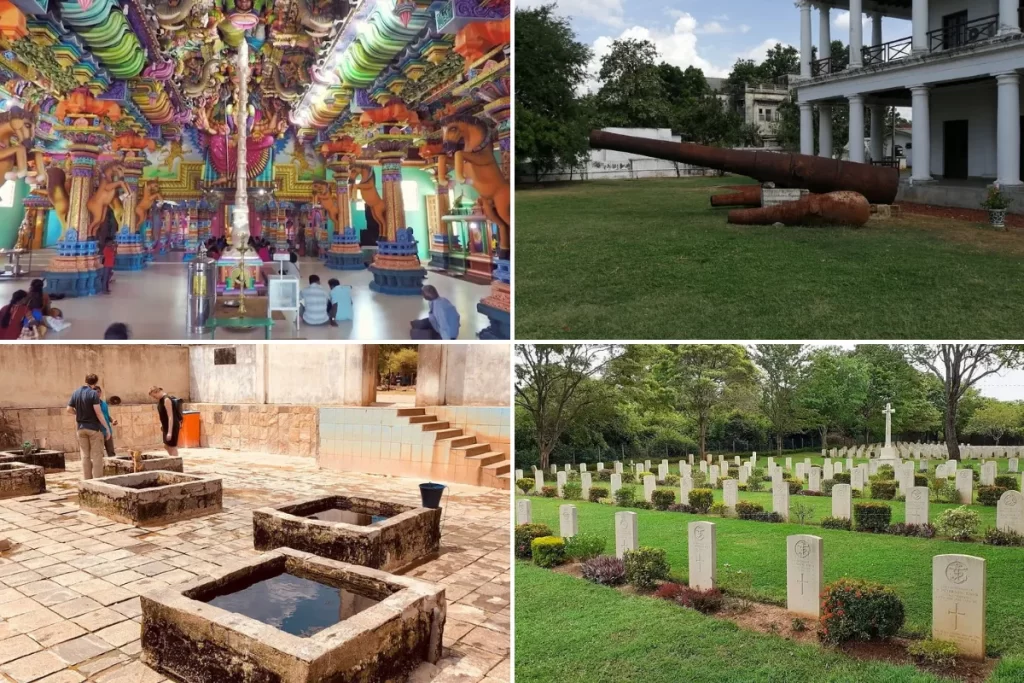
A few more historical stops worth squeezing in if you have the time: the Sri Badrakali Amman Temple near the central bus stand, a vibrant Hindu temple dedicated to Goddess Kali with colorful gopurams (free entry, modest dress required); the Maritime and Naval History Museum, housed in a restored Dutch Commissioner’s residence near Fort Frederick, with free entry (donations welcome), guided tours on local shipwrecks, and a rooftop view; the Kanniya Hot Water Springs, seven shallow square wells of naturally thermal water at varying temperatures (the stone floors get slippery, mind your footing); and the British War Cemetery, a quiet, landscaped site commemorating WWII soldiers, a good low-key stop between beach visits.
Where to Stay in Trincomalee

Best Areas to Stay
Uppuveli is the social hub, closest to dive shops, cafes, and bars, and the easiest base if you want a bit of a scene. Nilaveli is quieter and sits closer to the Pigeon Island boat launch, better if snorkeling is your main reason for coming. Staying in town works for budget and cultural sightseeing but puts you further from the beach. Marble Beach and the area further south are more isolated, mostly resort territory.
Accommodation Types (With Examples)
Guesthouses & Budget Stays
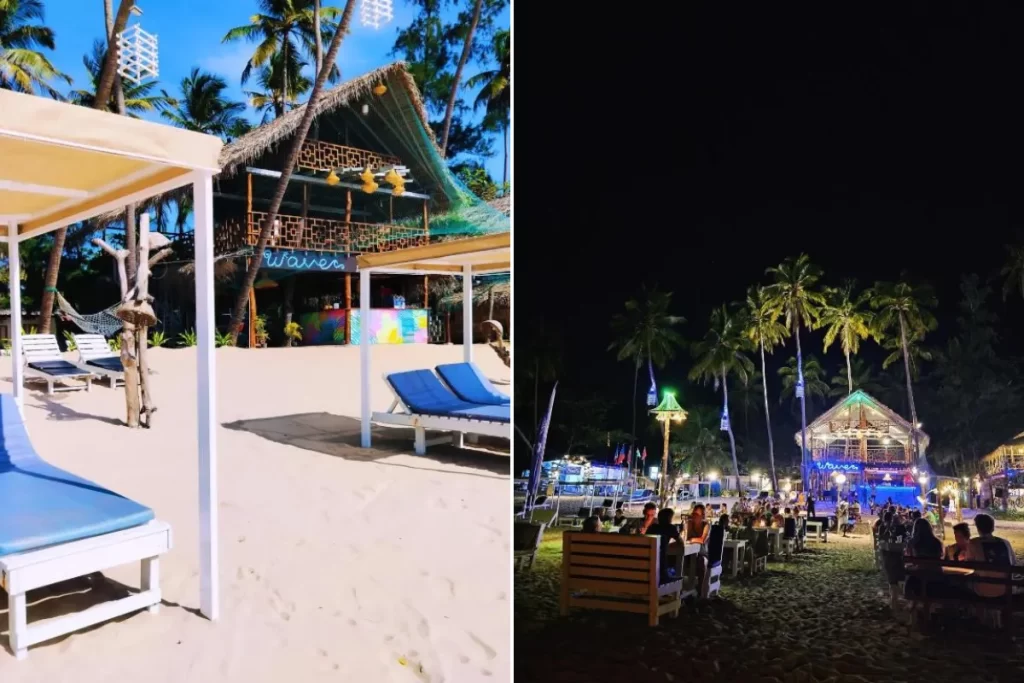
Under roughly 30 USD a night. The White House in Uppuveli is a popular pick, run by local guide Rangan, with private and dorm rooms, an on-site restaurant , and dive and snorkeling guiding. Oceanic White House in Nilaveli sits close to the Pigeon Island departure points, from around (~15 USD) a night. Also worth checking, French Garden, Green Garden Hotel, and Coconut Beach Lodge.
Mid-Range Hotels
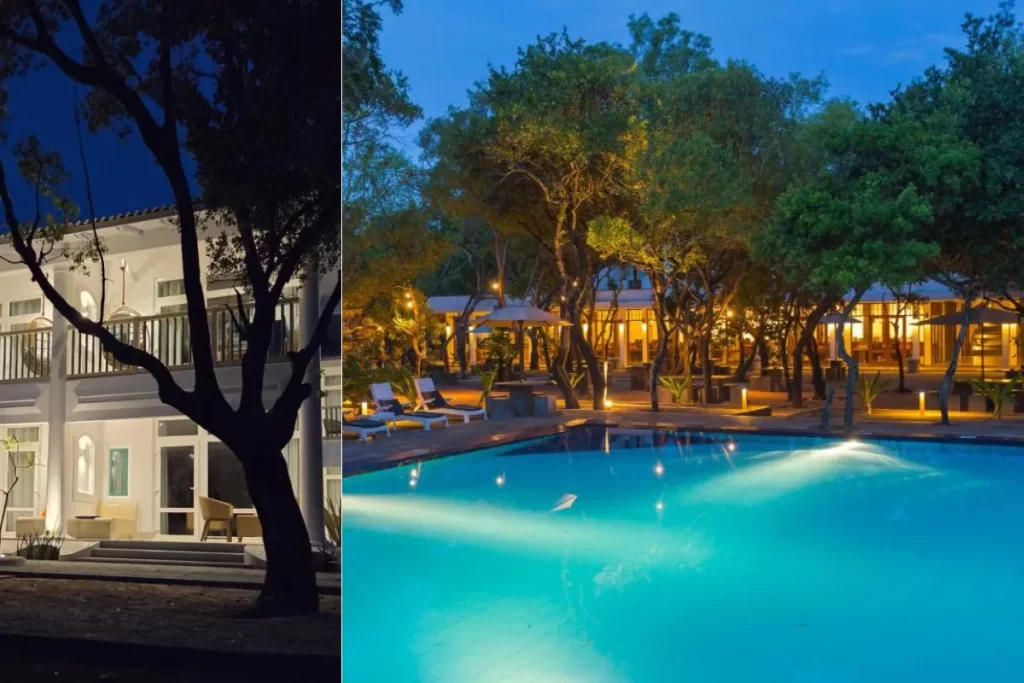
Roughly 40 to 80 USD a night. Golden Beach Cottages on Uppuveli sand starts from around (45 USD). Anantamaa Hotel has spacious rooms and a large pool near Uppuveli. Blue Wings Beach Hotel is a solid mid-range option near Uppuveli Beach. For the Nilaveli side, Nilaveli Beach Hotel sits at the upper end of this bracket.
Boutique & Resort Stays
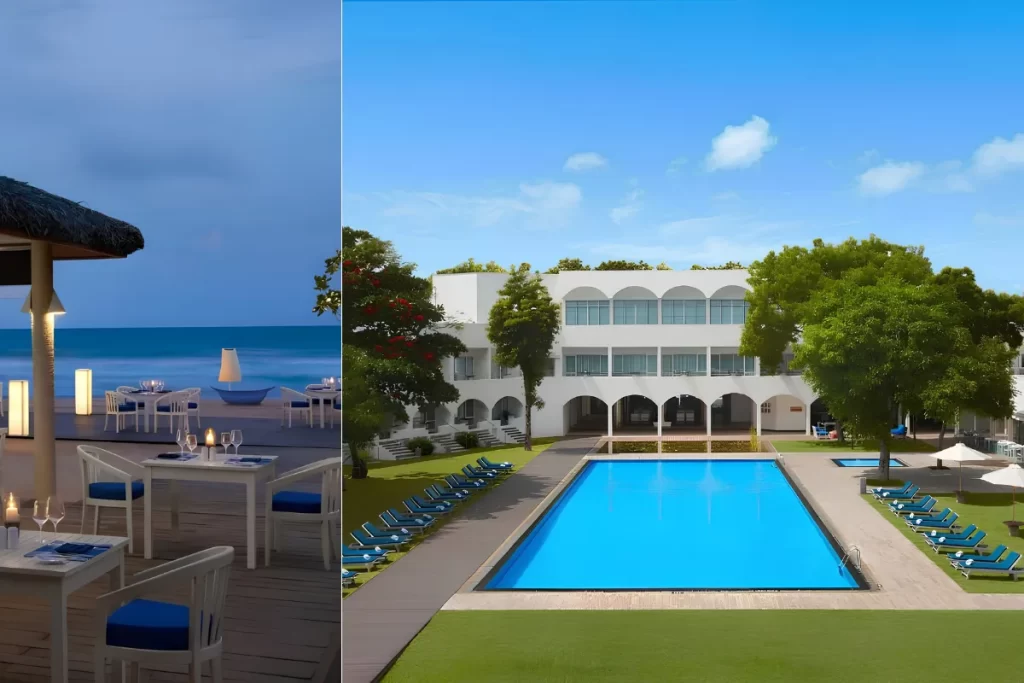
80 to 150+ USD a night. Trinco Blu by Cinnamon is a 4-star beachfront resort in Uppuveli with a large pool, an on-site PADI dive center, and oceanfront dining. Jungle Beach by Uga Escapes is the high-end pick near Nilaveli.
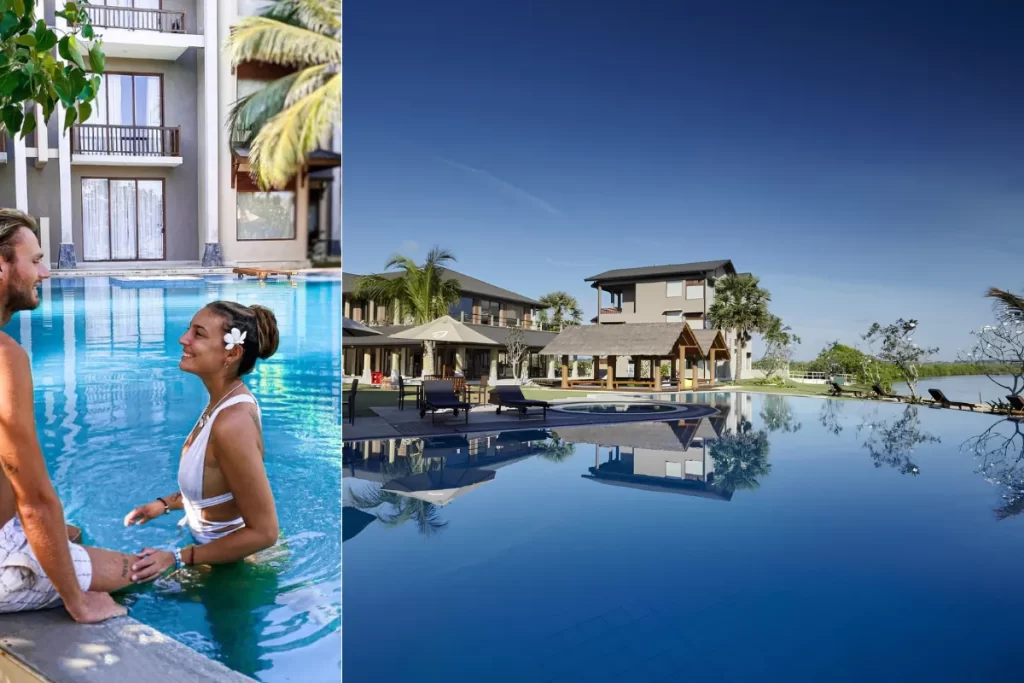
Amaranthe Bay Resort & Spa sits on the lagoon near Uppuveli with an outdoor pool, spa, and a floating deck dining platform. Villa Nilaveli Cabana offers quiet beachfront cabanas directly on Nilaveli Beach, from around (80 USD) a night.
Food & Restaurants in Trincomalee
Food options are simple and beach-focused.
Seafood & Local Food

Rice ‘n’ Curry in Uppuveli is a popular buffet serving local rice and curry dinners alongside fresh seafood made to order. Nina’s Restaurant is a family-run spot doing authentic rice and curry. Coconut Beach Lodge does romantic candlelit seafood dinners right on the sand. For something cheaper and faster, Wood Cape in town serves large plates of kottu roti, Be Cool Juice Bar cover home-cooked meals, smoothie bowls, and juices. Palm Beach Restaurant is another solid sit-down option. Around the central bus station, local “hotels” (small eateries) sell rice and curry, vada, samosas, and pastry puffs for a few hundred rupees.
Casual Cafés & International Food

Fernando’s Beach Bar is Uppuveli’s central beachfront hub: sunbeds, hammocks, swings, an upstairs lounge, snacks, bacon sandwiches, and evening drinks. Right next door, Cafe on the 18th serves paninis, coffee, smoothie bowls, and brownies. On Nilaveli Beach.

For produce and fresh catch, the Central Market and fish market near the clock tower and bus stand sells dragonfruit, bananas, jackfruit, fresh fish, and local dried fish, worth a walk-through even if you’re not cooking.
How Many Days to Spend in Trincomalee
Budget at least 2 to 4 days. Two days is enough to cover the main cultural and fort sites, Fort Frederick, Koneswaram, and a beach afternoon, but it’s rushed if you want to do anything in the water. Three to four days gives you room for whale watching, a Pigeon Island snorkeling trip, and actual beach time without racing the clock, and it buffers against a canceled boat trip if the sea kicks up on your first attempt.
Trincomalee vs South Coast Beaches
The honest answer is they’re not really competing for the same trip. Trincomalee’s season runs April to September, exactly opposite the south coast’s November to April window, so for a lot of travelers the real question isn’t which is better, it’s which matches your dates. The east coast is quieter, rawer, and better for snorkeling with reef sharks and whale watching without the crowds. The south coast, around spots like Mirissa and Hikkaduwa, has far more developed infrastructure, nightlife, and surf culture. If you’re building an itinerary around a single trip, check which coast is in season before you check which one sounds nicer in photos.
Safety & Practical Tips

- Getting around town: Tuk-tuks are everywhere for short hops, a one-way ride from Trincomalee town to Nilaveli Beach (~16 km) runs roughly 1,200 to 2,600 LKR ($3 to $8), always agree the fare before getting in. Scooter rental runs about 1,100 to 2,000 LKR (~$5) a day if you want to cover the coastal roads yourself.
- Pigeon Island rules: No chemical sunscreen (bring reef-safe), no fins in the shallow reef sections, and don’t touch the marine life, the coral here is already showing damage from trampling.
- Temple dress code: Shoulders and knees covered at Koneswaram and the Sri Badrakali Amman Temple, bring a sarong or light cover-up if you’re coming straight from the beach.
- Kanniya Hot Springs: The stone floors around the wells get slippery when wet, watch your step.
- Monsoon season: October/November through January brings rough seas and regularly canceled Pigeon Island and whale watching trips. Don’t build a water-activity-heavy itinerary around these months.
- Flights: Cinnamon Air’s Trincomalee route is seasonal and the schedule changes through the year, confirm current timetables and fares directly before booking around a flight.
Frequently Asked Questions About Trincomalee
Is Trincomalee worth visiting?
Yes, if you go in the right season (April to September). It suits travelers who want calm water and fewer crowds over nightlife and a packed social scene.
What is the best time to visit Trincomalee?
April to September, with May through August or September as the peak window for calm seas, snorkeling, diving, and whale watching.
Is Trincomalee better than south coast beaches?
It depends on when you’re traveling. Trincomalee is strongest in the dry-season months from April to September, while the south coast (November to April) offers more nightlife and infrastructure. Check which coast is in season before deciding.
Which beach is best in Trincomalee?
Nilaveli for calm swimming and proximity to Pigeon Island; Uppuveli for cafes, bars, and a livelier feel.
Is Trincomalee good for snorkeling?
Yes. Pigeon Island National Park is the main spot, with shallow reefs, blacktip reef sharks, and the chance of turtles and reef fish.
Are there sharks in Trincomalee?
Yes, blacktip reef sharks live around Pigeon Island. They’re small and generally non-aggressive, and snorkeling alongside them is one of the park’s main draws.
Is Trincomalee safe for swimming?
Generally yes in calm, dry-season conditions. Avoid the water during monsoon months when seas get rough, and follow local advice on any given day.
How many days should I spend in Trincomalee?
At least 2 to 4 days. Two days covers the cultural and fort sites but is rushed for water activities; 3 to 4 days gives room for whale watching, Pigeon Island, and actual beach time.
Is Trincomalee good for families?
Yes, especially Nilaveli during the dry season, with calm, shallow water and beachfront accommodation close by.
Is Trincomalee expensive?
Generally affordable. Budget guesthouses run under $30 a night, and most activity costs (boat hire, park entry, dive courses) sit in the tens-of-dollars range rather than hundreds.
Is there nightlife in Trincomalee?
Limited. It’s a handful of beach bars rather than a club scene, the south coast is the better choice if nightlife is a priority.
How do I get to Trincomalee?
By private car (5 to 6 hours from Colombo), overnight bus or train (7 to 8 hours), or a seasonal Cinnamon Air flight (45 to 60 minutes). It’s a longer trip than most south-coast destinations, so plan accordingly.