
Arugam Bay, known locally as Ullai, is a small fishing village on Sri Lanka’s southeast coast that turns into the island’s surf capital every year from May to October. The draw is a string of long, right-hand point breaks that can run 200 to 500 metres on a good day, with something for every level from the gentle rollers at Baby Point to the fast, technical wall at Main Point. It’s also a genuine springboard into wildlife country: Kumana National Park, Elephant Rock, and the Pottuvil Lagoon are all close enough to fold into a surf trip without losing a day to travel. This guide covers when to go, what things actually cost, and the small details that make planning easier.
Best Time to Visit Arugam Bay
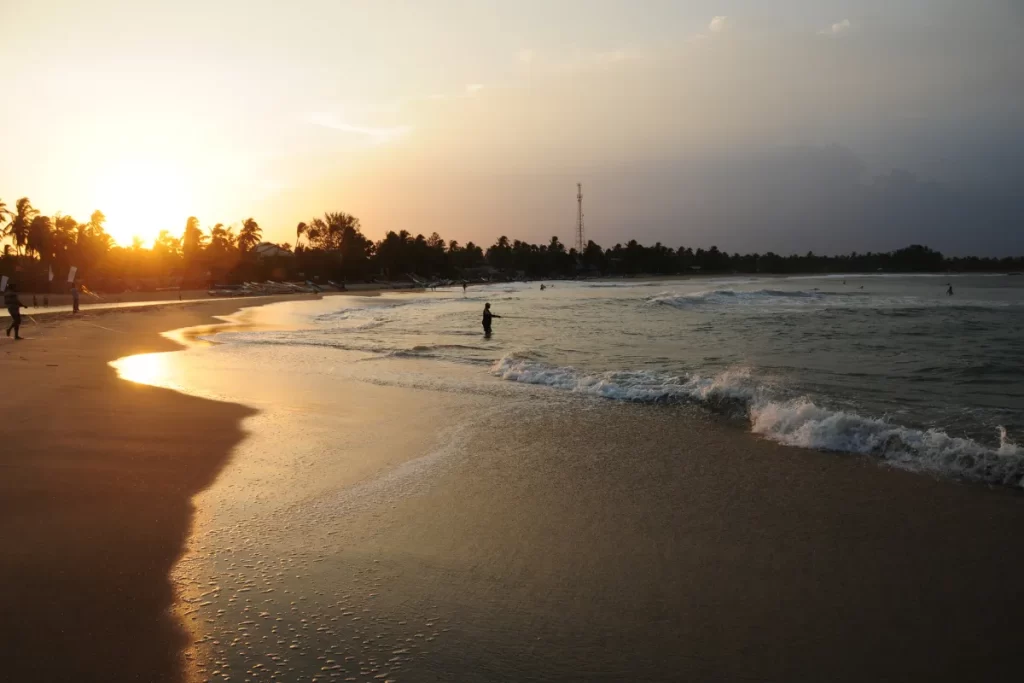
The surf season runs from May through September or October, with the cleanest, most consistent swells typically arriving in July and August. Ocean temperatures stay a comfortable 28°C year round, so the water is never the issue, the waves and the weather are. From around November through January the eastern monsoon brings heavy rain and rough seas, and a lot of the seasonal surf shops, restaurants, and hostels simply close for the stretch between October or November and April. If you’re coming specifically to surf, build your trip around the May to October window. Outside it, Arugam Bay is quiet to the point of feeling half-shuttered.
Expect average temperatures of 28 to 30°C from November to January, 30 to 32°C in February, March, September, and October, and a hotter 32 to 36°C during the dry summer stretch from April to August.
How to Get to Arugam Bay
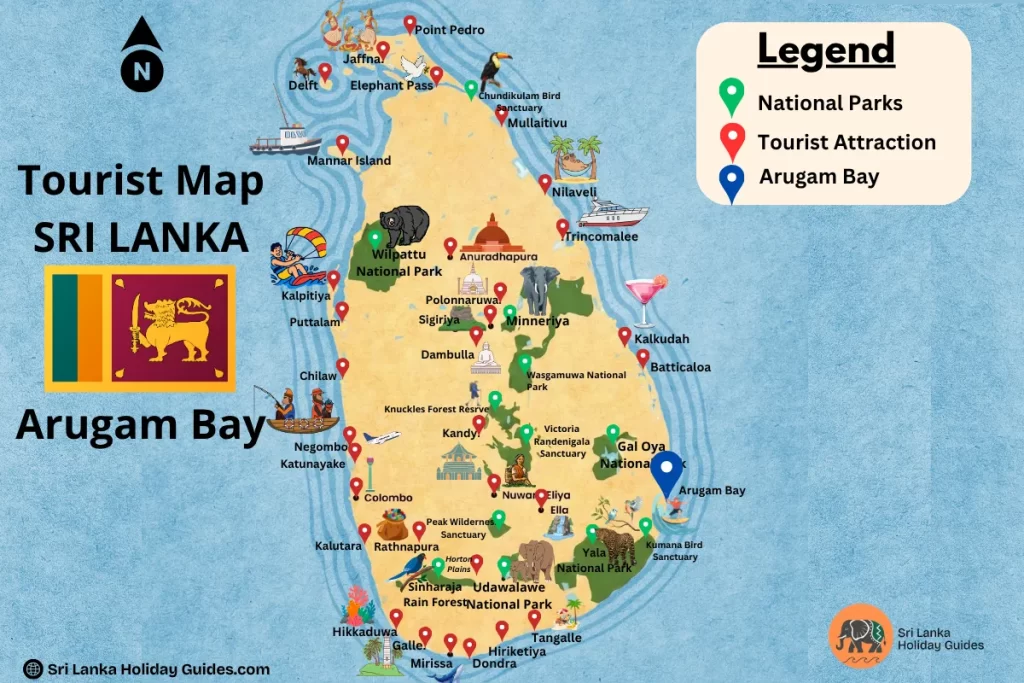
Getting to Arugam Bay requires some effort, and that is part of what keeps it from feeling overrun. There is no direct highway from Colombo, no airport nearby, and no train that pulls up at the edge of the beach. The journey is part of the experience.
From Colombo or Bandaranaike International Airport
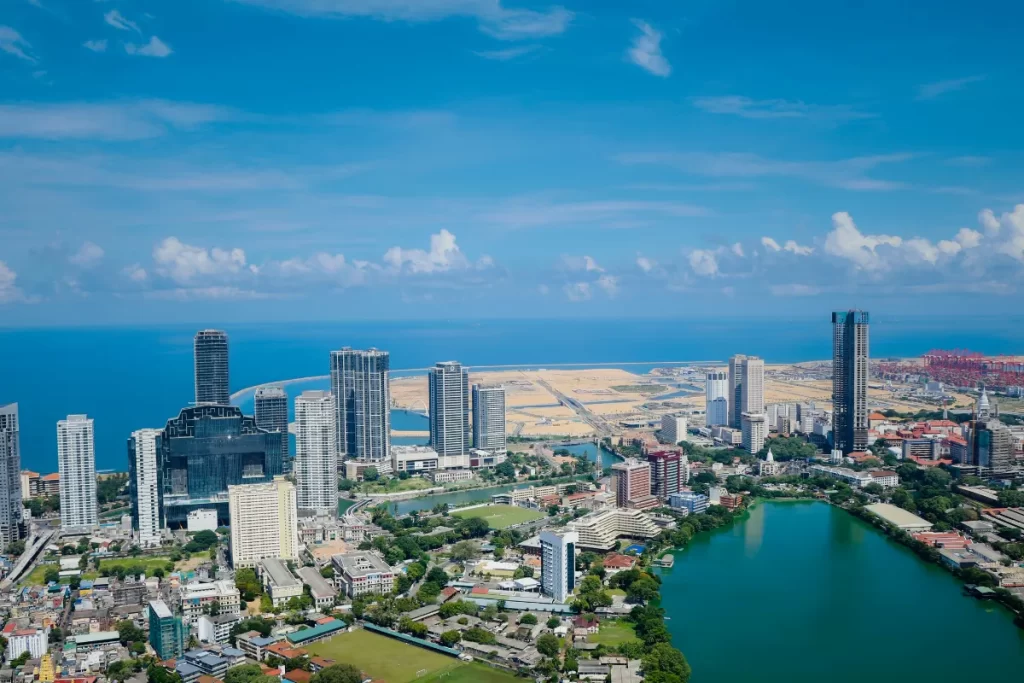
It’s roughly 320 to 330 km from Colombo, which works out to about 6.5 to 7.5 hours by private vehicle and 7 or more hours by public bus. There’s no direct railway to Arugam Bay itself, the nearest stations are in Batticaloa and Ella, so most travelers either drive straight through or break the trip up with a stop in the hill country.
From Ella and the Hill Country
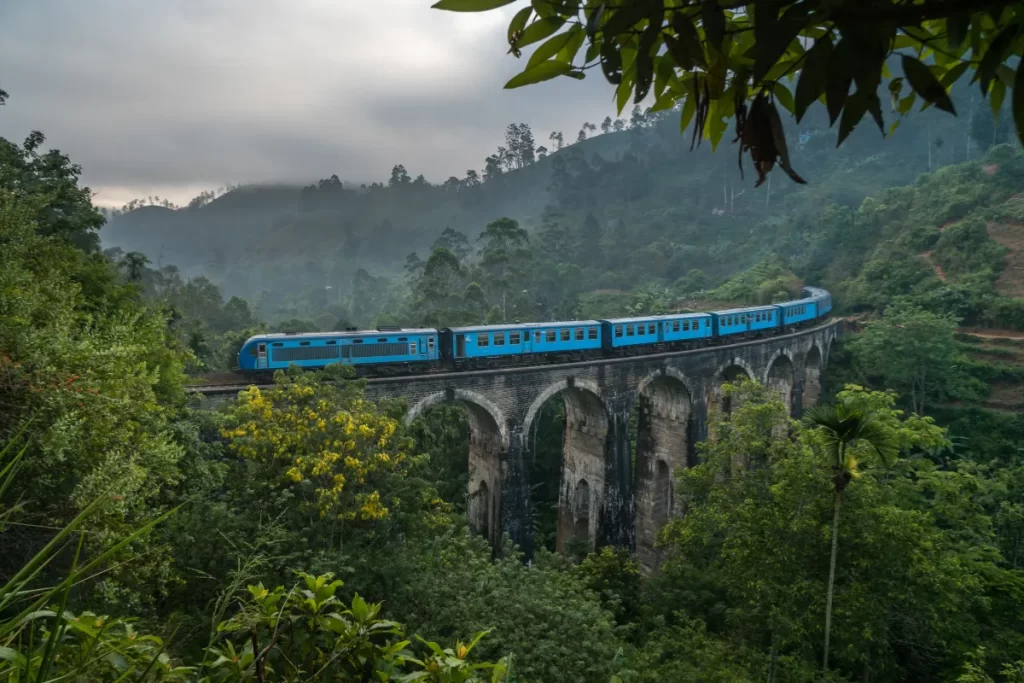
This is the more common route, and a genuinely scenic one. By car or direct tuk-tuk, Ella to Arugam Bay is about 131 km and takes roughly 2.5 to 3 hours by tuk-tuk, a touch faster by car. Going by public bus is cheaper but slower and involves a few changes: an early bus to Wellawaya, a transfer to a Monaragala-bound bus, then a connecting bus on to Pottuvil, followed by a short tuk-tuk into Arugam Bay itself. All in, budget 3.5 to 5 hours for the full bus journey, against roughly 5,000 to 5,500 LKR for a direct tuk-tuk the whole way.
From the South Coast
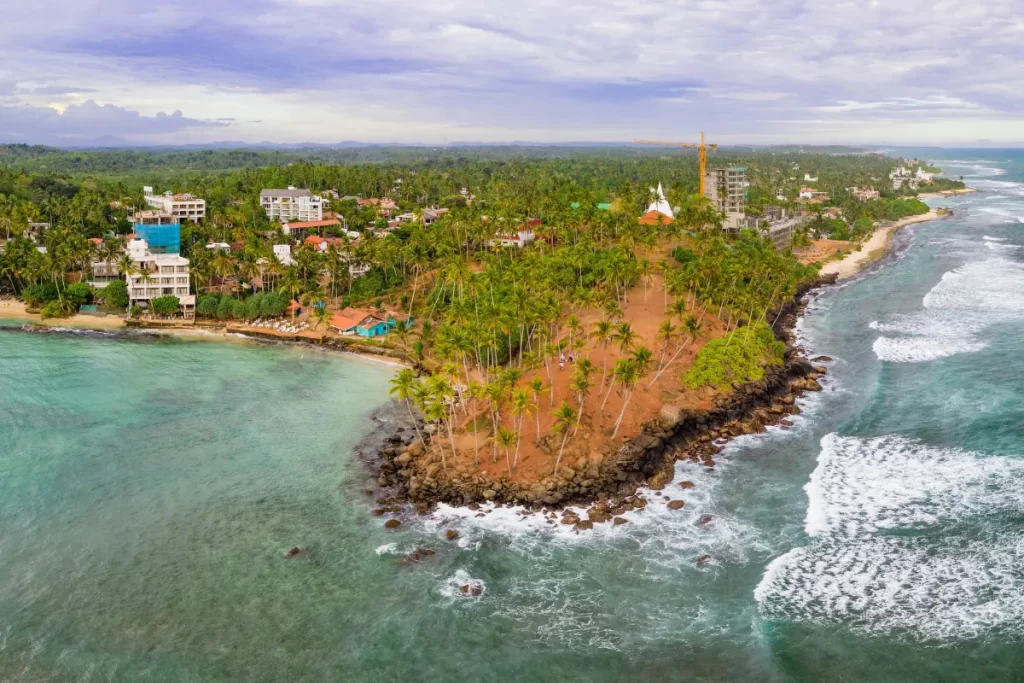
Coming from Mirissa, Tangalle, or the Yala area, a tuk-tuk takes about 3 to 3.5 hours, while the bus route via Wellawaya and Monaragala to Pottuvil runs 6.5 to 8 hours. A direct daily bus also connects Pottuvil to Matara in the early morning, which is worth knowing if you’re planning the trip in reverse.
Once you’re in Arugam Bay, a scooter is the easiest way to get around, running roughly 1000 LKR to 2000 LKR a day plus around 600 LKR to fill the tank. Tuk-tuks are everywhere for shorter hops to surf points or the lagoon.
Top Things to Do in Arugam Bay
Surfing dominates the conversation around Arugam Bay, but there is more to the area than the waves. Some of the most memorable experiences here happen away from the beach entirely.
Go on a Safari at Kumana National Park
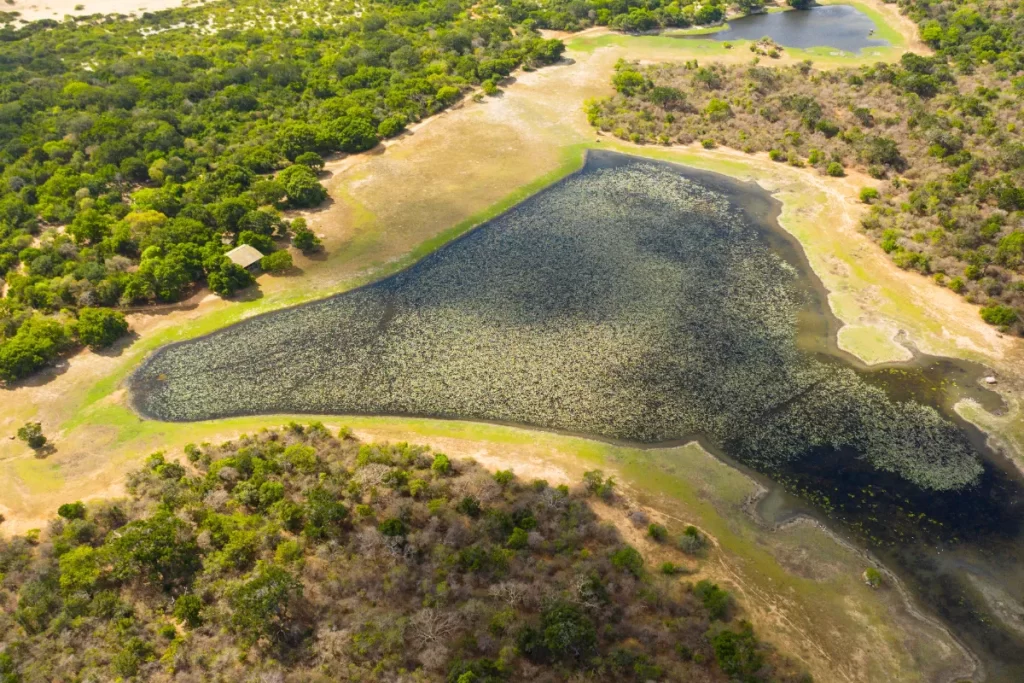
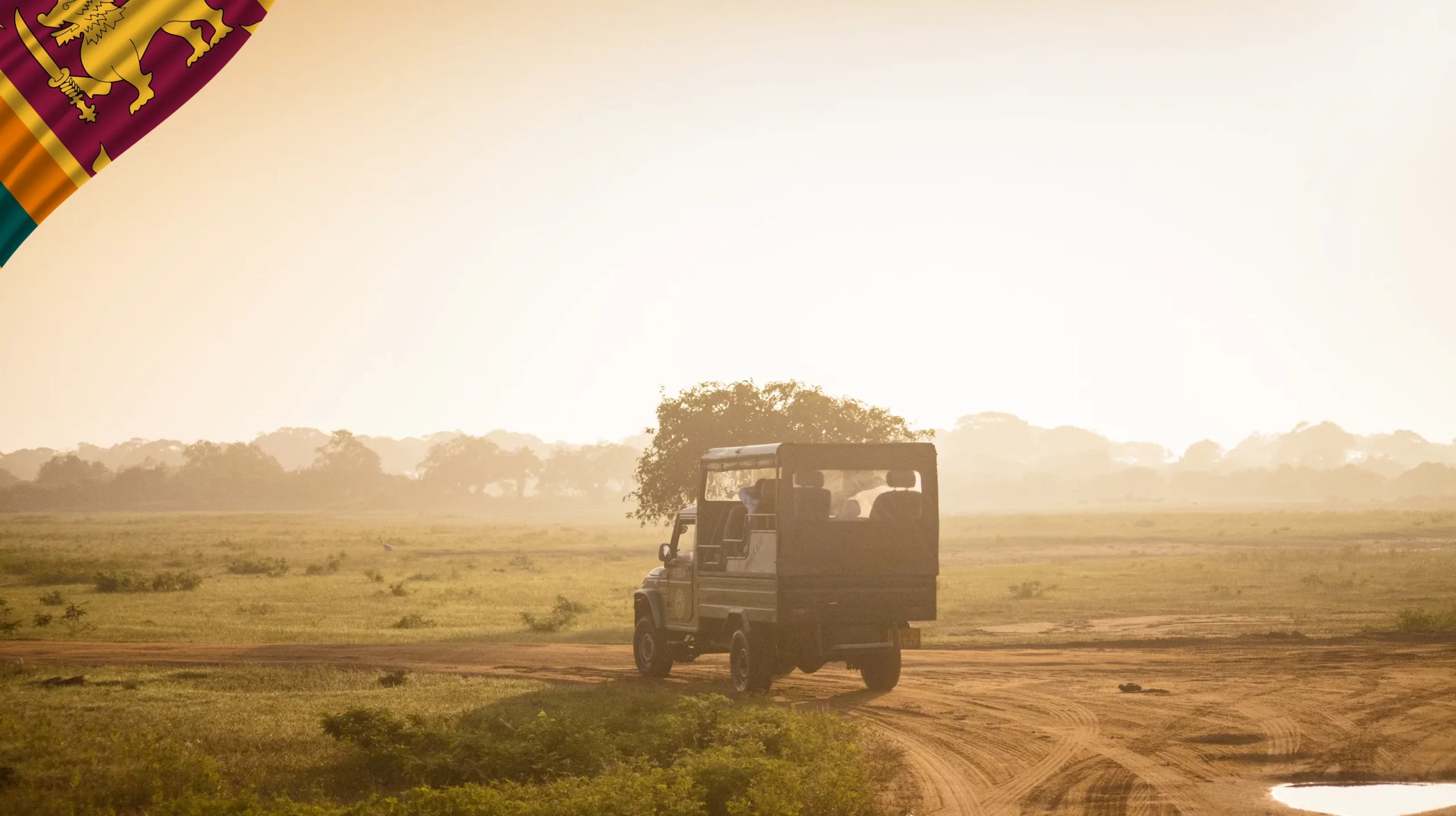
Kumana National Park, sometimes called Yala East, sits about 50 minutes south of Arugam Bay. It’s genuinely worth the detour: the park is known for thousands of migratory nesting waterbirds between April and July, alongside wild Asian elephants, leopards, sloth bears, crocodiles, and fishing cats. Entrance for foreign visitors runs around 35$ to 43$ for a foreign adult, which makes it noticeably cheaper than Yala or Udawalawe. Most visitors book a half-day or full-day jeep safari through a local operator rather than arranging entry separately, and many of those tour prices bundle the entrance fee into the total, so check what’s actually included before comparing quotes.
The 10 km dirt road leading up to the park boundary is worth the drive on its own. It cuts through open fields and wetlands where wild elephants, crocodiles, water buffalo, and deer roam freely well outside the official gate, so keep your eyes open even before the safari technically starts.
Climb Elephant Rock for Sunset
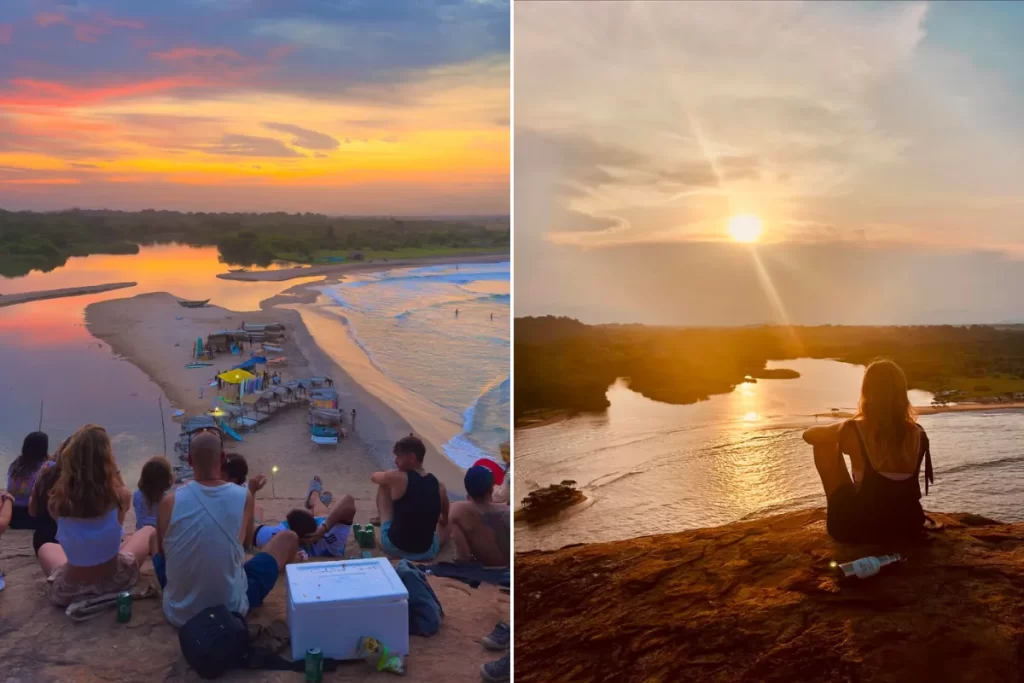
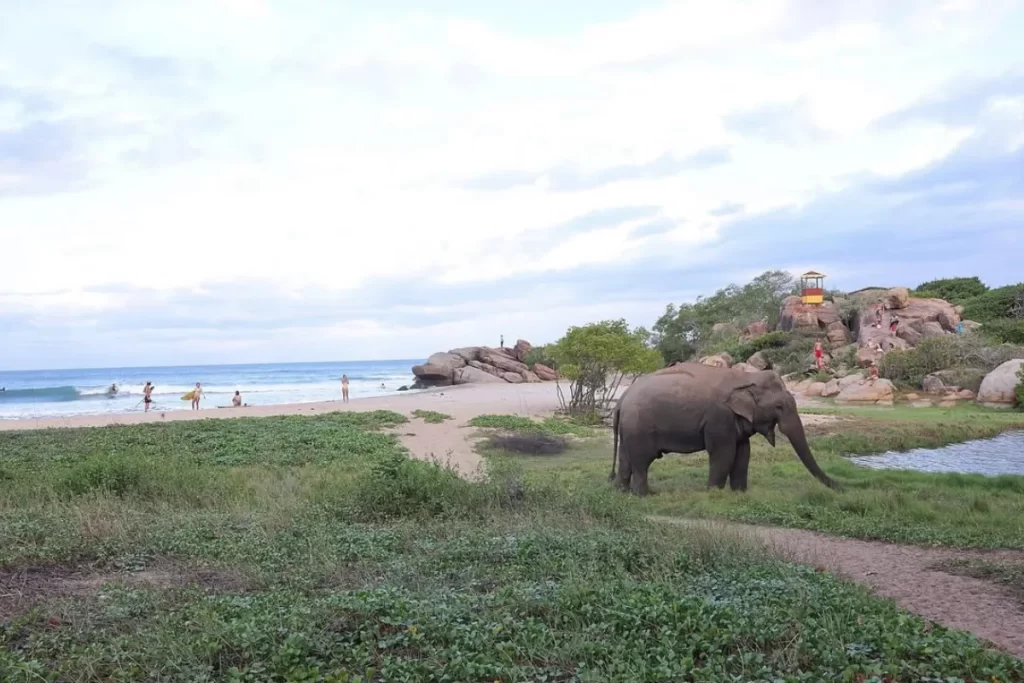
Elephant Rock is a rocky outcrop about 4 to 5 km south of town, and the 5 to 10 minute scramble to the top rewards you with a genuinely great view over the coastline and the surfers below, especially around sunset. A safety note worth taking seriously: crocodiles live in the adjacent lagoon, and wild elephants are known to pass through the area around dusk. The access trail also runs through deep sand, so a tuk-tuk or scooter handles it far better than a standard car.
The area around Elephant Rock is also where the Pottuvil Lagoon meets the land, and crocodiles are present in the water below. Wild elephants roam near this stretch of the road, particularly as the light fades. Visitors should stay aware of their surroundings, keep a safe distance from wildlife, and not attempt the climb at night.
Take a Pottuvil Lagoon Boat Tour
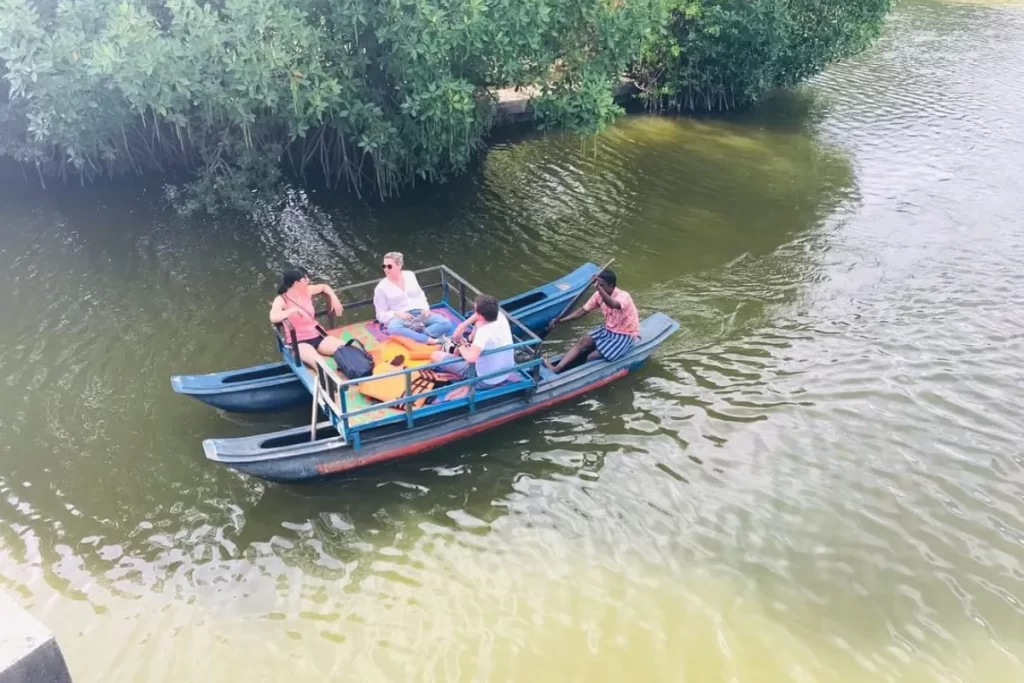
About 2 km north of town, a quiet two-hour paddleboat tour winds through mangrove swamps where you can spot wild elephants, monitor lizards, crocodiles, water buffalo, and plenty of waterbirds. The Urani Eco Lagoon Safari charges around $25, per person, which makes it one of the better value excursions in the area for what you see.
Discover Ancient History
Most visitors come to Arugam Bay for the surf and stay for the sunsets, but the area holds historical depth that often goes unexplored.
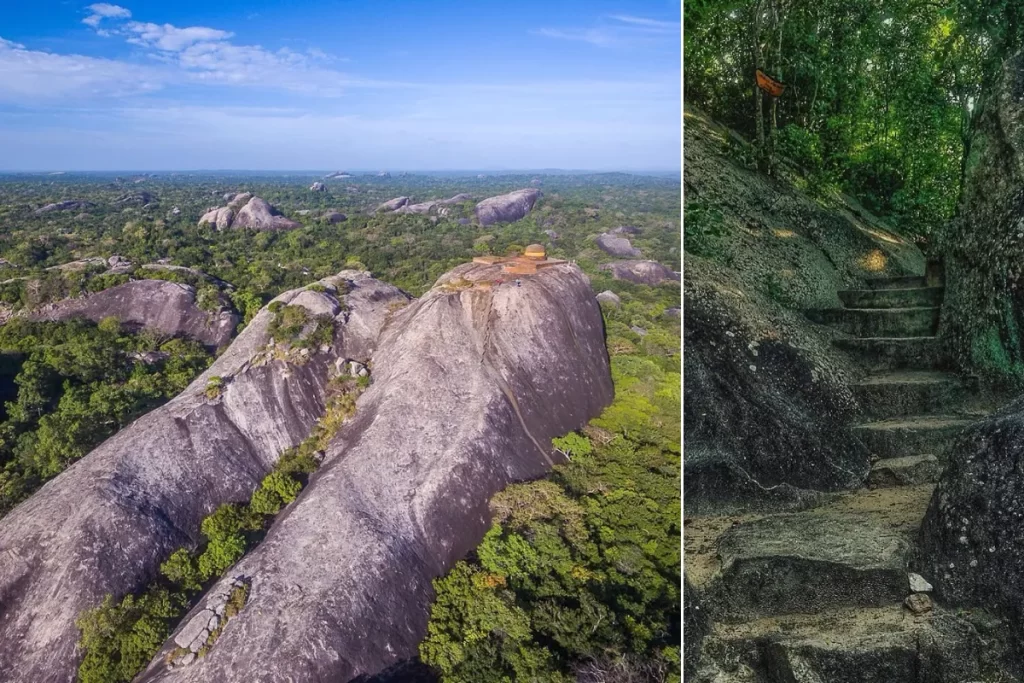
This part of the coast has history going back well over two thousand years. Kudumbigala Monastery, an ancient forest rock monastery said to date to around 246 BC, sits roughly 30 km south of town inside the Kumana jungle, and the climb to the top reveals an old stupa and sweeping views over the surrounding canopy.
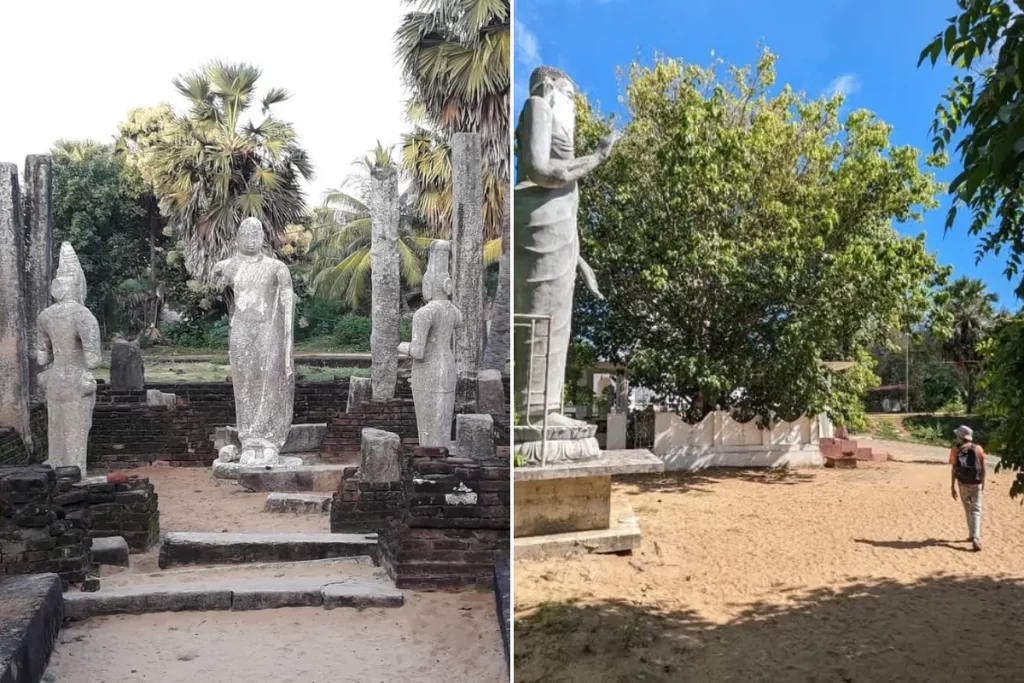
Muhudu Maha Viharaya is an ancient seaside Buddhist temple tucked among the Pottuvil sand dunes, with a large white stupa and stone Buddha statues, traditionally linked to King Kavan Tissa. Further inland near Lahugala, Magul Maha Viharaya is a sprawling ancient temple complex with lotus ponds and stone ruins, also associated with the Kavantissa era. If you have extra time, Okanda Shrine, about 20 km south, is a sacred seaside site marking the start of the Paada Yaathra pilgrimage, and nearby Lahugala Kitulana National Park is a quiet, uncrowded spot for watching wild elephant herds around its reservoirs.
Join a Morning Yoga Class
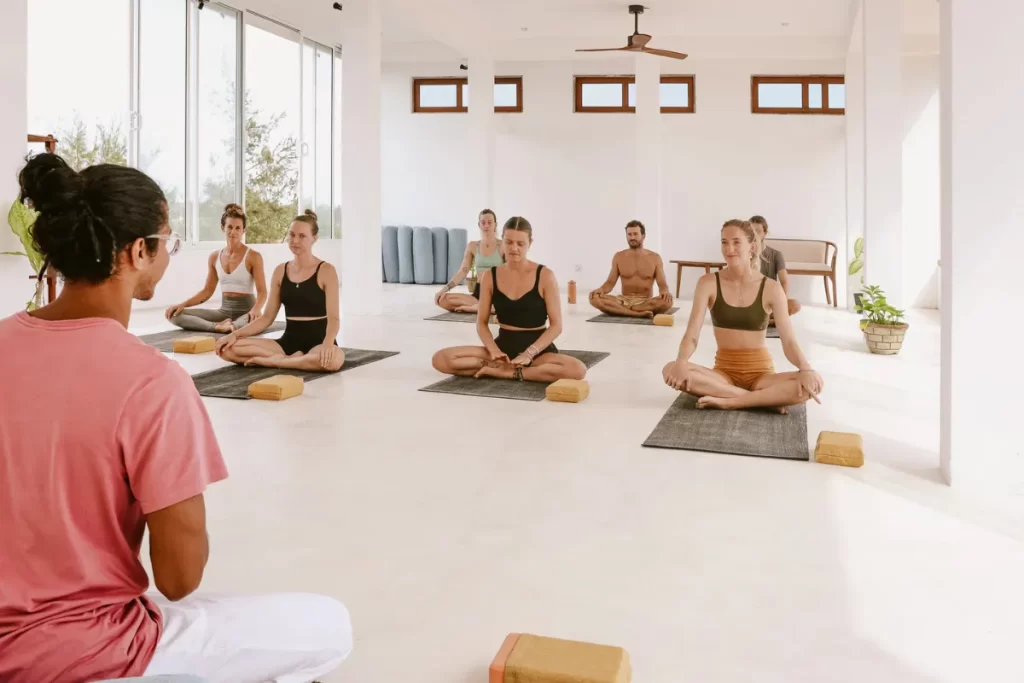
Daily yoga classes run at a few spots around town, including Yoga Shack, Stay Golden Hotel, and Hideaway Resort, and they’re a genuinely good way to start the day before the sun gets properly hot, whether or not you’re surfing that morning.
The Complete Arugam Bay Surf Guide
Arugam Bay is world-famous for its long, right-hand point breaks over sandy bottoms, with some rides stretching from 200 metres up to a full 500 metres on the right day.
Best Breaks for Beginners
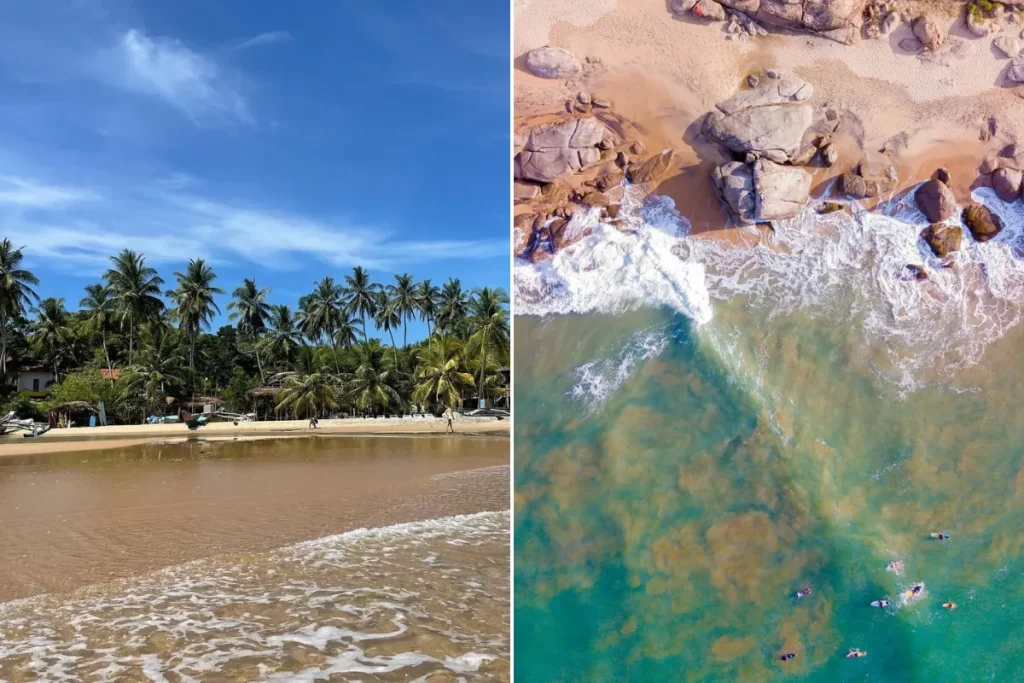
- Baby Point: Inside the main bay, right in front of town, with gentle, slow-rolling waves over a soft sandy seabed
- Elephant Rock: A gentle takeoff with playful, forgiving walls
- Panama: Mellow and uncrowded, a good forgiving break if you want fewer people around you
Best Breaks for Intermediate Surfers
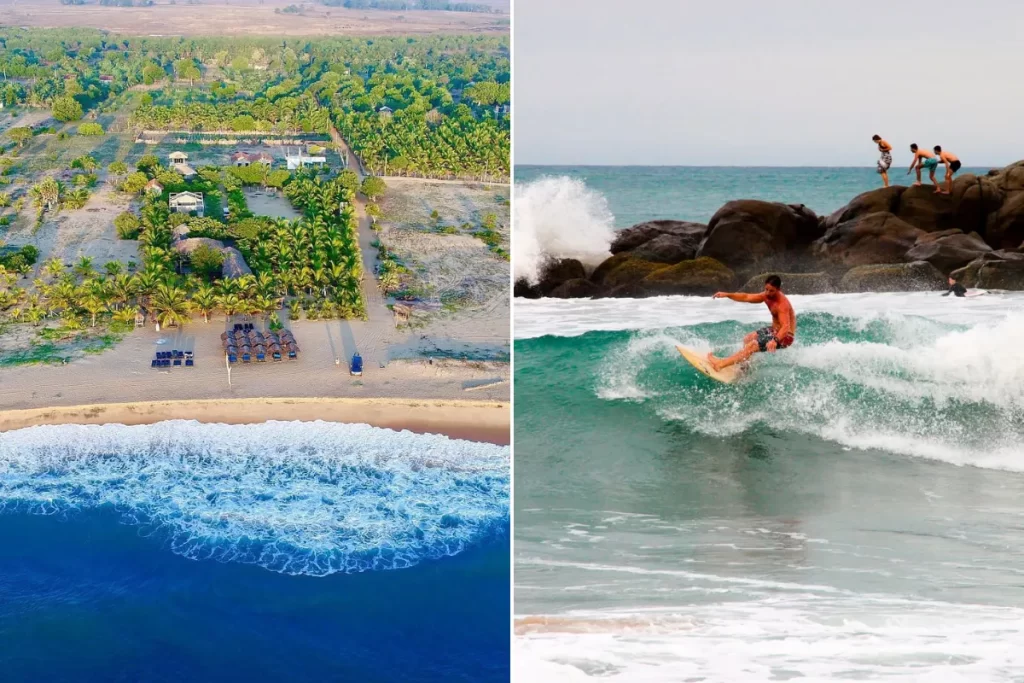
- Whiskey Point: About 25 minutes north of town, with consistent right-hand waves and good push
- Peanut Farm: South of town, a fun A-frame with a right-hand point break
- Lighthouse Beach: Around 45 minutes north, exposed and quiet, genuinely off the beaten path
Best Breaks for Advanced Surfers
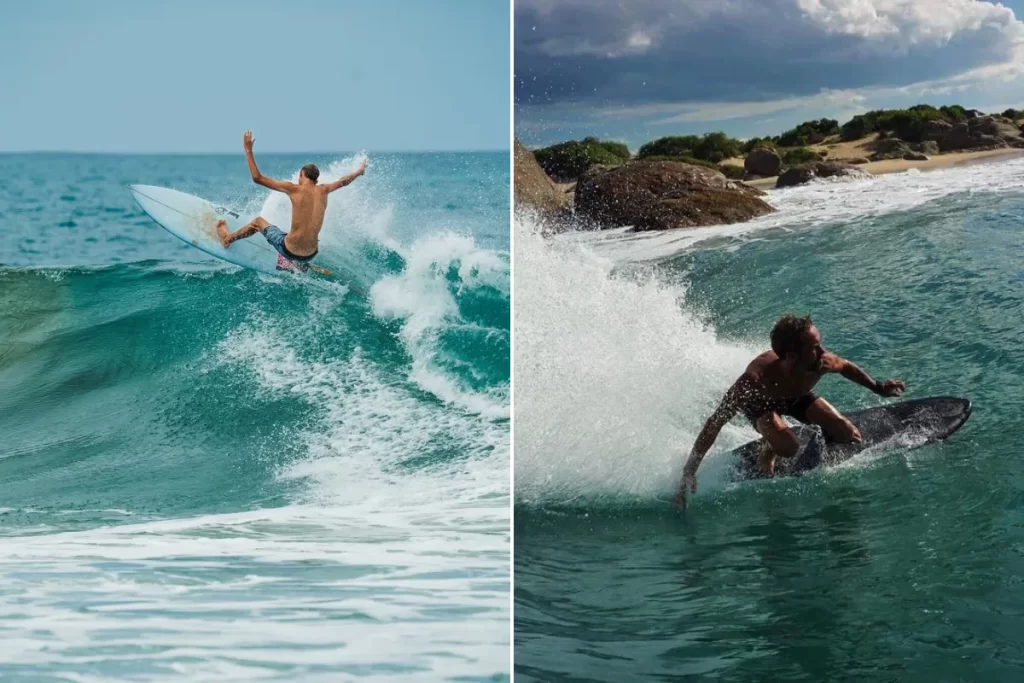
- Main Point: At the southern headland of the bay, a fast, powerful, technical 500m right-hand point break over reef and sand
- Pottuvil Point: A long, high-powered right-hand wall
- Okanda: Further south near the national park boundary, a heavy, remote wave for experienced surfers only
Rentals and Lessons
Board hire typically runs between LKR 1,500 and LKR 2,500 per day (around $5 to $8 USD)., which is cheap enough that there’s little reason not to try a different board if the one you’ve got isn’t working for the conditions. Surf lessons at local surf shops generally cost somewhere between LKR 7,500 and LKR 10,000 per session (approximately $25 to $33 USD), including an instructor, board, and rash guard. Booking a lesson in advance through an international platform will usually cost more, sometimes significantly so, than just walking up to a surf shop on the beach once you’ve arrived.
Where to Eat in Arugam Bay
The food scene in Arugam Bay punches well above its size. The town has attracted enough international visitors over the years to develop a dining culture that spans everything from Sri Lankan rice and curry to wood-fired pizza and European-style brunch spots, all within walking distance of each other.
Cafes and Brunch
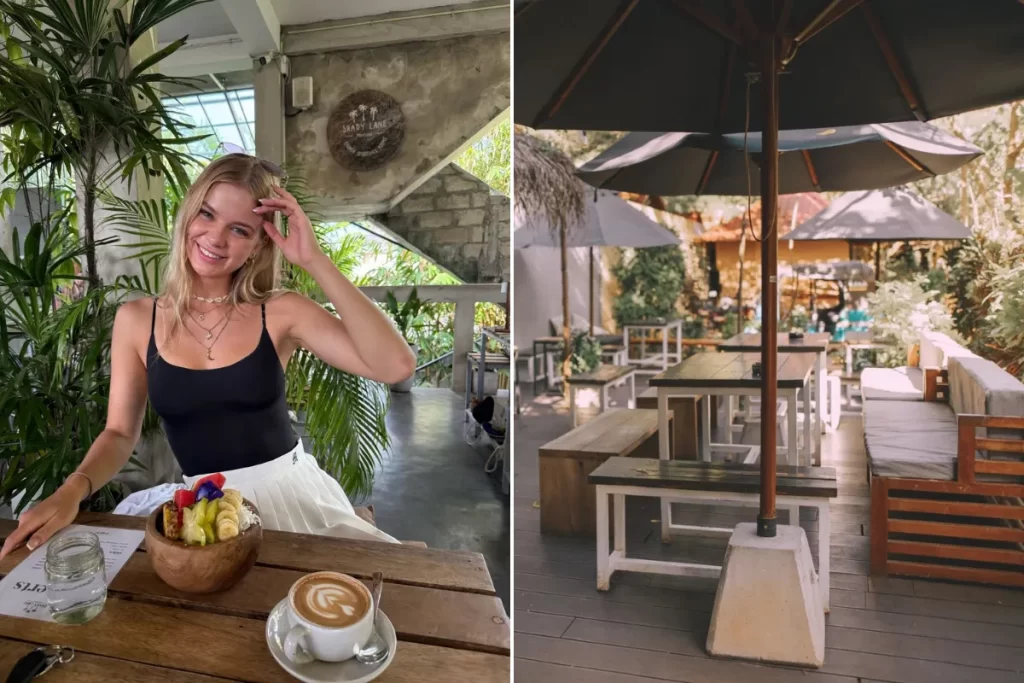
Shady Lane and Kaffi are the go-to spots for a proper brunch, thick gluten-free banana pancakes, smoothie bowls, and decent espresso, which isn’t always a given on this coast
Local and Budget Dining
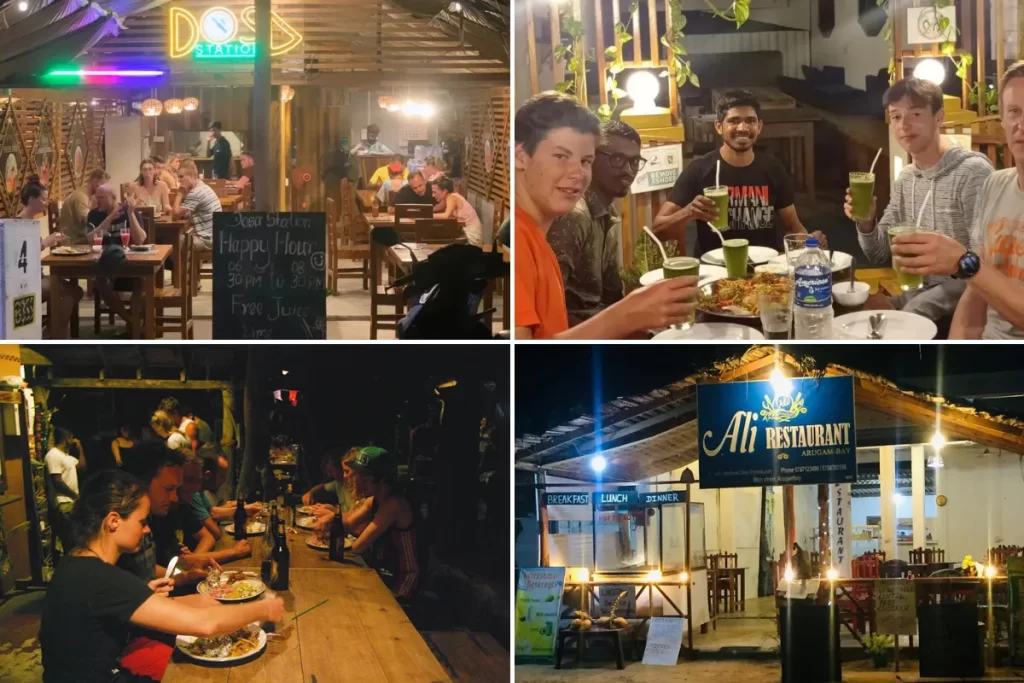
- Dosa Station delivers exactly what it promises: South Indian-style dosas at prices that make it a natural choice for budget-conscious travellers and those craving something authentically local.
- Moon Garden Restaurant and Beach Hut both serve a mix of Sri Lankan and Western dishes at accessible prices and are consistent picks among longer-stay visitors.
- Ali Restaurant is a long-standing local favourite, known for straightforward Sri Lankan food done well.
Evening Dining and Drinks
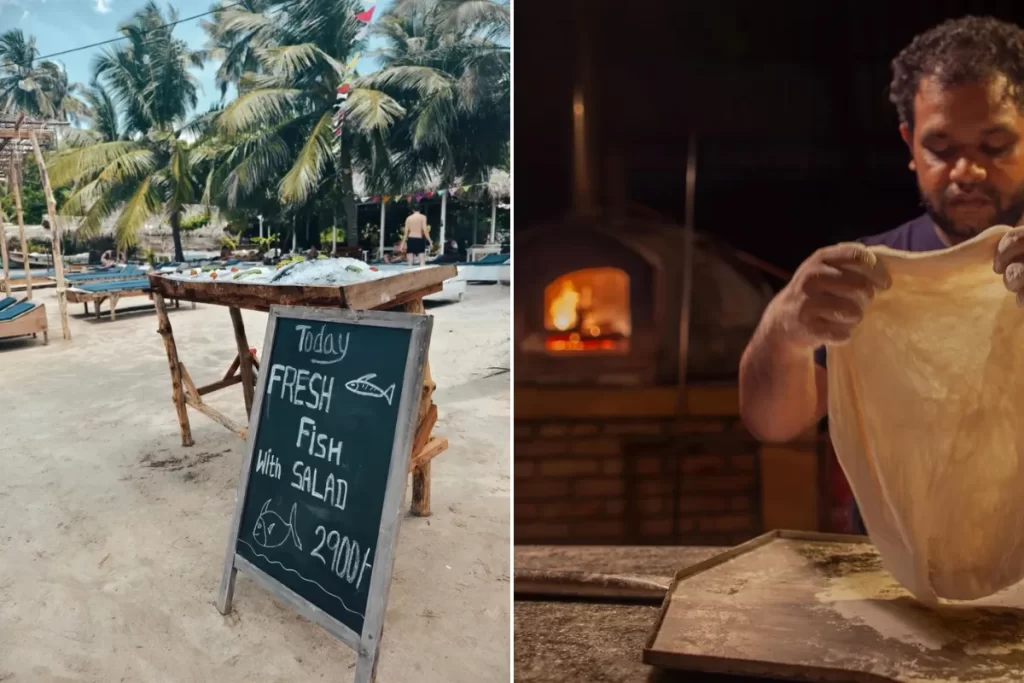
- The Hangout is one of the most popular spots after dark, serving food alongside drinks in a social setting that brings together most of the nationalities currently staying in the bay.
- Hideaway offers a more relaxed dinner setting with a menu that leans toward fresh seafood and international dishes.
- Pizza Hub fills a reliable niche for those evenings when only pizza will do.
Costs in Arugam Bay tend to run higher than equivalent establishments in Colombo or the south coast, particularly for imported goods and international-style food. Visitors on a tight budget will find better value eating at local spots in Pottuvil town rather than on the main beach strip.
Where to Stay in Arugam Bay
Accommodation in Arugam Bay ranges from no-frills surf hostels to boutique beachfront stays, and the experience varies considerably between them. Booking ahead is strongly recommended for July and August. Outside of those peak months, walk-in availability is generally easier to find.
Budget and Backpacker
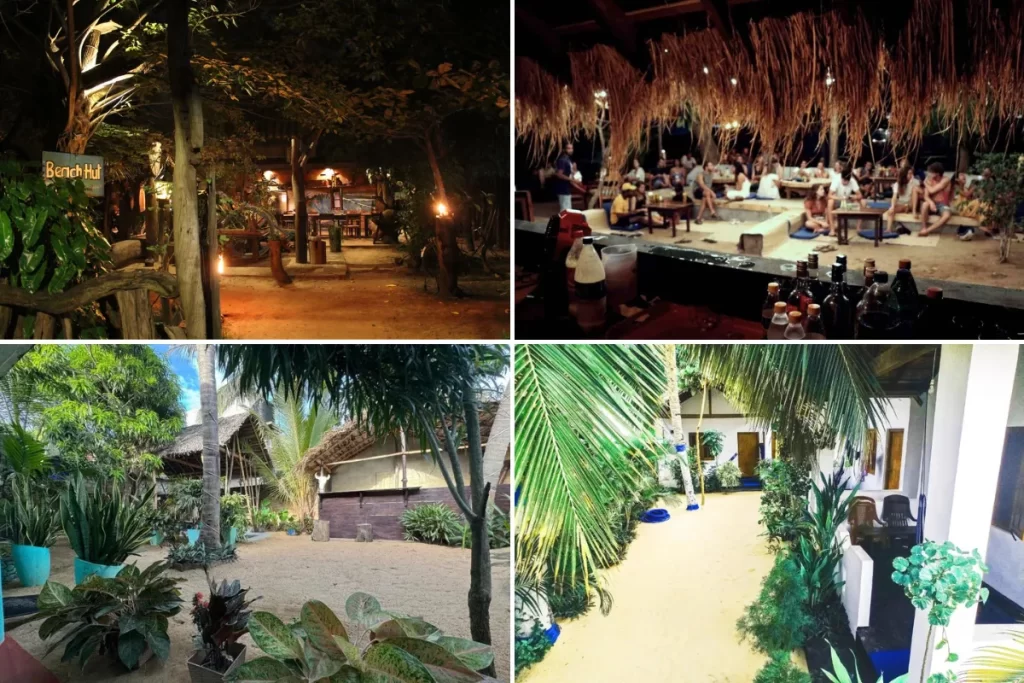
- Beach Hut, rustic rooms right near the sand, roughly $10 – $12
- Waypoint Hostel, simple air-conditioned dorms with lockers, directly across from Baby Point
- Moonlight Surf Hostel and Lucky Bay Guesthouse, both popular budget stays with friendly hosts and surf instruction on site
Mid-Range
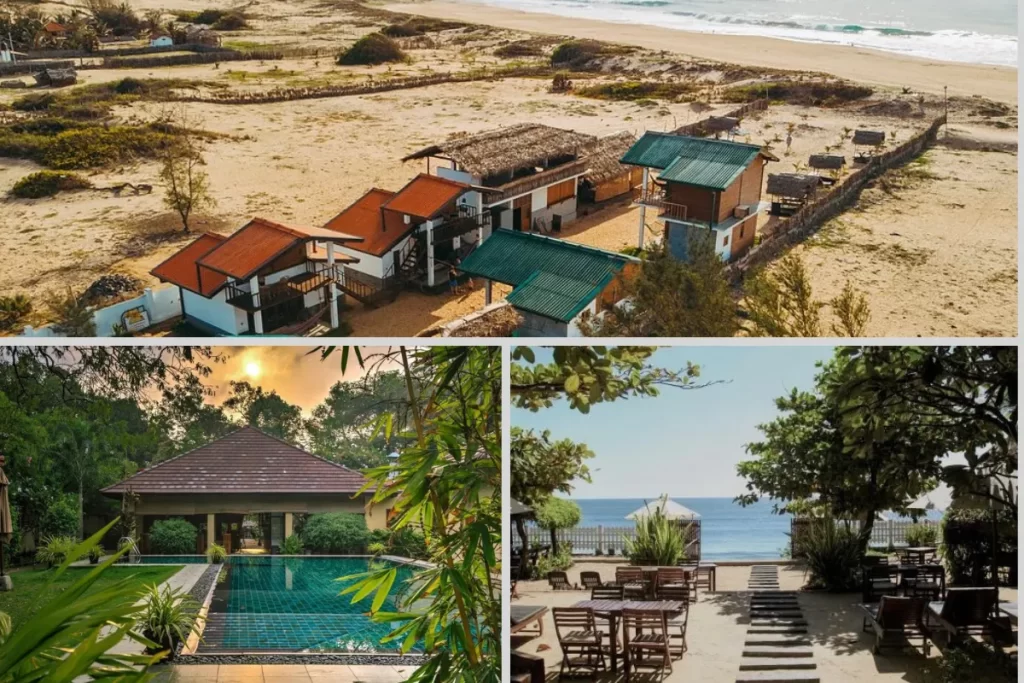
- Bay Vista, central, with rooftop yoga and ocean views
- The Spice Trail, a boutique-feeling stay with an outdoor pool, garden cabanas, and curated local tours
- Stay Golden, cozy and eco-friendly
Boutique and Luxury
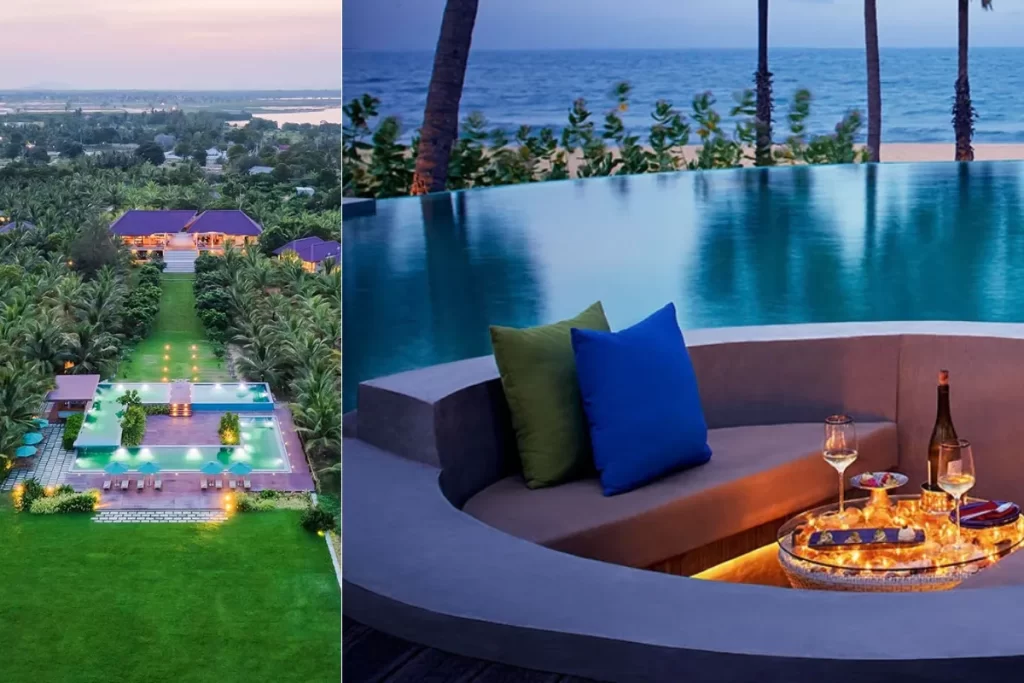
Jetwing Surf and Aprota Villas Whiskey Point are the area’s premium beachside picks, both with cabana-style rooms and larger swimming pools if you want a proper break from the dust and heat after a few days of surfing.
Rates shift significantly between peak season and shoulder months, and many properties price dynamically. Always confirm current rates directly with the property.
Essential Travel Tips for Arugam Bay
Prices on Arugam Bay’s main tourist strip can run high for what it is, think $30 and up for a private room, $10 burgers, and $12 cocktails. A genuinely useful budget hack is to stay and eat in neighbouring Pottuvil, just five minutes north, where local food and rooms cost a fraction of the Arugam Bay price. Daily expenses in Pottuvil typically run $25 to $30 a day, against $50 to $70 for the same standard of trip based directly in Arugam Bay.
Cash is still king here. Small beach shacks, tuk-tuks, and surf stalls rarely take international cards, so carry enough rupees for the day. ATMs are available in Pottuvil if you run short.
Wild elephants genuinely do pass through the wider area, including roads and trails that look fully residential, so stay alert at dusk and keep a respectful distance if you do see one.
Frequently Asked Questions
Is Arugam Bay worth visiting?
Yes, especially if surfing or a laid-back beach town with easy access to wildlife is what you’re after. It’s less polished than some south coast towns, but that’s part of the appeal for most visitors who come back year after year.
What is Arugam Bay famous for?
It’s best known for its long, consistent right-hand point breaks, considered some of the best in Asia, along with its laid-back surf town atmosphere and easy access to Kumana National Park.
When is the best time to surf in Arugam Bay?
May through September or October is the main season, with the cleanest swells generally arriving in July and August. From November to January, the monsoon brings rough seas and many businesses close for the off-season.
How do I get to Arugam Bay?
Most travelers come via Ella, about 2.5 to 3 hours away by tuk-tuk or car. From Colombo, it’s roughly 320 to 330 km and takes 6.5 to 7.5 hours by private vehicle. There’s no direct rail link, the nearest stations are in Ella and Batticaloa.
How much does a surf lesson cost in Arugam Bay?
A 1.5-hour lesson with a local surf shop, including instructor, board, and rash guard, typically runs 7,500 to 10,000 LKR, roughly $25 to $33. Board rental alone is usually 1,500 to 2,500 LKR a day.
Is Arugam Bay good for beginner surfers?
Yes. Baby Point, Elephant Rock, and Panama are all gentle, forgiving breaks well suited to beginners, while more experienced surfers have plenty of faster, more technical options nearby.
How much does it cost to visit Kumana National Park?
Foreign adult entry runs around y $35 to $43 USD per adult. Most visitors book a jeep safari through a local operator, and some of those tour prices bundle the entrance fee into the total.
Is Arugam Bay expensive?
The main tourist strip can be pricier than expected for a small village, with private rooms from around $30 and $10 burgers. Staying in nearby Pottuvil instead is a genuine way to cut daily costs significantly.
Can beginners surf year round in Arugam Bay?
Not really. Outside the May to October season, rough seas and closed surf shops make it a difficult time to learn, so the main season is worth planning around if surfing is the priority.
Is Arugam Bay safe?
Generally yes. The main safety considerations are practical: wild elephants and crocodiles are present in the wider area, especially around Elephant Rock and the lagoons, so take the posted safety notes seriously rather than treating them as decoration.
What else is there to do besides surfing?
Plenty. A Kumana National Park safari, a Pottuvil Lagoon boat tour, a sunset hike up Elephant Rock, several ancient Buddhist temple sites, and daily yoga classes all fill out a trip well beyond just the waves.
Further Readings
- Can You Swim at Arugam Bay if You Don’t Surf?
- Best Beaches to Visit in Sri Lanka
- The Ultimate Sri Lanka Wildlife Guide: Safaris, Parks & The Big 5
- Hiriketiya Beach Travel Guide: Best Surf Spots, Cafes and Things to Do
- Mirissa Travel Guide: Whale Watching and Beach Hopping in Sri Lanka
- Solo Travel in Sri Lanka: Best Places, Safety, and Tips

1 Comment