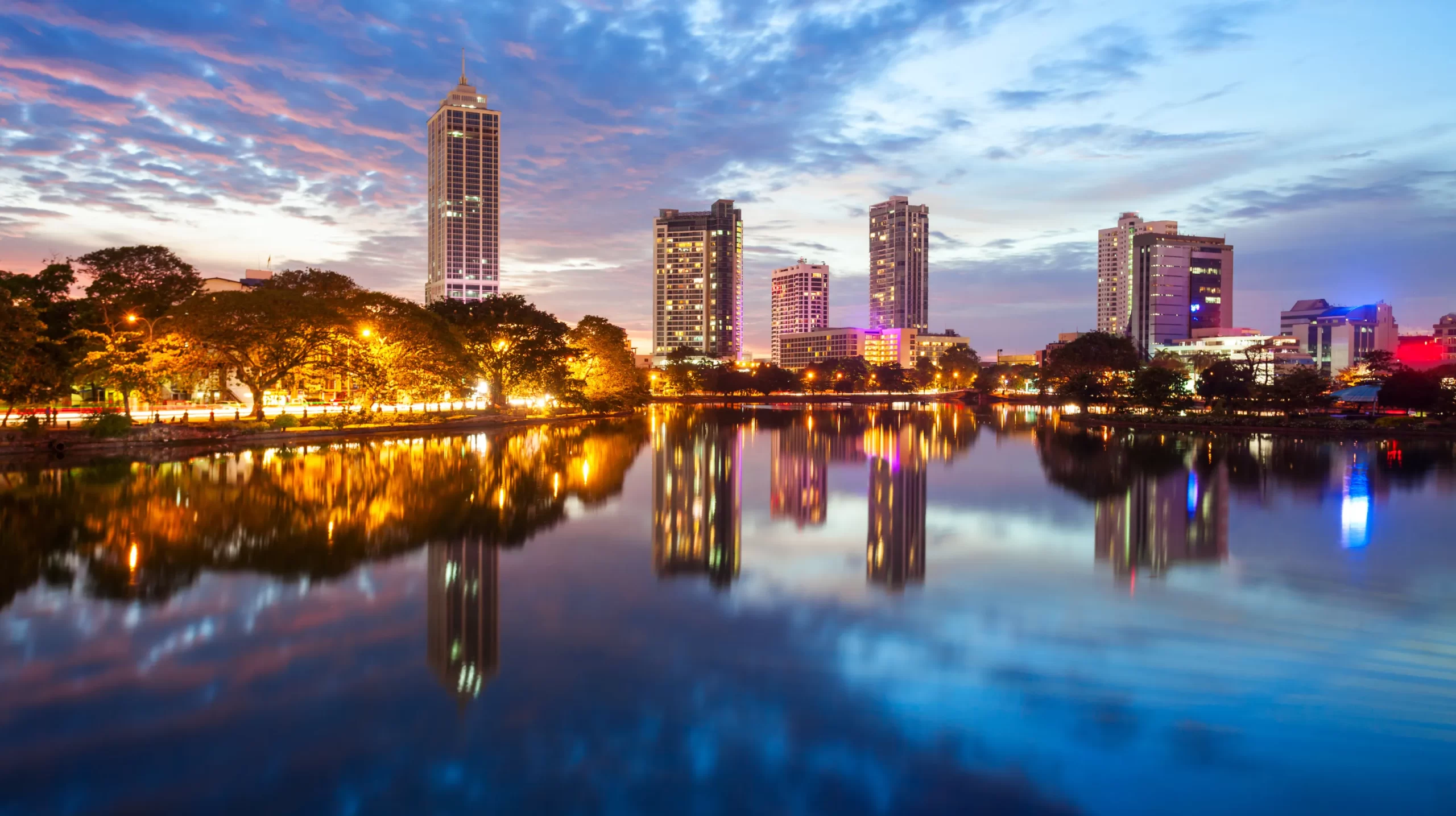
Kandy was the last royal capital of the Sinhalese kingdom before the British took it in 1815, and it’s the one place in Sri Lanka where you feel that history pressing right up against ordinary city life. It’s the country’s second-largest city, home to around 115,000 people, sitting in a valley in the central highlands surrounded by tea plantations and rainforest, with a man-made lake at its center that King Sri Wickrama Rajasinha built in 1807. UNESCO listed the whole city as a World Heritage Site in 1988, largely because Kandy kept traditional arts, drumming, and religious customs alive through the colonial period when they were suppressed almost everywhere else on the island.
This guide keeps things simple. You’ll learn when to visit, what to see, where to stay, and how to move around without stress. Think of it as advice from a calm travel companion who knows the shortcuts.
Why Visit Kandy?
You come to Kandy for the Temple of the Sacred Tooth Relic, Sri Lanka’s most important Buddhist site, and for the fact that the city still runs on its old rhythms: morning pooja ceremonies, a lake walk at dusk, drumming carrying across the water. It’s also the natural base for the hill country, tea estates, mountain hikes, and the Cultural Triangle are all within a few hours, and the train ride up from Colombo is one of the better ways to start a Sri Lanka trip.
Where Is Kandy & How to Get There
Kandy sits 75 to 95 km northeast of Colombo, about 3 to 3.5 hours by road, in the central highlands at the gateway to the hill country.
Getting to Kandy
| Method | Time | Cost |
|---|---|---|
| Train (Colombo Fort to Kandy) | ~2.5 hours | Under $2 USD in unreserved seats |
| Taxi / private car | 3 to 3.5 hours | ~$45 USD (~15,000 LKR) |
| Bus | Varies with traffic | Low fares, frequent public and AC minibus departures |
If you’re continuing on from Kandy, the Kandy to Ella train is one of the world’s most scenic rail journeys, winding through tea estates, pine forest, and mountain bridges. It runs about 4 hours to Nuwara Eliya (Nanu Oya station) and 7 to 10 hours all the way to Ella. Reserved tickets release 30 days ahead, online or at the station: 1st class (~$10 USD/3,000 LKR) has air conditioning and sealed windows, 2nd class (~$2 USD/700 LKR) is the one most people recommend since the windows actually open, and 3rd class runs about $1 USD (400 LKR).
Getting Around Town
The central sights, Kandy Lake, the markets, the main temple, are all walkable. Tuk-tuks are everywhere, and drivers will frequently try to upsell you on tours or spice garden detours, using PickMe or Uber gets you a fixed, noticeably lower fare instead. Scooters can be rented locally for around 1,500 LKR a day if you want to cover more ground yourself.
Best Time to Visit Kandy
Kandy’s weather is gentler than the lowlands, but rain still plays a role.
Best Months
The dry season runs December/January through April, with temperatures sitting comfortably between 20°C and 30°C and mostly clear skies, ideal for walking, sightseeing, and hiking.
Festival Season
The Esala Perahera is the big one, held over 10 days in July or August during the Sinhalese month of Esala. Nightly processions feature over 100 elaborately decorated elephants, fire-eaters, acrobats, and more than 1,000 Kandyan dancers and drummers. It’s a genuine spectacle, but accommodation sells out months in advance, book well ahead if you want to be in town for it.
Months to Be Careful With
The southwest monsoon brings rain from April/May through September, and the northeast monsoon brings heavier downpours in October and November. September tends to offer a reliable window of decent weather between the two.
Top Things to Do in Kandy
The sights cluster close together, so you don’t need to plan a tight schedule to see most of them in a day or two.
Temple of the Sacred Tooth Relic
This is Sri Lanka’s most sacred Buddhist site, housing what’s believed to be the left canine tooth relic of the Buddha, sealed inside seven nested golden caskets. Entry costs 1,500 to 2,000 LKR (roughly $5 to $6 USD, 1,000 LKR for SAARC nationals), and ticket price includes entry to the adjacent International Buddhist Museum. Dress modestly, shoulders and knees covered, shoes off before entering, and go for one of the daily pooja ceremonies at 5:30 am, 9:30 am, or 6:30 pm, when drumming and traditional trumpets accompany the flower offerings. This is a place of devotion, not a photo stop, move slowly and keep that in mind.
Walk Around Kandy Lake
Built in 1807 by King Sri Wickrama Rajasinha, the lake has a 3.2 km paved perimeter path, the historic Cloud Wall, and a central island that once served as a royal harem. It’s free to walk, and early morning or late afternoon gives the best light and the clearest view of daily life around it.
Royal Botanical Gardens, Peradeniya
About 5 km (15 minutes) southwest of the city, these 147-acre gardens hold over 4,000 plant species, a Royal Palm avenue, giant Javan fig trees, an orchid house, a river suspension bridge, and thousands of fruit bats hanging in the canopy during the day. Open 7:30 am to 6:00 pm, entry runs 3,000 to 3,540 LKR (roughly $9 to $12 USD). Getting there costs next to nothing, local Bus 644 runs for about 20 LKR, or a tuk-tuk for around 400 LKR. Plan for about two hours, bring water, there’s plenty of shade.
Kandy Viewpoints
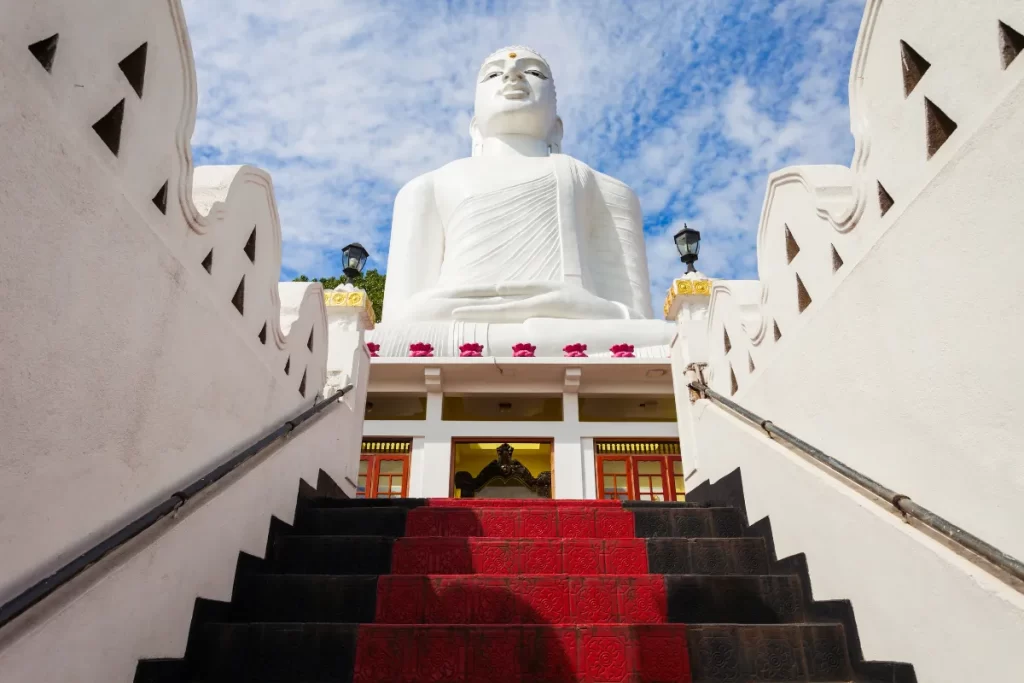
The Big Buddha at Bahirawakanda Vihara is a 25 to 27-meter white statue on a hillside above the city, with panoramic views from the rear staircases, entry runs 250 to 600 LKR (around $1 USD).
Arthur’s Seat and the Asgiri Maha Vihara Pirivena offer more scenic hillside viewpoints, the Asgiri Stupa has an illuminated dome covered in Buddhist ceiling paintings along with the city views. Go near sunset, but head down before it’s fully dark if you’re walking.
Cultural Dance Shows
Daily one-hour shows run at 5:00 or 5:30 pm at the Kandy Cultural Centre or Lake Club, with traditional Puja Natuma dances, plate spinning, acrobatics, and fire walking. Tickets run 1,250 to 2,000 LKR, a solid introduction if this is your only cultural show on the trip.
Udawattakele Forest Reserve
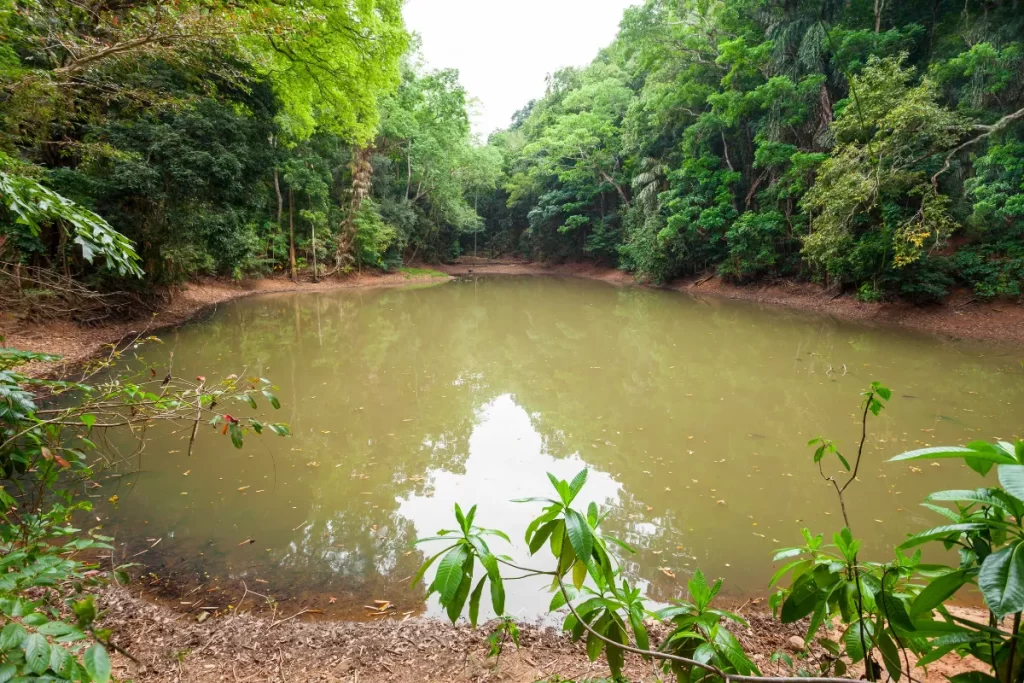
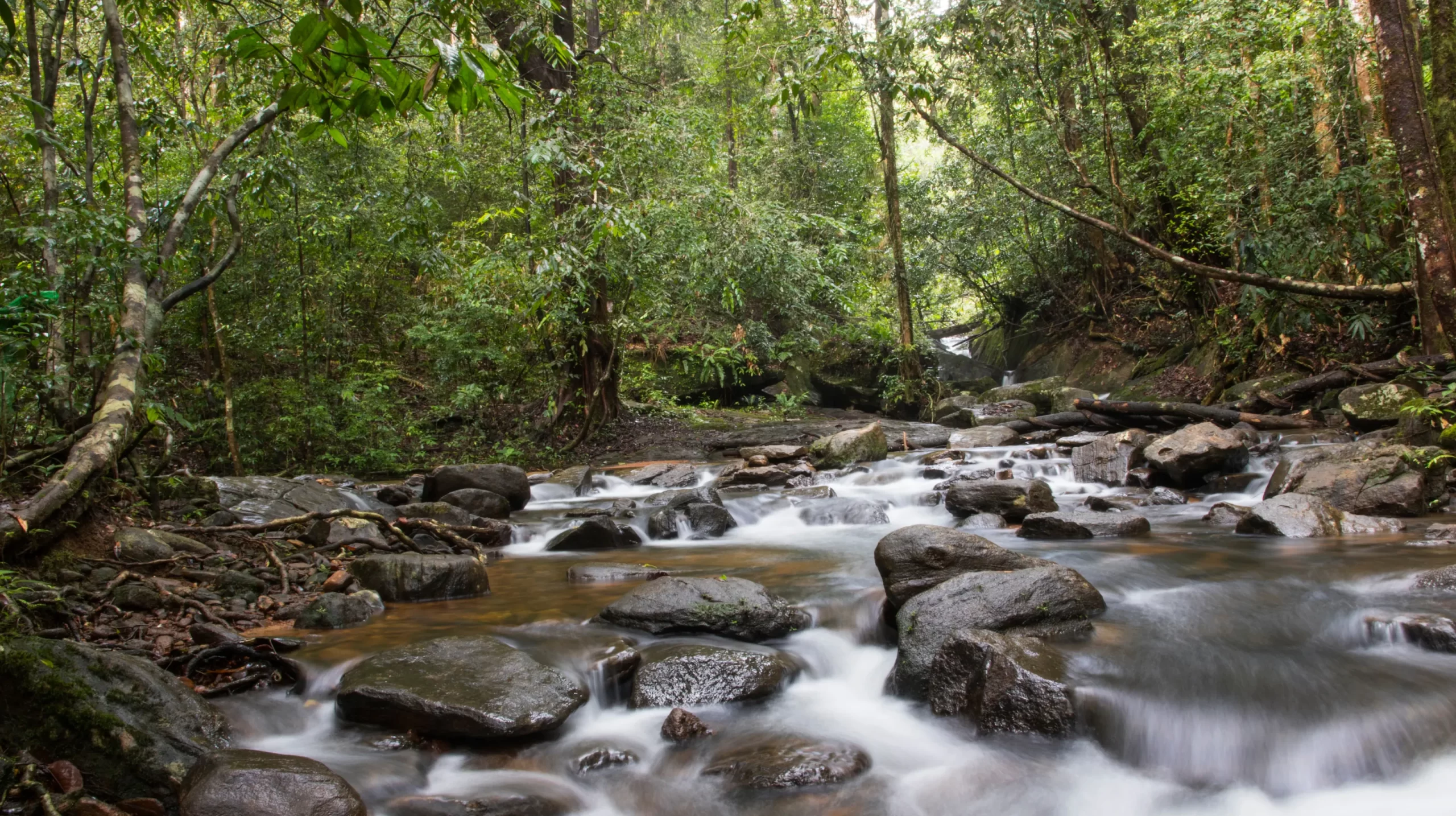
Tucked directly behind the Temple of the Tooth, this 104-hectare urban rainforest sanctuary is easy to miss but worth the detour, thick liana canopy vines, over 80 bird species, macaque monkeys, and historic caves once used by meditating monks. Entry costs 650 to 1,000 LKR (roughly $2.60 to $3 USD). If you’re visiting during the wetter months, DEET repellent is genuinely worth packing, the forest leeches are no joke.
Exploring Kandy Town
Kandy Central Market
Officially the Kandy Central Municipal Market, this historic building near the clock tower has two open courtyards packed with fresh tropical produce, spices, butchers, dried fish, and souvenir stalls, busy, colorful, and a good way to see daily trade up close. Walk through, take it in, move on when you’re ready.
Streets & Local Life
The small streets near the lake and temple hold bakeries, cafés, bookshops, and quiet corners, this is where Kandy feels least like a tourist stop. For boutique shopping, Luv SL (apparel and souvenirs) and Spa Ceylon (wellness products) are clustered in the downtown shopping complex.
Temples, Tea Estates & Mountain Hikes Beyond the City
Kandy’s surrounding hills hold a cluster of sights that rarely make the standard itinerary but reward the extra effort, three centuries-old temples, a working tea museum, and two serious hiking ranges.
The Three-Temple Loop
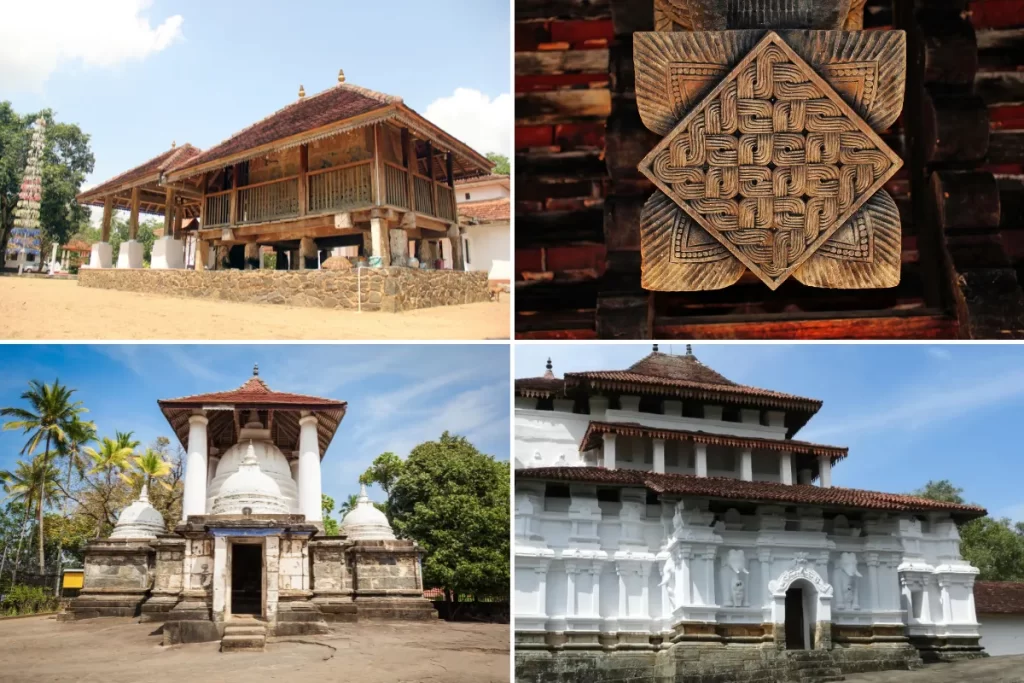
A half-day loop through the outer Gampola temples: Embekke Devalaya, built in the 14th century and famous for intricately carved wooden pillars depicting dancers, animals, and mythical figures; Gadaladeniya Viharaya, a 1344 AD stone temple built in a distinct South Indian architectural style on a cliff; and Lankathilaka Vihara, perched on a rock outcrop, blending Buddhist and Hindu shrines with ancient stone elephant carvings. Entry runs about 300 LKR per temple.
Ceylon Tea Museum
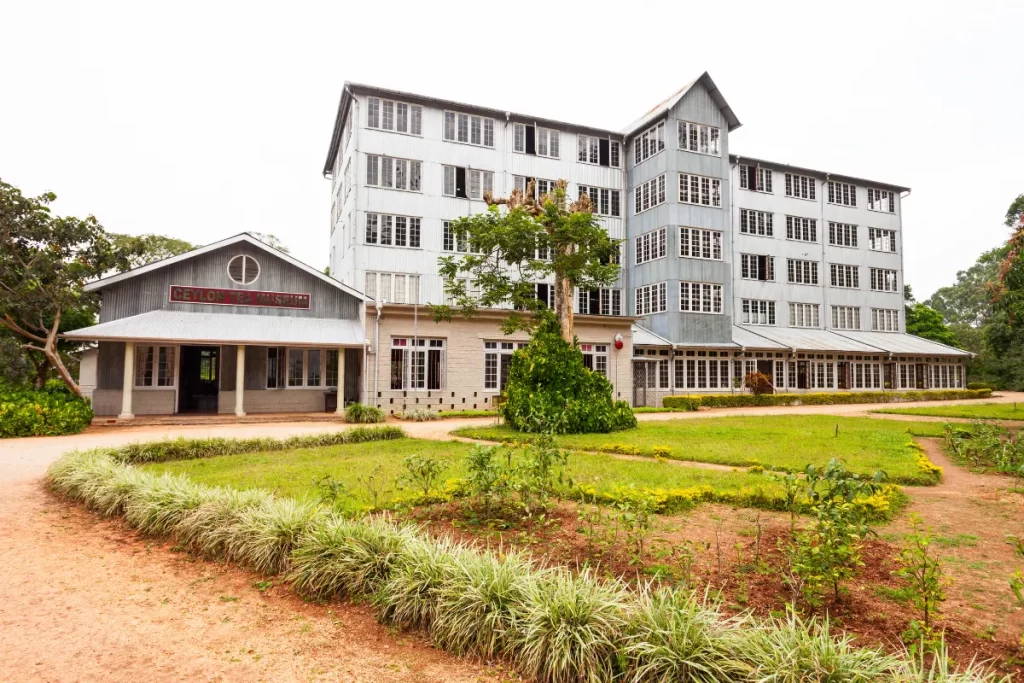
Housed in a restored 1925 tea factory at Hantane, 15 minutes from town, the museum displays 19th-century British machinery and records tied to James Taylor and Thomas Lipton. Entry costs 1,000 LKR, which includes a cup of tea, open Tuesday to Sunday, 8:30 am to 3:30 pm.
Hanthana & Knuckles Mountain Ranges
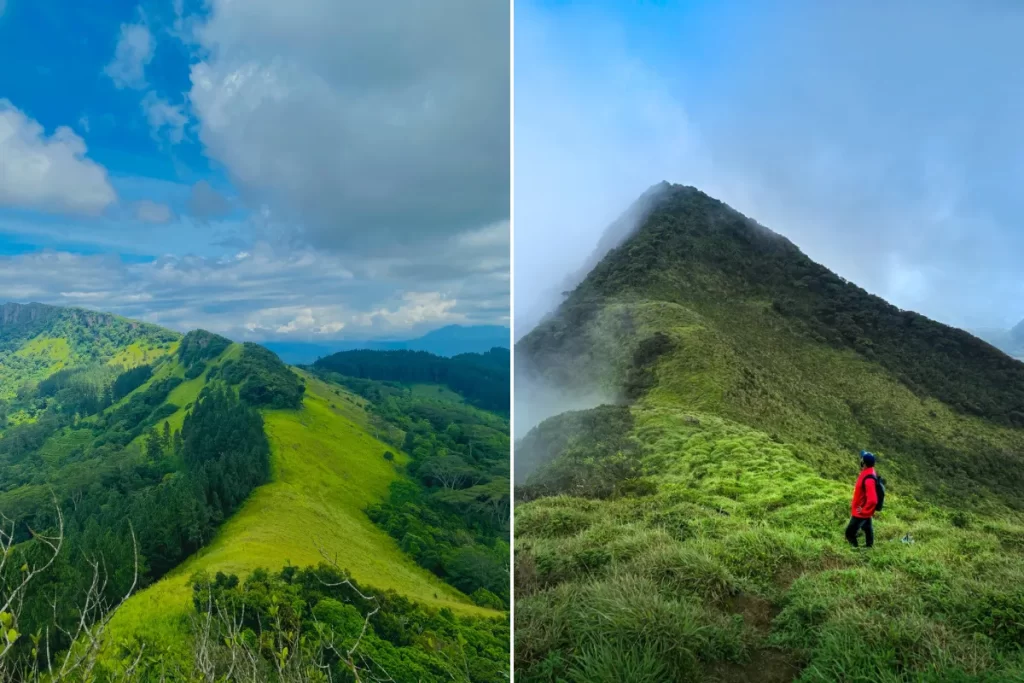
The Hanthana Mountain Range offers a moderate 4 km ridge hike (4 to 6 hours) through tea fields and across 7 peaks, the highest, Uura Kanda, reaches 3,800 ft, with wide views over the Kandy valley. For something bigger, the Knuckles Mountain Range is a UNESCO World Heritage cloud forest made up of 20 peaks, full-day guided treks like the Tea Trail Trek pass waterfalls and mist-shrouded valleys.
Day Trips from Kandy
Cultural Triangle
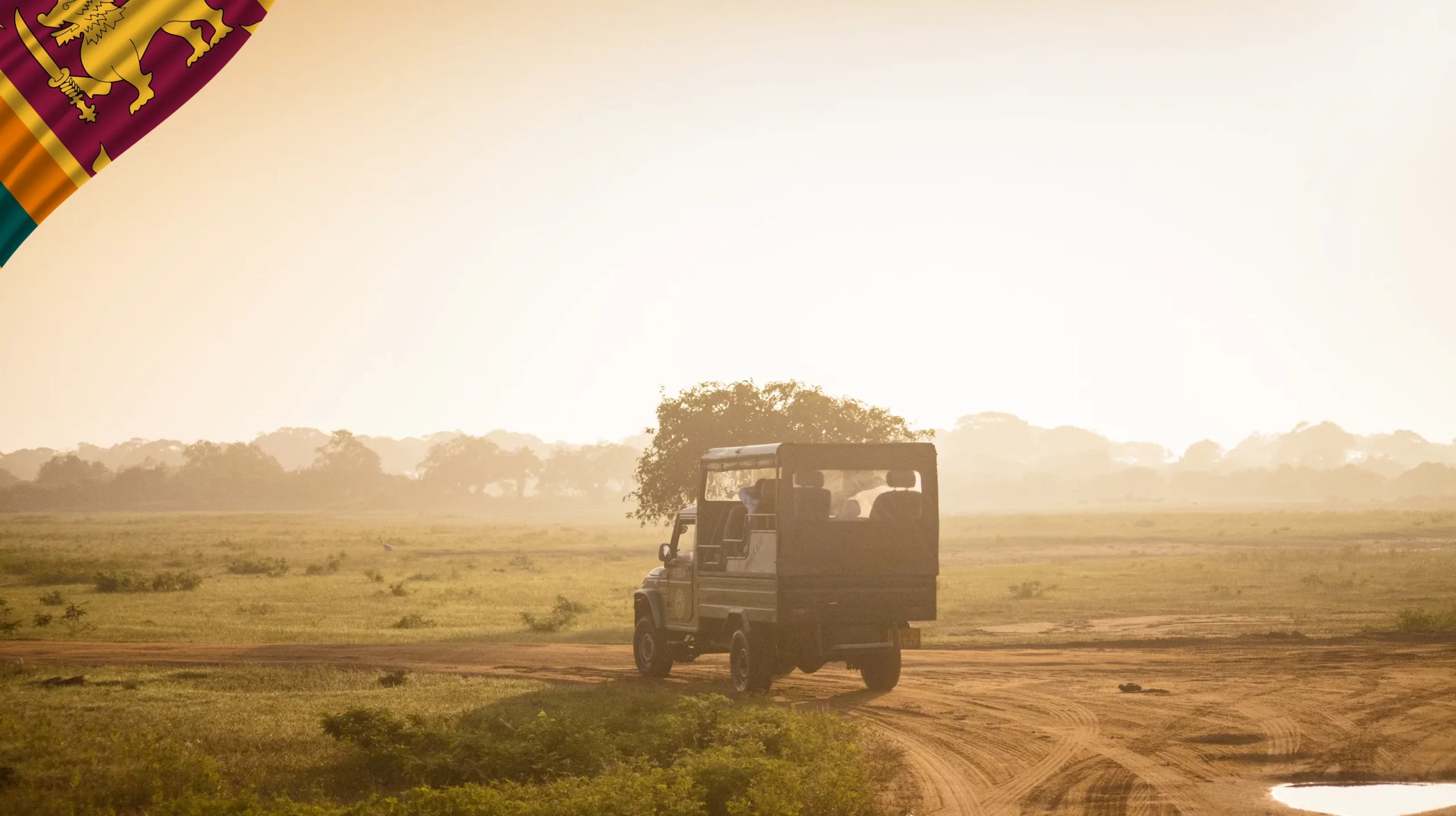
Sigiriya Rock Fortress and the Dambulla Cave Temples are a 2.5 to 3-hour drive north, both doable as a long day trip or an overnight if you want to take it slower. Minneriya National Park, nearby, runs afternoon 4×4 safaris to see wild elephant gatherings, worth timing your visit around if elephants are the priority.
Tea Country
Nuwara Eliya and the surrounding tea estates are an easy extension from Kandy, especially if you’re taking the scenic train onward rather than coming straight back.
Ambuluwawa Tower
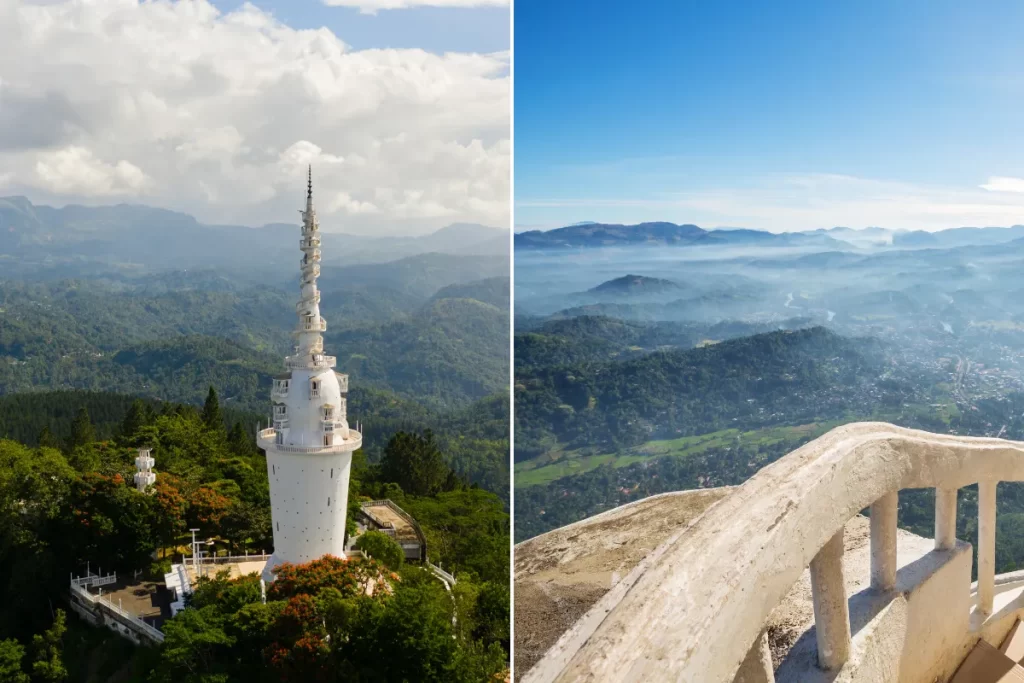
About 25 km south in Gampola, this narrow, futuristic spiral tower sits on a mountain peak and delivers 360-degree valley views from the top, not for anyone uneasy with tight stairwells, but a memorable stop if you’re already in the area for the Three-Temple Loop. Entry costs 200 LKR.
Where to Stay in Kandy
Options range from hillside hotels with lake views to simple city-center guesthouses, the right pick depends on whether you want views and quiet or walkable access to the temple and restaurants.
Best Areas to Stay in Kandy
The city center is best for easy access to the Temple of the Tooth, shops, and restaurants, it’s walkable, though traffic and noise are noticeable during the day. The hills around Kandy offer better views and cooler, quieter evenings, you’ll rely on tuk-tuks to get around, but the scenery makes up for it. If steep access roads are a concern, confirm it before booking a hillside stay.
Accommodation Types in Kandy (With Examples)
Guesthouses (good value, local feel)
Mahaweli View Inn offers simple rooms in peaceful surroundings, ideal if you want comfort without a high price tag.
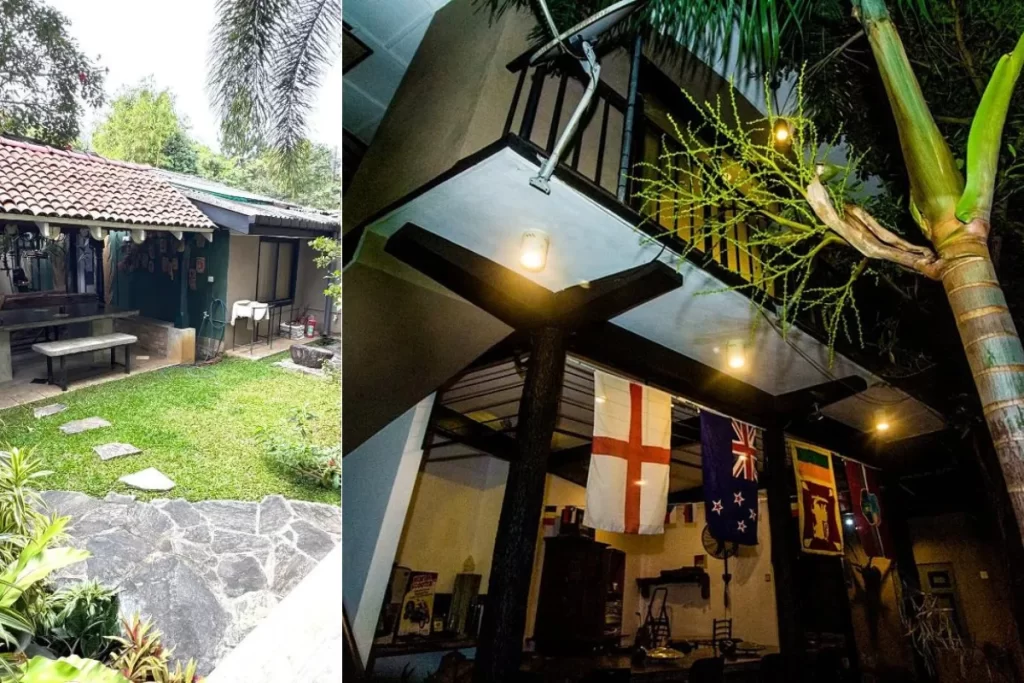
Settle Inn Tourist Lodge is a popular budget pick offering double rooms and private villas about 1 km from town, roughly $20 to $28 a night. Jaye’s Homestay, a peaceful hillside homestay away from city noise, is another good value option in this range.
Boutique & Mid-Range Hotels (roughly $25 to $120 a night)
Theva Residency offers scenic views and modern design, suited to couples and slower travelers.
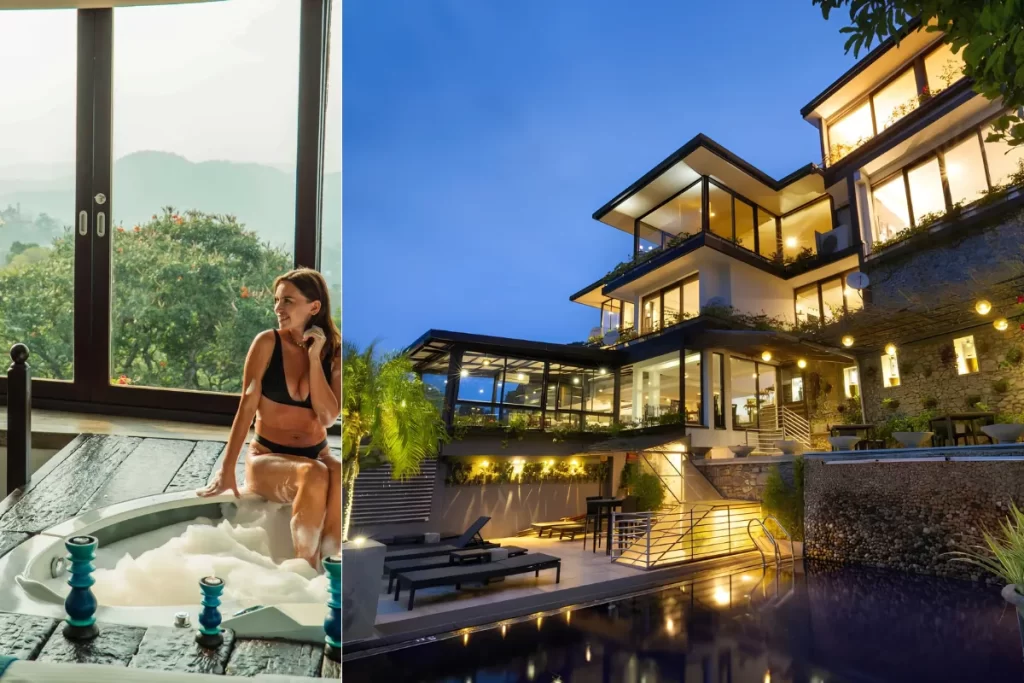
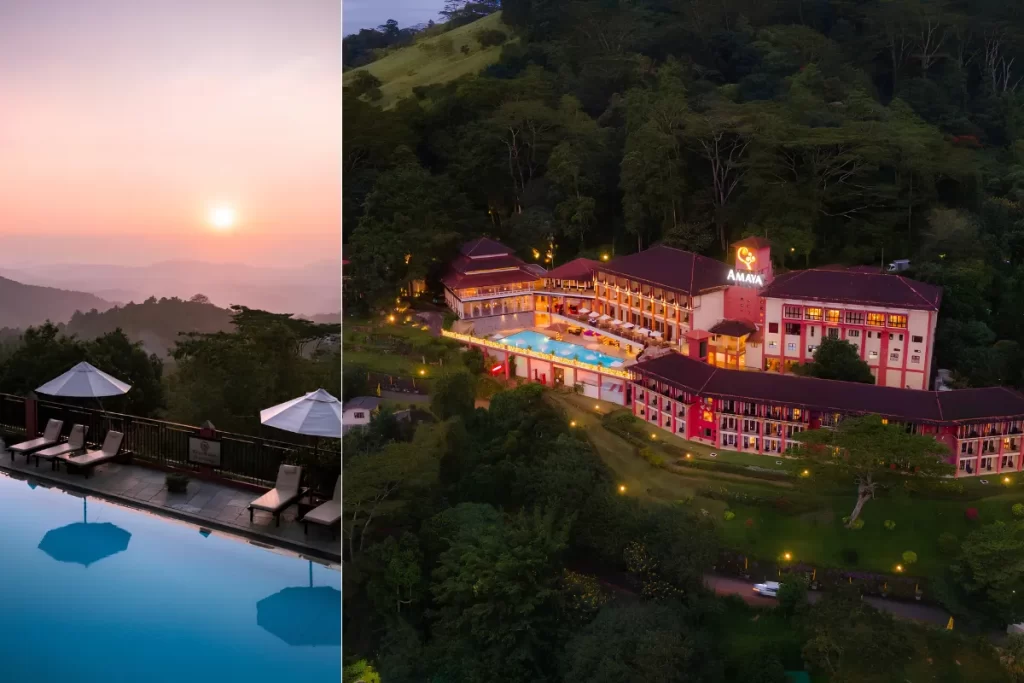
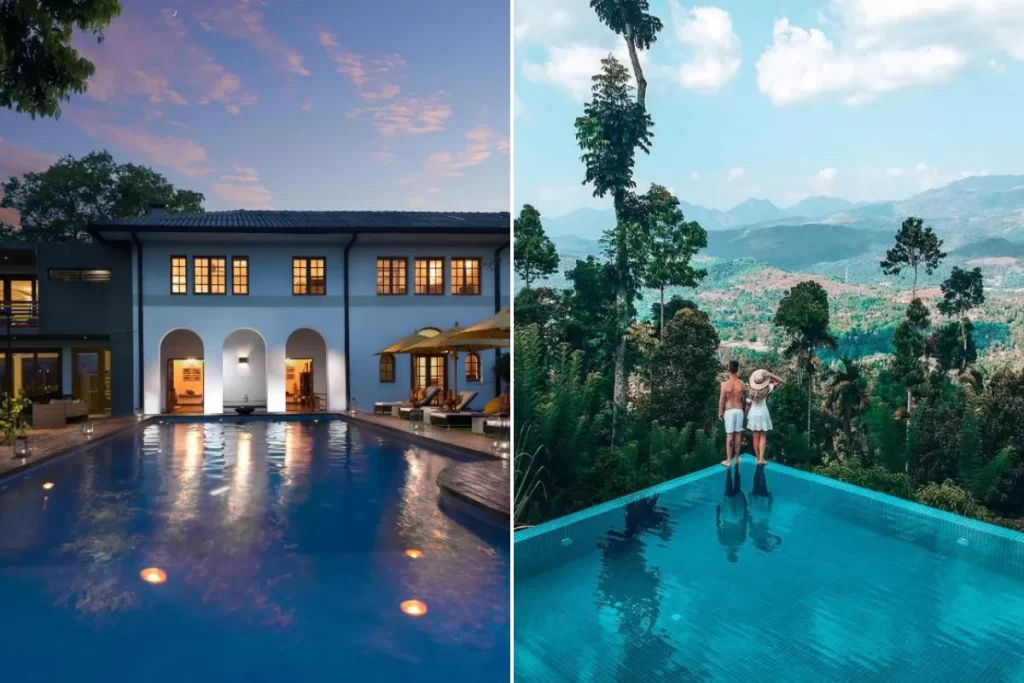
Amaya Hills sits in the hills 20 minutes above the city center (roughly a 1,000 to 1,500 LKR tuk-tuk ride), with traditional Kandyan design, a large outdoor pool, and valley views, roughly $62 to $100 a night including breakfast.
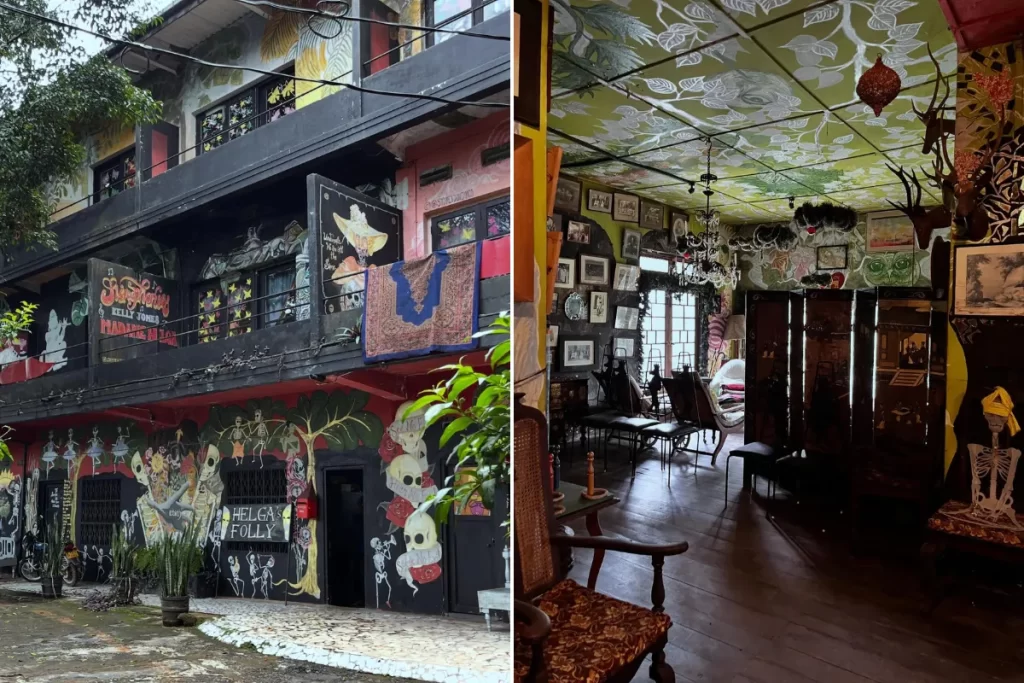
Helga’s Folly is an eccentric, anti-ordinary art-mansion hotel filled with historic murals, red walls, antiques, and candles, genuinely one of a kind if quirky character matters more to you than a standard hotel room, roughly $80 to $100 a night.
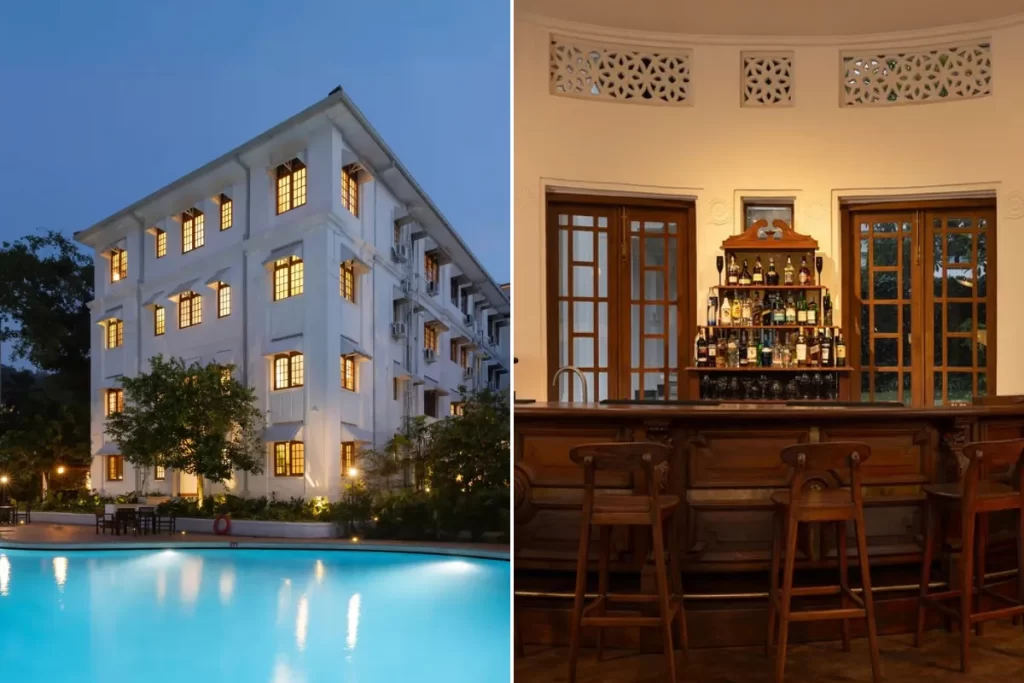
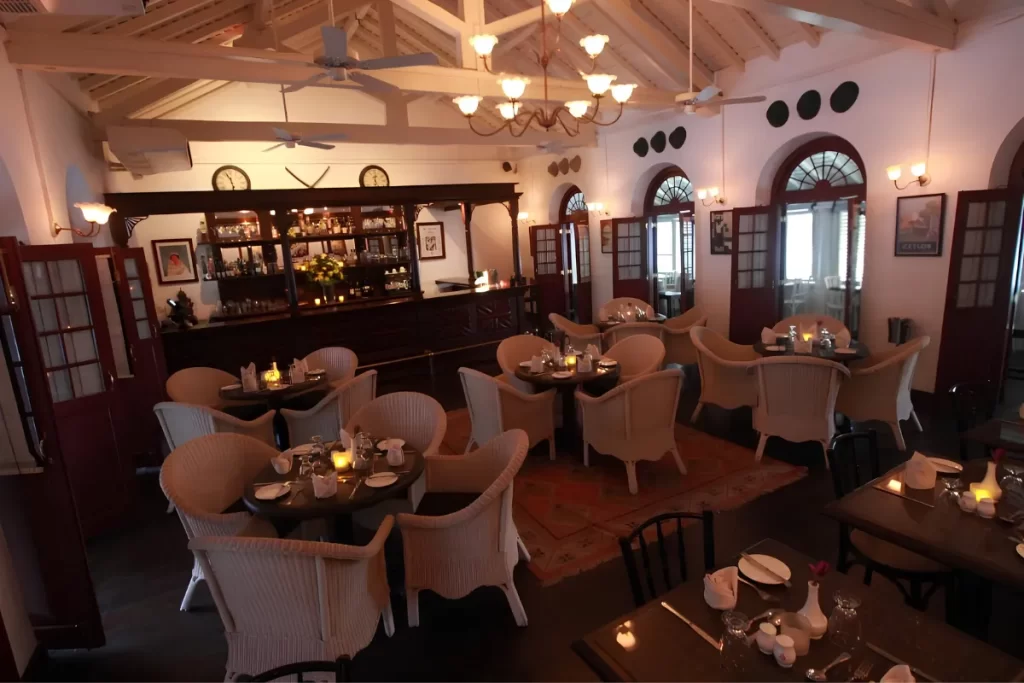
Hotel Suisse is centrally located with colonial charm
Oak Ray Heritage Hotel offers scenic views and a cozy feel. My City Hotel is centrally located opposite the train station, roughly $26 to $54 a night including breakfast, a solid pick if you want to walk everywhere. Kandy Tree Tops (roughly $100 to $170) is another mid-range option worth a look.
Luxury & Destination Estates (roughly $150 to $500+ a night, higher for full-board wellness packages)
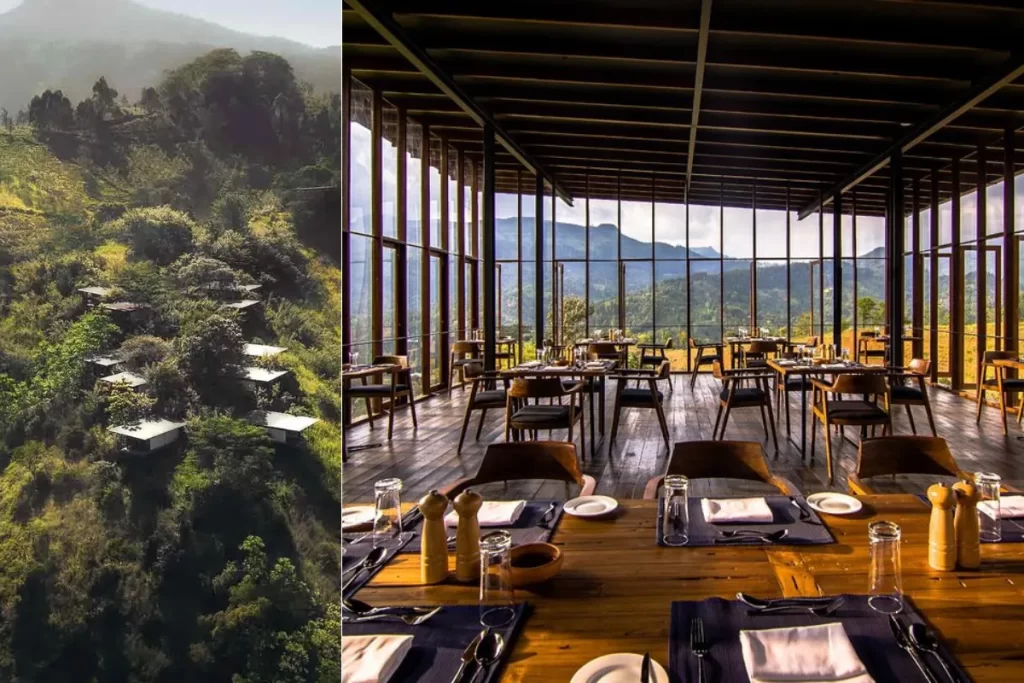
Santani Wellness Kandy is a high-end eco-friendly spa resort spread across 116 acres of mountain forest, offering Ayurvedic therapies and minimalist chalets. Live rates we checked run roughly $360 to $825 a night for standard stays, full-board wellness packages push well past $1,000, confirm what’s included before comparing it to a straight room rate elsewhere.
Tip: If steep roads are an issue, confirm road access before booking hillside stays.
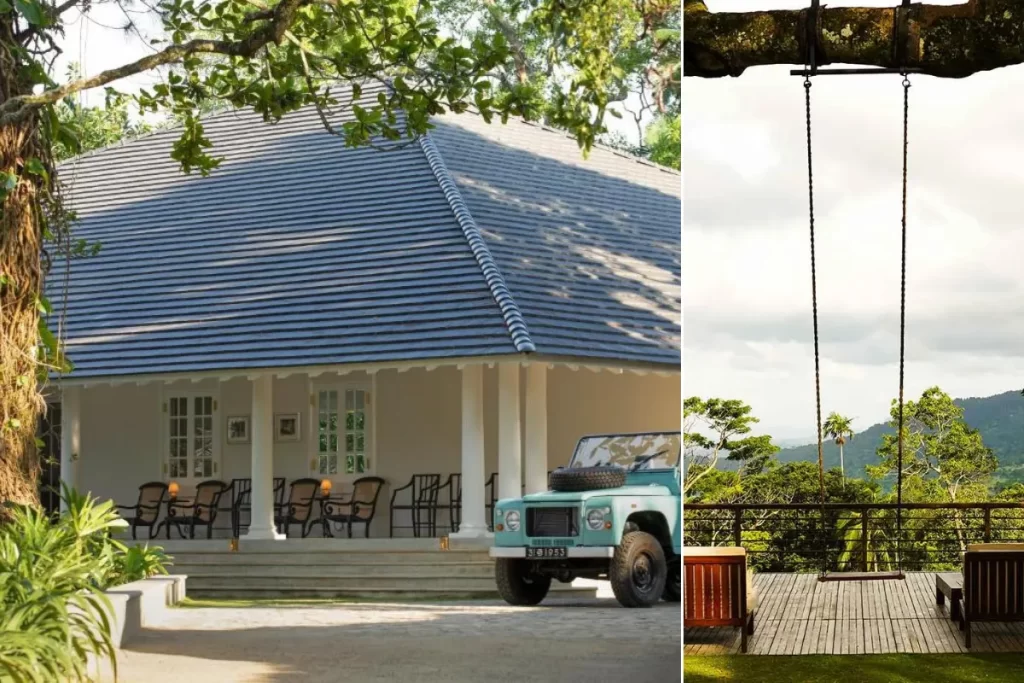
W15 Hanthana Estate is a restored 9-bedroom colonial plantation bungalow with personalized luxury service and an outdoor pool, roughly $350 to $830 a night depending on room and season.
Earl’s Regency has a riverside setting with plenty of space and comfort, an upscale resort-style hotel, roughly $48 to $120+ a night depending on room category, it spans a wide range so check what’s included at the lower end.
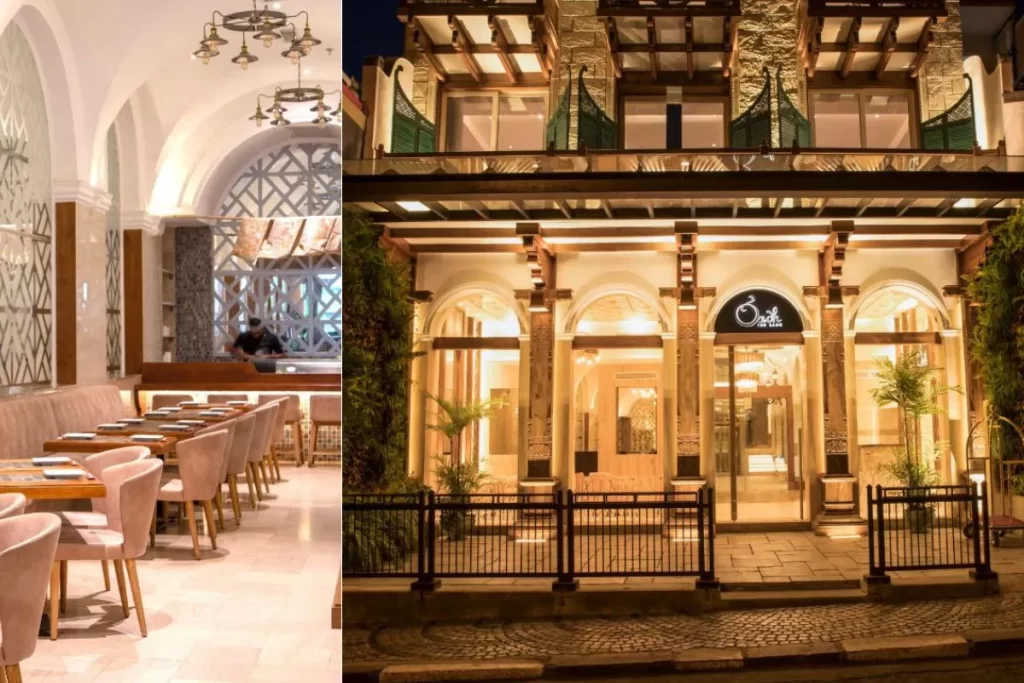
The Radh Hotel is an upscale downtown hotel near the Tooth Temple with a spa and suites that include private indoor pools. Pricing here genuinely varies by source, we found figures anywhere from roughly $95 to $280 a night depending on room category and how far ahead you book, so treat any single number as a starting point and confirm directly.
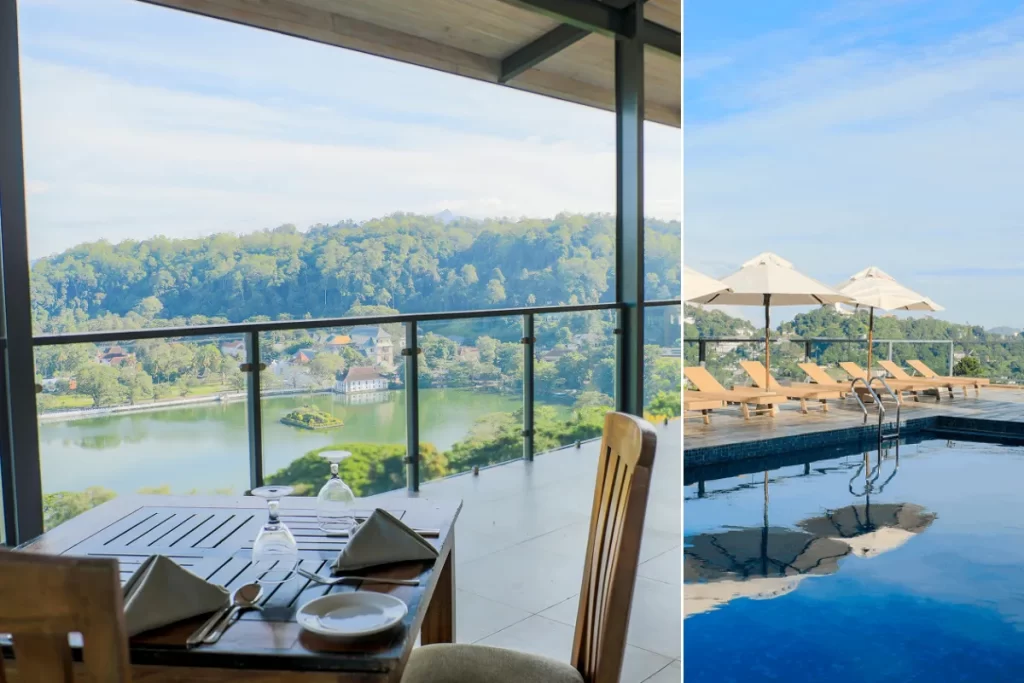
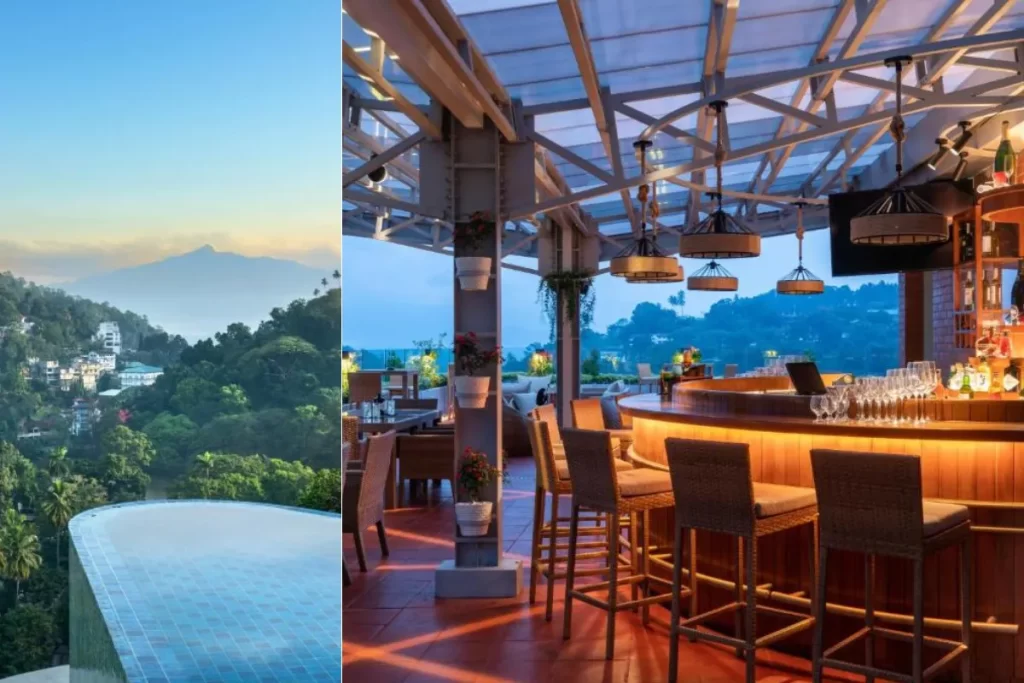
Grand Serendib Hotel is a modern hillside luxury hotel overlooking Kandy Lake and the surrounding peaks, roughly $52 to $145 a night, with entry-level rooms often available toward the lower end of that range.
The Elephant Stables, a boutique heritage stay, runs roughly $150 to $220 a night. Aarunya Nature Resort, a sustainable retreat with private pool villas set within a 7-acre tea and spice plantation, is another option in this tier, confirm current rates directly as we didn’t find an independently verifiable live range for this one.
Food & Restaurant Scene in Kandy
Kandy has one of the better food scenes in the hill country, local meals, casual cafés, and a handful of genuinely good restaurants. A good meal feels earned after a day of sightseeing.
Cafés & Casual Dining
These places work well for breakfast, lunch, or a break.
- Cafe 1886 – Good mix of Sri Lankan and Western food near the temple
- Licensed to Grill by DIIB – Popular for burgers and grilled food
View & Hotel Restaurants
If you prefer dining with views and calm surroundings:
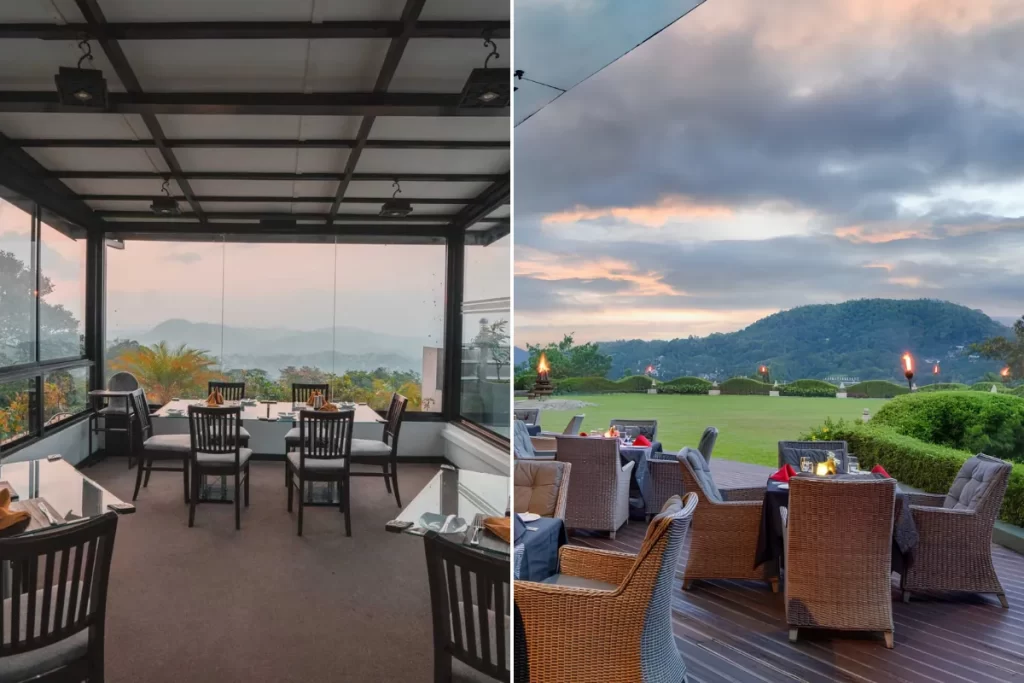
- Theva Cuisine – Hilltop dining with wide valley views
- Earl’s Regency Restaurant – Comfortable setting and varied menu
Local & Authentic Eats
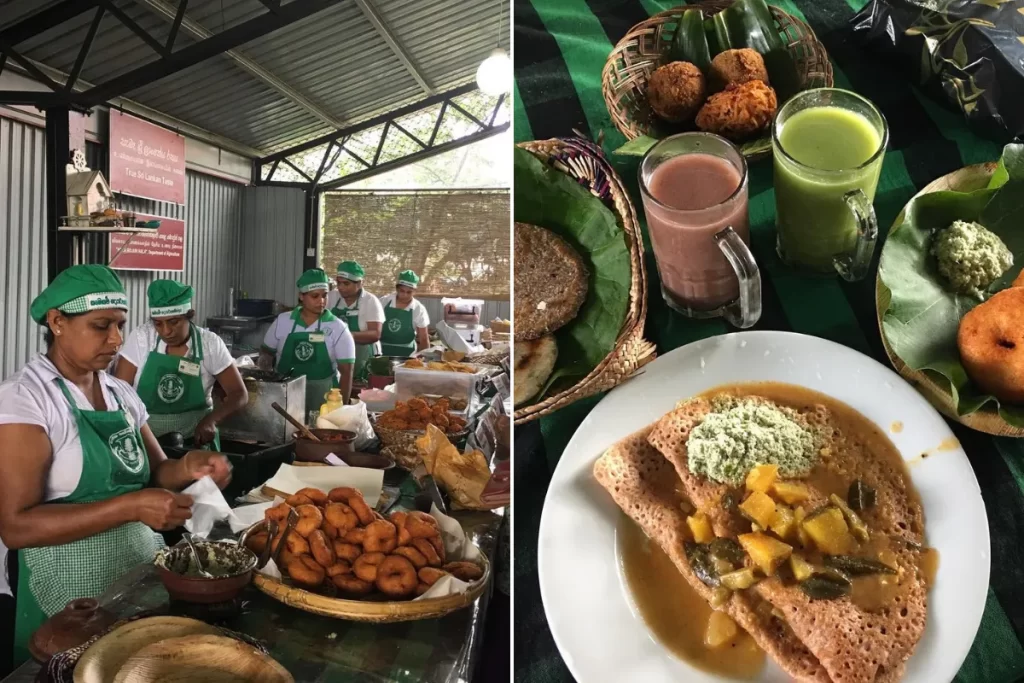
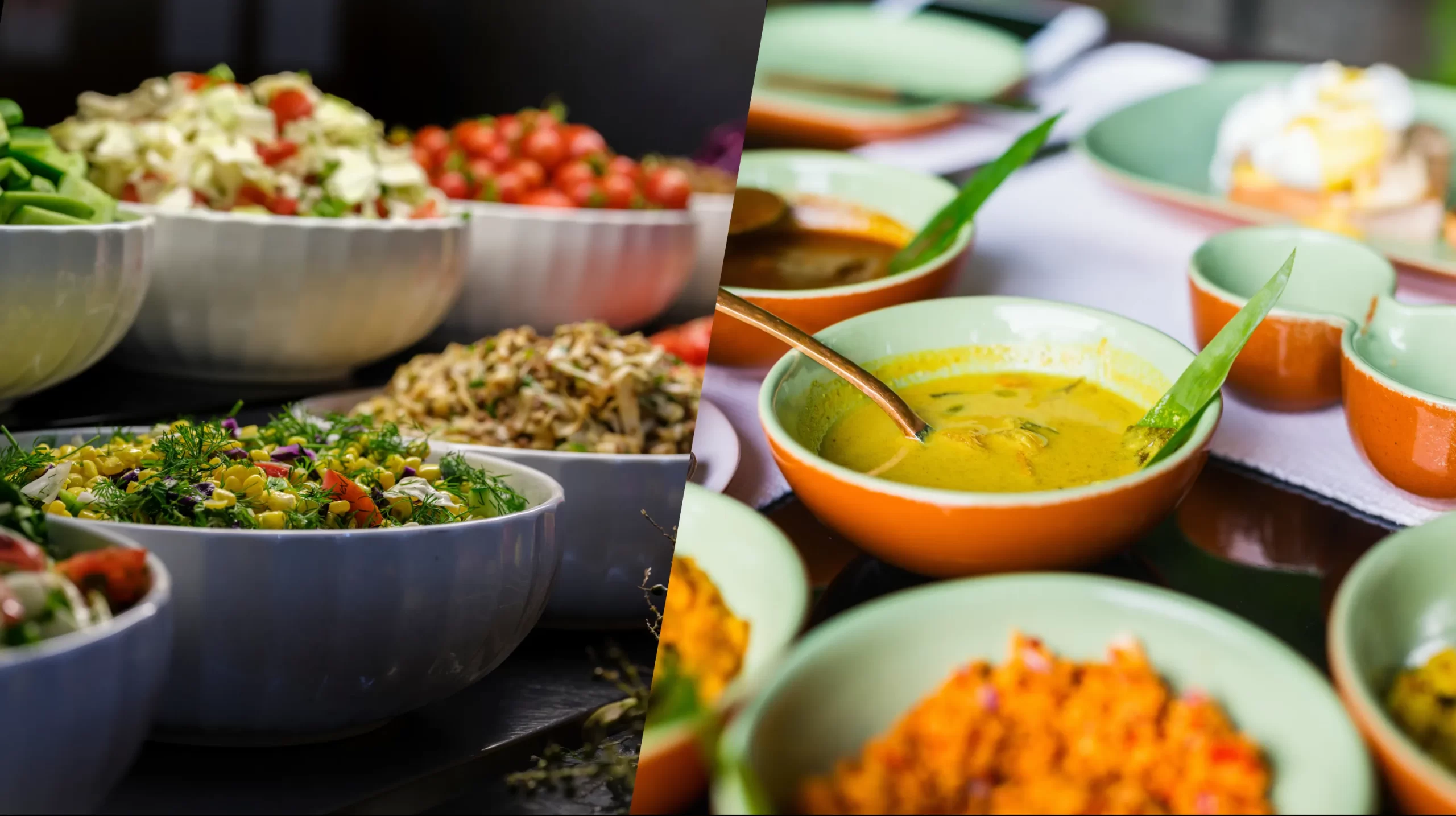
For the real local flavor, skip the hotel restaurants for a meal or two. Kandyan Muslim Hotel (not actually a hotel) is an iconic local eatery serving authentic kottu roti, kabool sandwiches, beef samosas, and chilli egg puffs. Mandiya is a home-cooking restaurant hidden at the back of an old shopping center, large rice and curry spreads with jackfruit and coconut sambol for roughly $2 to $2.50 (600 to 800 LKR). Siri Ramya Hotel is a local three-story eatery serving freshly chopped kottu roti, rice and curry, and short-eats for under $5 for two. Hela Bojun, an open-air food court run by the Department of Agriculture in Peradeniya that empowers rural women, serves traditional snacks at minimal prices.
Nightlife & Rooftop Bars
Royal Bar & Hotel is a colonial-era institution with a courtyard and street-view veranda, serving arrack with ginger beer and devilled chicken, large beers run about 500 LKR. Slightly Chilled Lounge Bar is a popular sunset rooftop spot overlooking Kandy Lake, serving drinks and continental and East Asian food after 8:00 pm. The Stag’s Head Pub at Hotel Casamara is a rooftop balcony bar reached by a vintage elevator, with panoramic sunset views, a large beer runs about 900 LKR.
Practical Food Tips
- Restaurants near the temple get busy after evening ceremonies
- Many places close early, especially outside the city center
- Asking hotel staff for recommendations often leads to good finds
Daily Budget & Costs
| Category | Typical Range | Notes |
|---|---|---|
| Luxury hotel / wellness estate | ~$150–$500+/night | Full-board wellness packages at Santani and similar properties push past $1,000 |
| Boutique / mid-range | ~$25–$120/night | |
| Guesthouse | ~$20–$28/night | |
| Train, Colombo to Kandy | Under $2 USD | Unreserved seats |
| Temple of the Sacred Tooth Relic | $5–$6 USD (1,500–2,000 LKR) | 1,000 LKR for SAARC nationals |
| Royal Botanical Gardens entry | $9–$12 USD (3,000–3,540 LKR) | |
| Udawattakele Forest Reserve | ~$2.60–$3 USD (650–1,000 LKR) | |
| Cultural dance show | 1,250–2,000 LKR | |
| Three-Temple Loop | ~300 LKR per temple | |
| Ceylon Tea Museum | 1,000 LKR | Includes a cup of tea |
How Many Days to Spend in Kandy
Two days covers the core sights comfortably, the Temple of the Tooth, the lake walk, and the Botanical Gardens. Add a third day if you want the Three-Temple Loop, a hike, or a Cultural Triangle day trip without rushing.
Kandy vs Other Sri Lankan Cities
Kandy is calmer and more culturally dense than Colombo, and it’s a better base for hill country trips than the coastal towns further south. Compared to Ella, Kandy has more heritage sites and a bigger city feel, Ella is smaller, quieter, and more about scenery and viewpoints. Plenty of travelers do both rather than picking one.
Crowds, Festivals & Timing Tips
The Esala Perahera in July or August draws the biggest crowds by far, book accommodation months ahead if you want to be there for it. Outside festival season, the city stays manageable, mornings and early evenings around the temple and lake are the calmest times to visit.
Safety & Practical Tips
- Temple visits: Modest dress required, shoulders and knees covered, shoes off before entering.
- Tuk-tuks: Use PickMe or Uber for fixed, lower fares rather than negotiating with drivers who approach you directly.
- Walking at dusk: The hillside viewpoints are best near sunset but come down before full dark if you’re on foot.
- Hiking: DEET repellent is worth packing for Udawattakele and the Hanthana/Knuckles trails during wetter months, leeches are common.
- Festival season: Book well ahead if visiting during the Esala Perahera, rooms disappear months in advance.
Frequently Asked Questions About Kandy
Is Kandy worth visiting in Sri Lanka?
Yes. It’s the cultural heart of the island, home to the Temple of the Sacred Tooth Relic, and the natural gateway to the hill country and tea estates.
How many days should I spend in Kandy?
Two days covers the core sights. Add a third if you want a hike, the Three-Temple Loop, or a Cultural Triangle day trip.
What is the best time to visit Kandy?
Roughly December/January through April, when the weather is driest. If you want the Esala Perahera festival, July or August is worth planning around specifically, just book accommodation early.
Is Kandy very crowded?
Only really during the Esala Perahera. Outside that window, the city is manageable, with mornings and evenings the calmest times around the main sights.
What should I wear when visiting Kandy?
Modest dress covering shoulders and knees is required at the Temple of the Sacred Tooth Relic and other active temples, shoes come off before entering.
Is the Temple of the Sacred Tooth Relic worth visiting?
Yes, it’s Sri Lanka’s most significant Buddhist site. Go for one of the daily pooja ceremonies if you want to see it at its most atmospheric.
Is Kandy safe for tourists?
Generally yes, standard travel precautions apply. Use PickMe or Uber for tuk-tuk fares to avoid being overcharged.
Can I walk around Kandy easily?
Yes, the city center is compact and walkable, with the lake, market, and temple all close together.
Is Kandy better than Ella?
Depends what you want. Kandy has more heritage and city life, Ella is smaller and more scenery-focused. Many travelers visit both.
Is Kandy suitable for first-time visitors to Sri Lanka?
Yes. It’s easy to reach, well organized, and a good introduction to the island’s culture and history.
Are day trips from Kandy worth it?
Yes. Sigiriya and Dambulla are a manageable drive north, and the Three-Temple Loop and Ambuluwawa Tower make for an easy half-day closer to the city.
Is Kandy a good place for families?
Yes, the main sights are close together and easy to manage with kids, and the pace is generally slower than Colombo.
1 Comment