Hikkaduwa is a working beach town on Sri Lanka’s southwest coast, about 98 to 100 km south of Colombo and 17 km northwest of Galle. It started as a fishing village and is now one of the busier beach hubs on the south coast, known for wild sea turtles that swim close enough to touch (don’t), a shallow coral reef you can snorkel straight off the sand, and surf breaks that work for beginners and intermediates on the same stretch of coast. It’s also, bluntly, ground zero for the 2004 Boxing Day Tsunami, the disaster that killed more than 30,000 people across Sri Lanka, including over 1,700 passengers on the “Queen of the Sea” train that was engulfed just north of town. That history is part of the place now, not hidden away, there are memorials you can visit alongside the beach bars and surf schools, and most visitors find it adds real weight to a trip that could otherwise just be sunbeds and smoothie bowls.
Where Is Hikkaduwa?
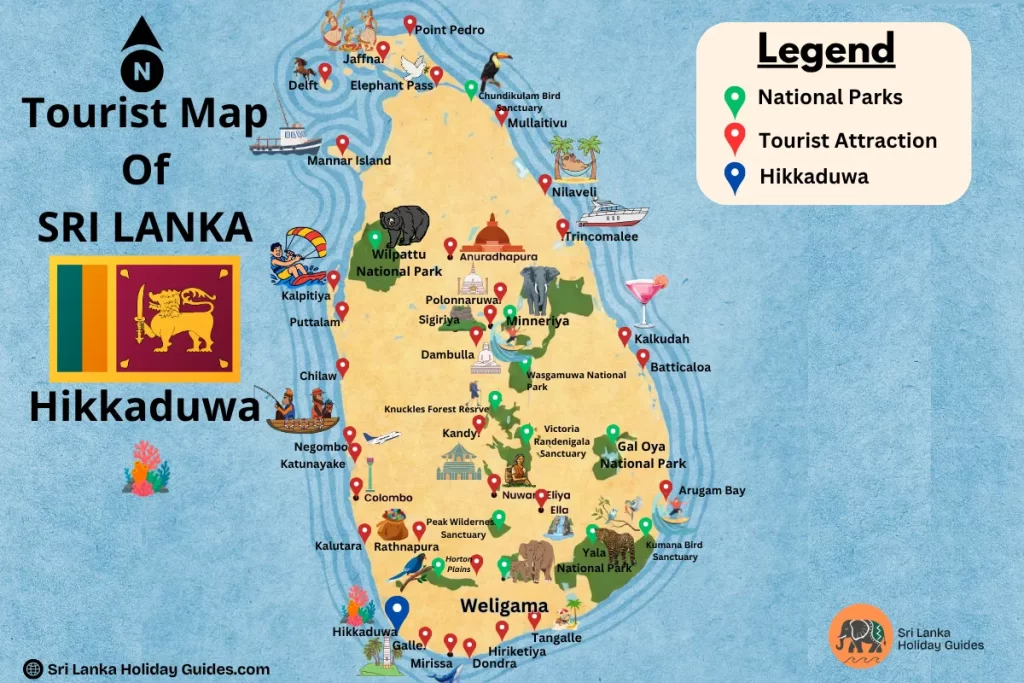
Hikkaduwa sits right on the coastal A2 highway between Colombo and Galle, which is exactly why it’s so easy to reach and why it’s been developed longer than most south coast towns. The main beach, surf schools, restaurants, and town center are all walkable from each other, you genuinely don’t need a vehicle for most of a stay here.
Hikkaduwa is a good fit if:

- You want a first stop in Sri Lanka that’s easy to navigate, with transport, food, and English widely available
- You want to snorkel or dive without a boat trip, the reef is close enough to swim to from the beach
- You’re learning to surf, or want a beach with both beginner whitewater and a livelier social scene than quieter spots further along the coast
- You want a base with easy day trips to Galle Fort, mangrove safaris, and mask-carving workshops without committing to a long drive each time
Best Time to Visit Hikkaduwa

The sea decides everything in Hikkaduwa.
Best Months Overall
November through April is the dry season on the southwest coast, with stable sunshine, warm temperatures averaging 27°C to 30°C, calm seas, and the clearest water of the year for snorkeling and diving.
Peak Season
December through March is when everything lines up at once: the best surf swells, the calmest seas, and the busiest crowds and highest accommodation rates. February and March tend to be the sweet spot, still reliably dry but a touch less packed than the December holiday rush.
Months to Avoid
May through October is monsoon season. Rainfall picks up noticeably, though it’s rarely a total washout, sunny breaks happen between showers. What you lose is consistency: seas get rougher, snorkeling visibility drops, and surf conditions get patchy. The upside is genuinely lower hotel rates and far fewer people, worth considering if you don’t need guaranteed calm water.
Hikkaduwa Beaches: What Each One Is Best For
Hikkaduwa Main Beach

The main beach is the town’s center of gravity, backed by hotels, cafes, and dive shops, with the reef running close offshore. This is also where wild sea turtles show up most reliably, several graze on seagrass right in front of Hikka Tranz Hotel, close enough to view without a boat.
Turtle Beach

A quieter stretch a short walk from the main beach, worth the detour specifically for calmer turtle viewing away from the busiest sunbathing crowd. Go early in the day if you want the water to yourself.
Narigama Beach

Narigama is the surf and nightlife end of town, a short walk or tuk-tuk ride south of the main beach. Soft whitewater breaks here are what most beginner lessons use, and the beach bars (more on those below) get going once the sun’s down.
Snorkeling in Hikkaduwa

The Hikkaduwa Coral Reef, part of a marine national park, sits about 100 meters offshore and is one of the few reefs in Sri Lanka you can snorkel straight from the beach without booking a boat. It holds over 70 coral varieties along with parrotfish, butterflyfish, moray eels, and the same sea turtles that graze near shore. Glass-bottom boat tours are also widely available if you’d rather view it without getting in the water. Worth knowing upfront: years of unregulated tourism have damaged parts of the shallow reef, so this isn’t a pristine, untouched reef experience, it’s still worth doing, just go in with realistic expectations.
Best Time of Day
Mornings give the calmest water and best visibility, before the wind and boat traffic pick up. Dry season (November to April) is the window for this overall, outside it the water turns murkier and choppier.
What to Bring
Your own mask and snorkel if you have them, reef-safe sunscreen (chemical sunscreen damages coral, and a reef already under pressure doesn’t need more of it), and water shoes if you’re wading out over any rocky sections. Rental gear is easy to find along the main beach if you’re traveling light.
Surfing in Hikkaduwa

Narigama’s soft whitewater is where almost every beginner lesson happens, forgiving enough for a first-timer, with surf schools lining the beach. More experienced surfers head further out to the reef breaks, which hold a cleaner, faster wave. Swells peak between November and March, the same window as the dry season generally, so the best surf and the best weather line up.
On cost: beginner lessons at Narigama run around 6,000 LKR an hour including the board, and board rental alone (if you’re already comfortable) runs roughly 2,000 LKR an hour or about 3,000 LKR for a full day, the day rate is the better deal if you’re out for more than two or three hours. Treat these as a rough local-market figure rather than a fixed rate, it varies school to school and is worth confirming before you commit.
Things to Do Beyond the Beach
Walk the Town

Hikkaduwa’s town center is small enough to cover on foot: tailor shops offering custom-fit clothing made within 24 hours at low rates, handicraft stores selling batik, Ceylon tea gift boxes, coconut shell crafts, and gemstones, and a morning fish auction on the sand if you’re up early enough to catch it.
The town also carries its tsunami history openly rather than tucking it away. A family-run photo and community museum just north of town displays photographs, news clippings, and personal accounts from December 26, 2004. Nearby stands the Tsunami Honganji Vihara, an 18-meter Buddha statue gifted by Japan, deliberately built to match the height of the wave that struck the passenger train behind it. A kilometer further back, the Sri Pushparama Temple and Monastery has resident monks who’ll offer tea, home-cooked sweets, and a rundown of Buddhist philosophy to visitors who stop by. And just offshore, the small island temple of Seenigama Vihara is where locals make pepper-oil offerings, worth a look even just from the shore.
Easy Day Trips

A handful of genuinely different day trips sit within 40 minutes of town. The Ambalangoda Mask Museum and Workshop, about 20 minutes north, exhibits traditional hand-carved devil masks made from kaduru wood, used in exorcism dance rituals like Reeri Yakseya and Maha Sona, worth it even if you’re not usually a museum person. The Madu River Safari out of Balapitiya, about 40 minutes north, takes you by boat through mangrove tunnels, past cinnamon-growing islands, crocodile habitats, and vampire bat colonies. There are also moonstone mines in the nearby hills where you can see shaft extraction and lapidary work up close, and buy direct if a gem catches your eye. And Galle Fort itself is about 30 minutes south, an easy half-day trip to a UNESCO World Heritage site with Dutch-era ramparts, boutique shops, and better dining than most of what’s in Hikkaduwa.
Where to Stay in Hikkaduwa
Hikkaduwa offers everything from simple guesthouses to beachfront resorts. Location matters more than luxury.
Best Areas to Stay
The main beach puts you closest to the reef, restaurants, and dive shops, good if you want to walk everywhere. Narigama is the pick if surfing or nightlife is the priority, it’s a short tuk-tuk ride from the main strip but noticeably quieter during the day and livelier after dark. Staying a bit inland off the main beach road is worth considering if you want quieter nights without giving up the short walk to the water.
Accommodation Types & Examples
Luxury (100 to 200+ USD a night):
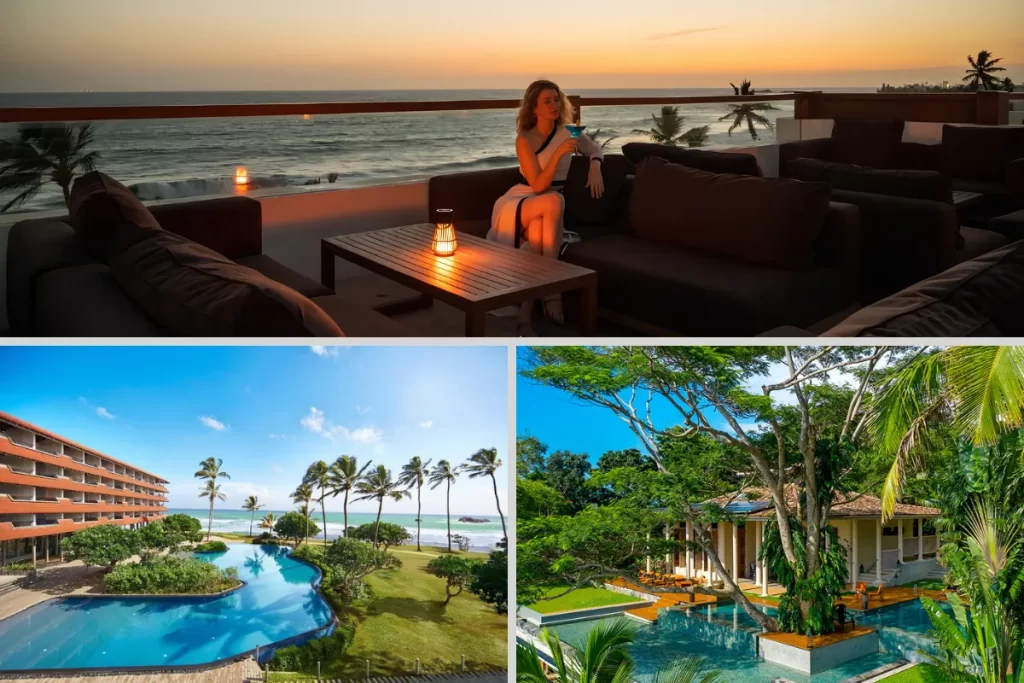
Hikka Tranz by Cinnamon has the best location in town, right where the wild turtles swim up to shore. Haritha Villas and Spa offers private pools and spa amenities for a higher-end villa stay, and Riff Hikkaduwa Hotel is a beachfront option slightly away from the busier center with its own private beach access.
Mid-range (roughly 50 to 90 USD a night):
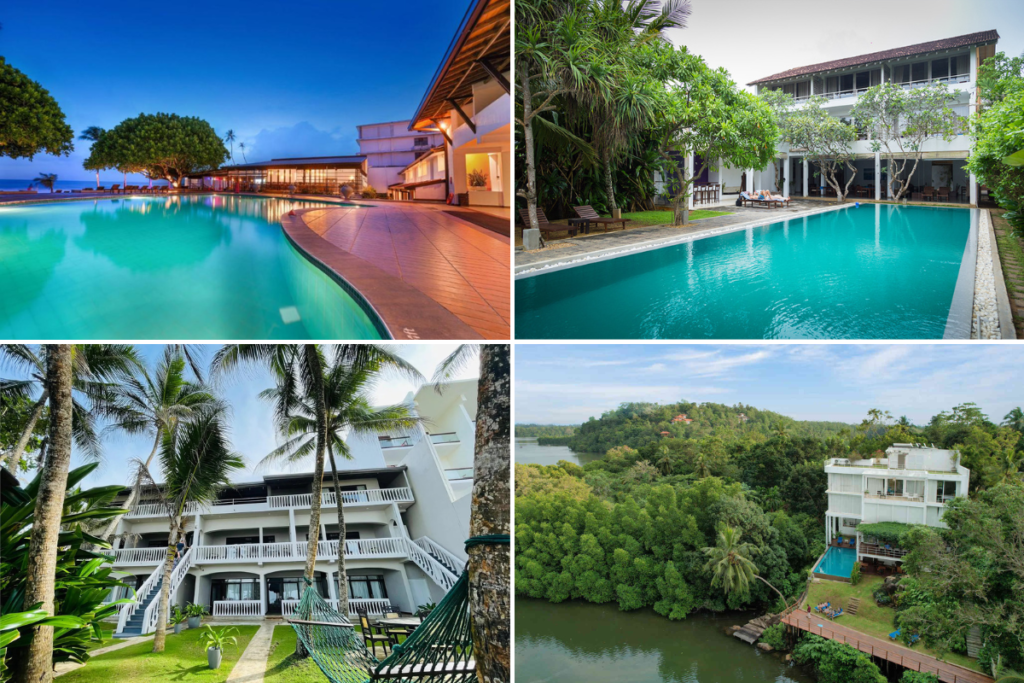
Coral Sands Hotel is beachfront with ocean-facing balconies, two pools, and buffet dining, current listings put it closer to 80 to 90 USD a night than the 70 USD some older write-ups quote, so budget on the higher end. Citrus Hikkaduwa is oceanfront with a beachside infinity pool, and Coral Rock by Bansei sits centrally with its own ocean-facing infinity pool. Roman Beach Hotel, Suite Lanka, 33 Lake Terrace, and Serendipity Lake round out this bracket.
Budget guesthouses and hostels:
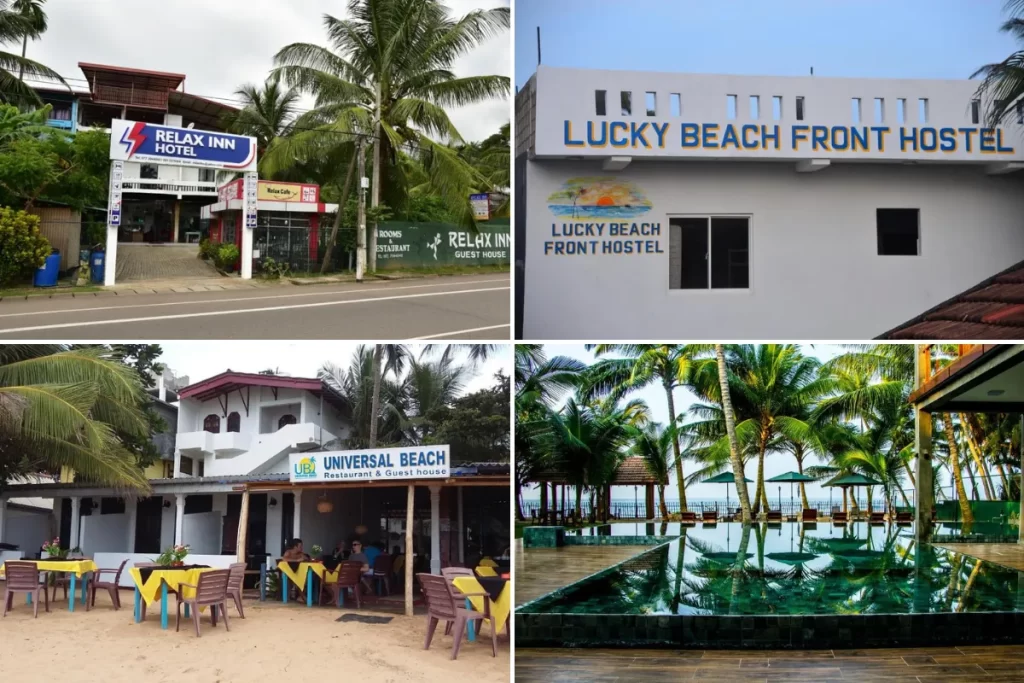
Universal Beach Guest House sits directly on the beach for around 4,000 LKR a night. Lucky Beachfront Hostel is the cheapest option going, some listings quote dorm beds from around 5 USD a night, though we couldn’t pin down a current, confirmed rate, treat that figure as a rough floor rather than a guarantee and check live rates before booking. Relax Inn is a family-run guesthouse with air-conditioned rooms, balconies, and a pool, and Hikka Sands & Spa is another affordable option close to the beach.
Food & Restaurant Scene in Hikkaduwa
Hikkaduwa’s food scene is casual and varied. You’ll find local flavors, seafood, and international options.
Popular Restaurants & Cafés
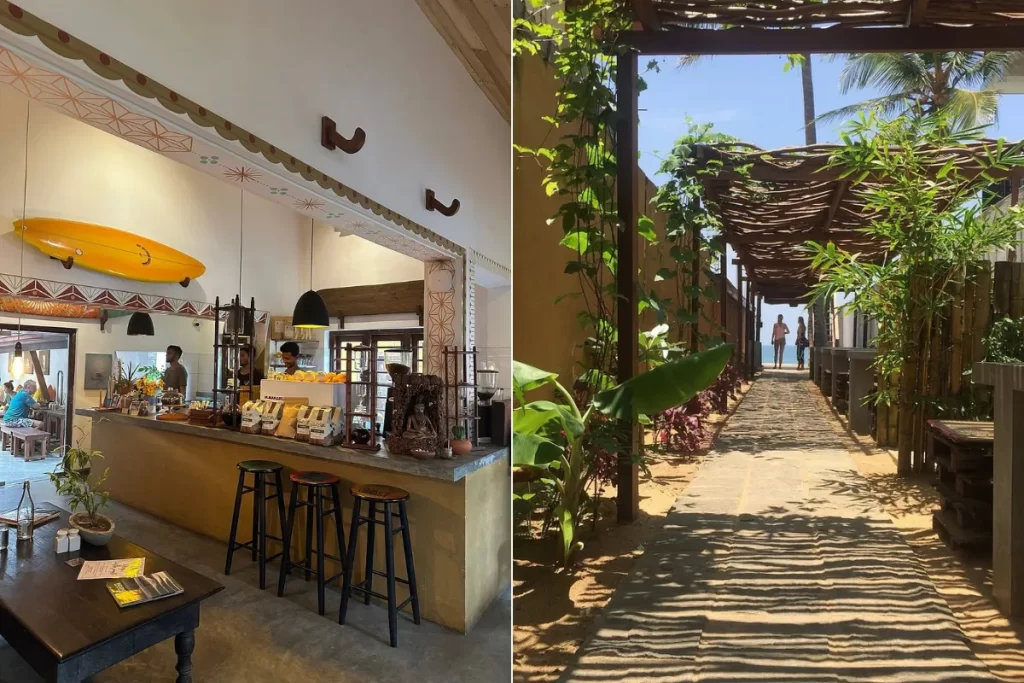
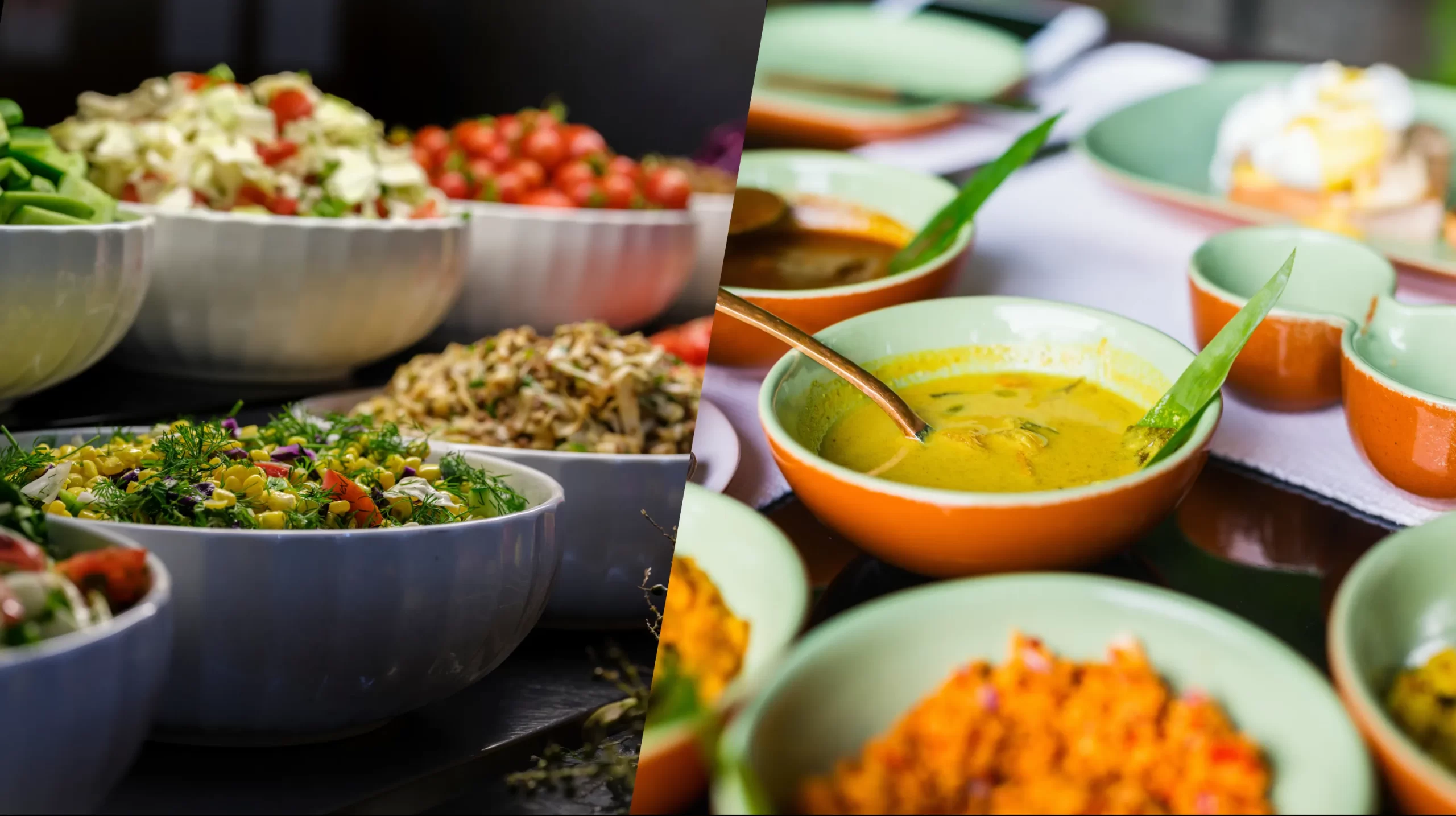
Salty Swamis Cafe & Surf Shop is the go-to for specialty coffee, healthy breakfast bowls, and banana bread, popular with the surf crowd for good reason. Chamis Place is a local spot known for authentic kottu roti, and Home Grown Rice & Curry and Tree-Top Restaurant both run home-kitchen-style rice and curry spreads that beat most tourist-facing menus on authenticity. For seafood, Red Lobster and The Garlic are the two names that come up most for fresh crab, fish, and prawns. Refresh Restaurant, the Moon Light Restaurant, and Spaghetti & Co cover the more international end if you want a break from curry.

If you’re trying local dishes for the first time: kottu roti (chopped flatbread stir-fried with egg, vegetables, and spices), fresh seafood grilled beachside at night, and the classic breakfast trio of hoppers, egg hoppers, and string hoppers served with coconut sambol. Fresh fruit juices, king coconut, passionfruit, papaya, mango, run around 200 LKR most places.
Nightlife & Shopping
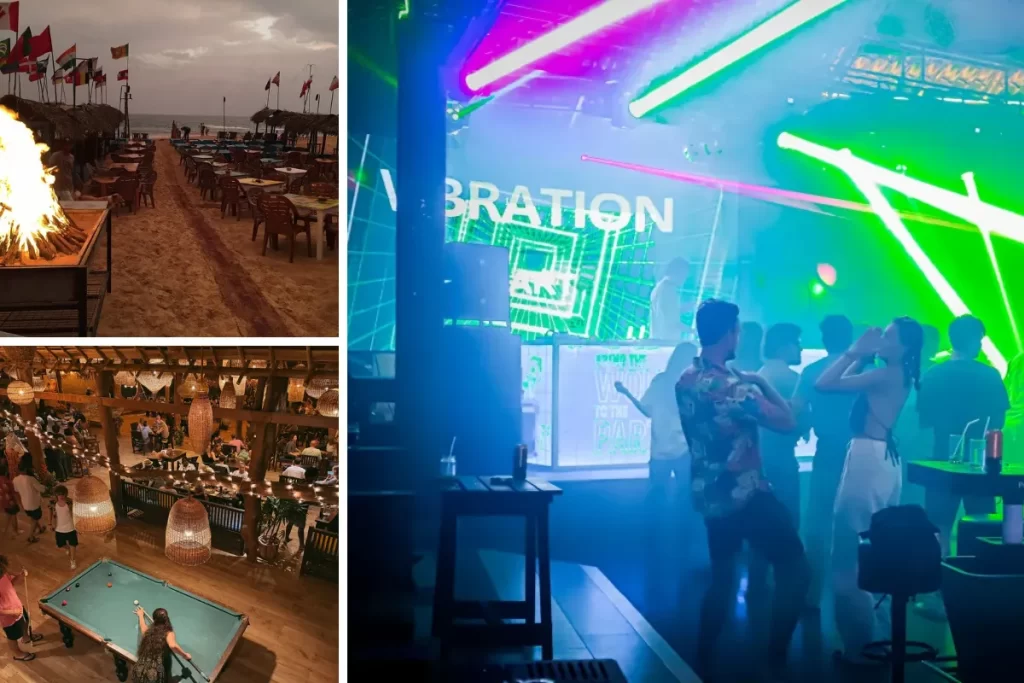
Top Secret Bar on Narigama Beach is the main gathering spot for cocktails and music after dark. Mambos and Vibration Bar both run weekend DJ sets and live music, Vibration leans into tribal music nights specifically. For shopping, the main street’s tailor shops can turn around a custom-fit outfit or swim trunks within 24 hours at low prices, and handicraft stores sell batik, Ceylon tea, coconut shell crafts, and gemstones if you’re picking up souvenirs before heading home.
Daily Costs in Hikkaduwa
| Item | Typical Cost | Notes |
|---|---|---|
| Short tuk-tuk ride | ~200 LKR+ | Agree the fare before getting in |
| Beginner surf lesson (1 hour, board included) | ~6,000 LKR | Varies by school, Narigama |
| Board rental | ~2,000 LKR/hour or ~3,000 LKR/day | Day rate is better value past 2 to 3 hours |
| Turtle Hatchery entry | ~500 to 2,000 LKR | Functions more like a donation than a fixed ticket, reviewers report wildly different amounts, bring cash and confirm before paying |
| Fresh fruit juice | ~200 LKR | King coconut, passionfruit, papaya, mango |
| Deep-sea fishing charter | ~240 to 480 USD | Priced per person by most operators, not per boat, and group pricing isn’t linear, confirm the structure directly before booking |
| Budget guesthouse | ~15 to 40 USD/night | Universal Beach Guest House ~4,000 LKR/night |
| Mid-range hotel | ~50 to 90 USD/night | Coral Sands currently trending toward the top of this range |
| Luxury resort | 100 to 200+ USD/night | Hikka Tranz, Haritha Villas, Riff Hikkaduwa |
A couple of honest flags on these: the Turtle Hatchery fee and the fishing charter price are the two figures we’d trust least going in. Hatchery reviews over the past two years report everything from 500 LKR to the equivalent of several thousand, with no consistent ticketing, so budget for the higher end and don’t be surprised either way. The fishing charter figure is built from one live operator’s listing, which prices per person rather than per boat and doesn’t scale the way you’d expect (a solo booking costs more per head than a group of two), so get a direct quote before assuming either number holds.
Getting Around Hikkaduwa

The beach, town center, surf schools, and most restaurants are compact enough to walk between. Tuk-tuks handle anything further, short local rides run from around 200 LKR, agree the fare upfront rather than after the ride. Scooters are easy to rent if you want to explore nearby coastal towns like Ambalangoda and Balapitiya under your own steam, just be comfortable with Sri Lankan traffic before you commit to that.
Getting to Hikkaduwa itself: coastal trains run directly from Colombo Fort in roughly 2 to 2.5 hours (120km) with genuinely scenic ocean views along the way. Private transfers and taxis take about the same, 2 to 2.5 hours via the Southern Expressway from Colombo or Bandaranaike International Airport (140 km). Regular public and AC express buses run frequently along the coastal A2 highway if you want the cheapest option and don’t mind the extra time.
Safety and Local Etiquette
- Swimming: Generally safe November to April in calm seas. Rip currents and rougher water show up outside that window, follow local advice on any given day rather than assuming it’s always calm.
- Turtles: View from a respectful distance, don’t touch or feed them, even though they swim close enough that it’s tempting.
- Reef etiquette: Use reef-safe sunscreen and avoid standing on coral, parts of the reef are already damaged from years of unregulated foot traffic.
- Turtle Hatchery visits: Bring small cash, confirm the fee before you pay, and know that what you’re seeing is a rescue and incubation operation rather than a wild sanctuary, manage expectations accordingly.
- Nightlife: The main beach road gets genuinely loud at night. If you want quiet sleep, book a bit inland or stick to the quieter end near Turtle Beach rather than directly on the main strip.
How Many Days to Spend in Hikkaduwa
Two to three days covers the essentials: beach time, a snorkel or surf session, the tsunami memorials, and a half-day trip to Galle Fort. Add a day if you want to fit in the Madu River Safari or the Ambalangoda mask workshop without rushing either one.
Simple 2–3 Day Hikkaduwa Plan

Day 1: Settle in, walk the main beach, and look for the turtles grazing near Hikka Tranz. Snorkel the reef in the late morning while the water’s calm, then grab dinner at one of the beachfront seafood grills.
Day 2: Morning surf lesson at Narigama if you’re new to it, or a session on the reef breaks if you’re not. In the afternoon, visit the Tsunami Honganji Vihara and the photo museum, then head into town for dinner and a look at the tailor shops.
Day 3: Day trip to Galle Fort for the ramparts, old town, and better dining options, or swap it for the Madu River Safari if mangroves and wildlife interest you more than colonial architecture.
Is Hikkaduwa Worth Visiting?
Yes, and it’s a genuinely good first stop in Sri Lanka specifically because it’s so easy: transport is simple, English is widely spoken, and the beach, surf, and snorkeling are all within walking distance of each other. It’s livelier and more built-up than some other south coast towns, so if you want total quiet, this isn’t it, but if you want an easy base with real substance behind the beach, the turtles, the reef, and the tsunami history give it more depth than most people expect going in.
Frequently Asked Questions About Hikkaduwa
Is Hikkaduwa good for first-time visitors to Sri Lanka?
Yes. It’s easy to reach and navigate, transport is simple, English is widely spoken, and most of what you need is within walking distance.
What is the best time of year to visit Hikkaduwa?
November to April, with February and March standing out for stable weather and slightly lighter crowds than the December to January peak.
Can you see turtles in Hikkaduwa?
Yes, often close to shore in calm conditions, especially near Hikka Tranz Hotel. Go early, watch from a distance, and don’t touch or feed them.
Is Hikkaduwa good for snorkeling?
It’s one of the more convenient south-coast spots since you can snorkel straight from the beach. Mornings in dry season give the clearest water, and parts of the shallow reef show wear from years of foot traffic, so go in with realistic expectations.
Is Hikkaduwa good for surfing?
Yes, especially for beginners and intermediates. Narigama is the main learning spot, and lessons and board rentals are easy to find in season.
Is Hikkaduwa safe for swimming?
Generally yes from November to April in calm seas. Avoid rough water outside that window and follow local advice about currents on any given day.
How many days should I spend in Hikkaduwa?
Two to three days covers the beach, snorkeling or surfing, and a trip to Galle Fort. Add a day for the Madu River Safari or the mask museum if you want more.
Is Hikkaduwa expensive?
It works across most budgets. Guesthouses and local food keep costs low, while beachfront hotels, dive trips, and fishing charters push the total up fast if you add them all in.
Can I visit Hikkaduwa during the monsoon season?
You can, but beach activities suffer from May to October due to rougher seas and lower snorkeling visibility. Hotel rates do drop noticeably if you don’t mind the trade-off.
Is Hikkaduwa noisy at night?
The main beach road can get genuinely lively. Staying a bit inland or near the quieter end of the beach gives you calmer nights, and tuk-tuks make getting around easy either way.
Is Hikkaduwa better than Unawatuna?
Depends what you want. Hikkaduwa has more nightlife and surf energy, Unawatuna is calmer. They’re close enough that plenty of people visit both rather than choosing one.
Is Hikkaduwa suitable for families?
Yes, particularly if you stay away from the busiest nightlife stretch. Calm beaches, short distances between everything, and family-friendly hotels make it manageable with kids.