
Udawalawe is the easiest place in Sri Lanka to see wild elephants up close. The park is open savannah and grassland around a large reservoir, built after the Udawalawe Dam flooded the valley in the early 1970s, and that open terrain is exactly why sightings here are so reliable: there’s nowhere for a herd of 20 elephants to hide. A day entry for a foreign adult works out to roughly $43 once every fee and tax is added up, a half-day jeep safari runs about $25 to $35 a person on top of that, and May to September plus December to March are the driest, most reliable months to go. This guide covers what to see, what it actually costs, and the small mistakes that are easy to avoid.
Why Visit Udawalawe National Park?

If seeing wild elephants is the whole point of your safari, Udawalawe is the park built for that. The open grassland means herds are visible from a distance rather than glimpsed through dense scrub, and sightings are close to guaranteed year round. It’s a strong choice for first-time safari visitors, families, and anyone with limited time who wants a shorter, less bumpy drive than Yala or Wilpattu usually involve.
Where Is Udawalawe and How to Get There
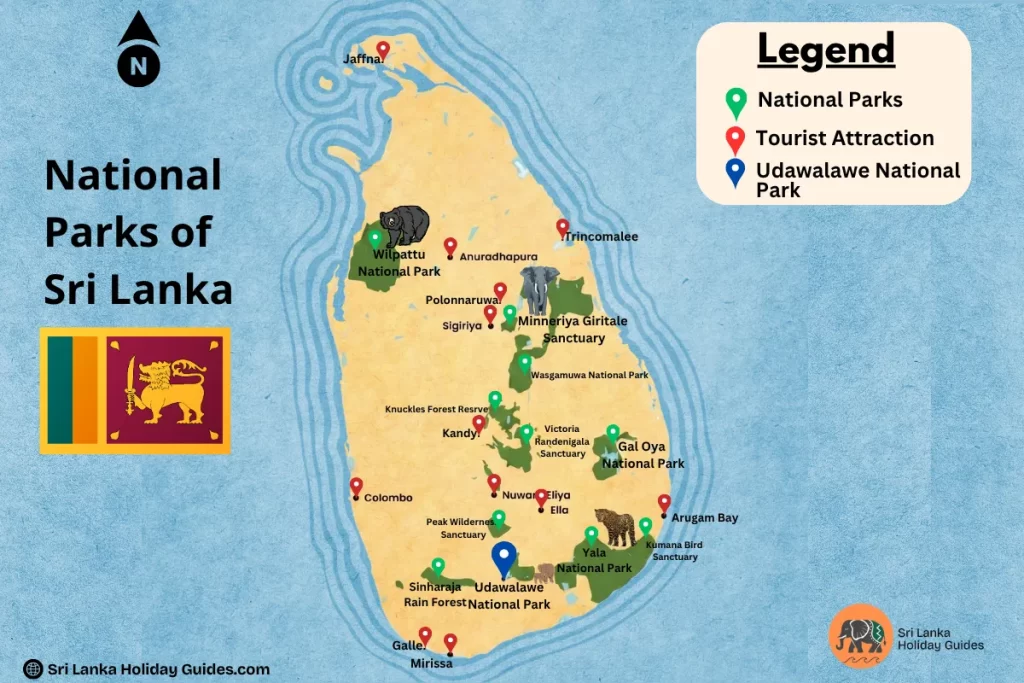
Udawalawe sits inland on the border of the Sabaragamuwa and Uva provinces, near Embilipitiya, between the hill country and the southern coast.
Getting There

| From | Approximate time and Distance to Udawalawe |
|---|---|
| Colombo (via Ratnapura or the Southern Expressway) | (237km) 4 to 6 hours |
| Ella (via Wellawaya) | (101 km) 1.5 to 2 hours |
| Southern coast, Mirissa, Tangalle or Galle | (100 km and 135 km) 2 to 4 hours |
| Kandy (via Ratnapura) | (175 km and 220 km) A long, winding drive south into the lowlands, best budgeted at a full half day |
Most visitors approach from Ella or the south coast, both of which make Udawalawe an easy half-day detour rather than a trip of its own. Coming straight from Colombo is doable but long, and better split with an overnight stop somewhere along the way.
Understanding Udawalawe Before You Go

Udawalawe National Park was established on 30 June 1972, created specifically as a sanctuary for wild animals displaced when the Udawalawe Dam flooded the valley on the Walawe River, and to protect the reservoir’s catchment area. Before that, much of the land was used for traditional chena, or slash-and-burn, farming, and the open grasslands you see today are a direct legacy of that earlier land use rather than untouched wilderness.
The park covers about 30,821 hectares, or roughly 308 km², centered on a 3,405-hectare man-made reservoir. Unlike the dense forest of Wilpattu, the terrain here is open savannah, thorny scrub, and pockets of riverine forest, which is exactly what makes wildlife so visible. An electric fence runs along the park’s southern boundary, put up in the 1980s, to keep elephants from wandering into the farmland beyond the park.
The park is open 365 days a year from 6 am to 6 pm, with no seasonal closures, which is one more thing that sets it apart from Yala.
Best Time to Visit Udawalawe National Park
This is the part worth getting exactly right, since the headline ticket price and what you actually pay at the gate are two different numbers.
| Fee | Amount |
|---|---|
| Foreign adult base ticket | $25 USD |
| Foreign child base ticket (6 to 12) | $15 USD |
| Child under 6 | Free |
| SAARC adult base ticket | $20 USD |
| SAARC child base ticket | $10 USD |
| Group service fee (per jeep) | About $10 USD |
| Vehicle entry ticket | About 300 LKR (roughly $1) |
| Government tax | 18%, charged on the combined total |
Once the base ticket, the group service fee, the vehicle fee, and 18% tax are all added together, a single foreign adult entering alone ends up paying roughly $43 USD, or around 13,420 LKR. That figure holds up consistently across multiple current sources, so treat it as reliable. It catches a lot of first-time visitors off guard because the $25 figure quoted most places is only the base ticket, not the walk-up total. Payment at the counter is cash only in LKR, so bring enough rupees rather than counting on a card.
This is the park entrance fee only. The jeep and driver are a separate cost, covered below.
Best Time to Visit Udawalawe National Park

Best Months
May to September and December to March are the driest stretches, when vegetation thins out and animals concentrate more predictably around the reservoir and remaining waterholes.
Rainy Period
October to January tends to bring the most rain to the region, with muddier tracks and less predictable sightings, though the park never actually closes for it the way Yala does.
Best Time of Day for Safari

Morning Safari
Starting around 6 am, mornings are cooler and animals are more active before the heat sets in. This is generally the quieter window too.
Afternoon Safari
Starting from around 2:30 pm, afternoon safaris run into softer evening light, and many visitors combine the drive with watching the sunset over the reservoir from just outside the gate.
Safari Options in Udawalawe
Half-Day Safari (Best Choice)

A 3 to 4 hour safari covers the core reservoir and grassland circuits, where elephant concentration is highest, and is genuinely enough time for most visitors. Local jeep rates average around 8,000 LKR, while foreign visitors typically pay somewhere in the range of $25 to $35 per person, or roughly $110 to $120 for a private jeep, depending on group size and how firmly you negotiate.
Full-Day Safari
A 6 to 7 hour safari pushes further into the wetland and woodland zones that a half-day drive skips, and it’s worth the extra time mainly for birdwatchers and photographers chasing specific shots. For most people it’s unnecessary. Expect to pay roughly $45 to $65 per person for a full-day jeep hire.
Wildlife You Can See in Udawalawe

Elephants are the headline act, with a resident population estimated between 500 and 700 wild Sri Lankan elephants, often moving in herds of up to 30. Adult males can weigh between 2 and 5.5 tons and stand 2.5 to 3.5 metres tall, and watching a herd of that size cross open grassland is genuinely one of the better wildlife experiences on the island.

Beyond elephants, expect water buffalo wallowing in the marshes, spotted axis deer, sambar deer, and wild boar, along with smaller mammals like ruddy mongoose, toque macaques, gray langurs, golden jackals, and Asian palm civets. Mugger crocodiles bask along the reservoir’s mudbanks, and the park is also home to Bengal monitor lizards, Indian star tortoises, and more than 30 snake species, vine snakes among them.
Leopards and sloth bears are present but exist in low numbers here, and sightings are genuinely rare compared to Yala, so it’s worth setting expectations accordingly rather than hoping for one. Birders have plenty to look for too: over 150 recorded species, including changeable hawk-eagles, white-bellied sea eagles, crested serpent eagles, painted storks, green bee-eaters, Indian peafowl, and pied kingfishers.
Choosing the Right Safari Operator
The driver matters more than the jeep. Look for one who sticks to established dirt tracks rather than cutting off-road through undergrowth, keeps a respectful distance from elephants rather than pushing in for a closer shot, and keeps the group quiet enough not to spook the animals. Don’t feed any wildlife, don’t bring loose food into the jeep that might draw a monkey raid at the gate, and take your rubbish out with you. A slightly cheaper driver who crowds every elephant for a photo isn’t actually a better deal.
Elephant Transit Home (ETH)

The Elephant Transit Home sits a few kilometres from the park’s main gate and was set up by the Department of Wildlife Conservation in 1995 to rehabilitate orphaned elephant calves, raising them until around age 5 before releasing them back into the wild. It’s run as a genuine rehabilitation centre rather than a tourist attraction, and the ethics show: visitors watch from a raised public platform during scheduled bottle-feeding sessions, and direct contact, petting, or posing with the calves is strictly off-limits.
On ticket pricing specifically, sources disagree more than I’d like. Some give a foreign visitor rate of roughly $5 plus 18% tax for adults and $3 plus tax for children, which works out to somewhere around 1,500 to 1,900 LKR for an adult at current exchange rates. Other sources, including the research behind this rewrite, list a flat 500 LKR for adults and 250 LKR for children, which is a meaningfully different number. I wasn’t able to settle which is current with full confidence, so treat both as approximate and confirm the actual price at the gate before you go.
Where to Stay Near Udawalawe
Udawalawe town is the most convenient base, with Embilipitiya a reasonable alternative a little further out.
Accommodation Types (With Examples)
Budget Safari Lodges
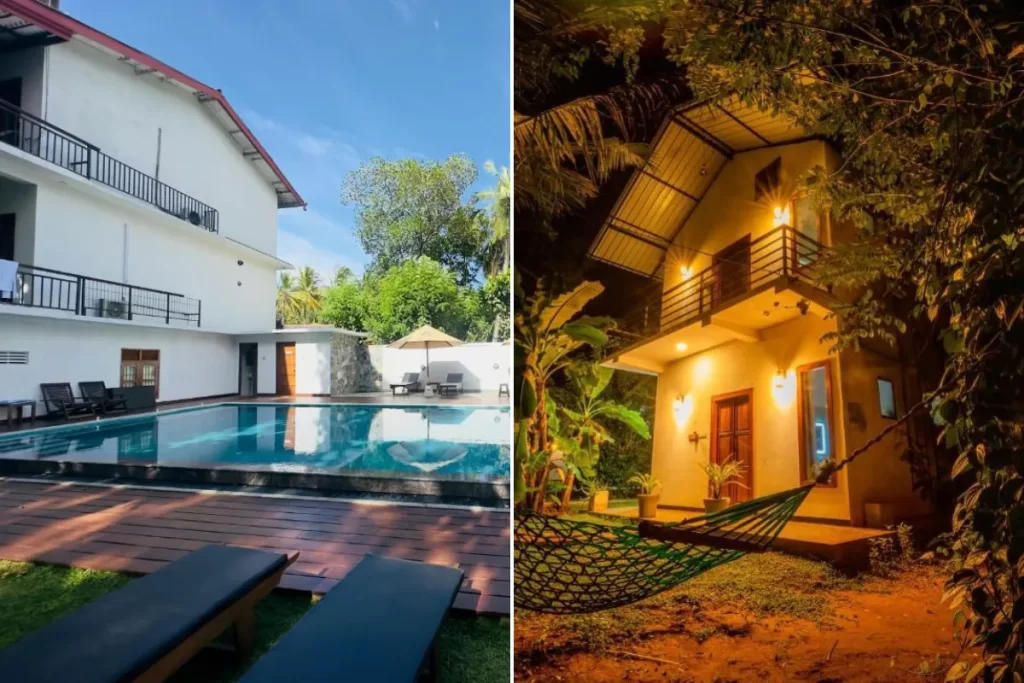
- Green View Safari Resort – Good value and helpful staff
Boutique and Eco-Lodge
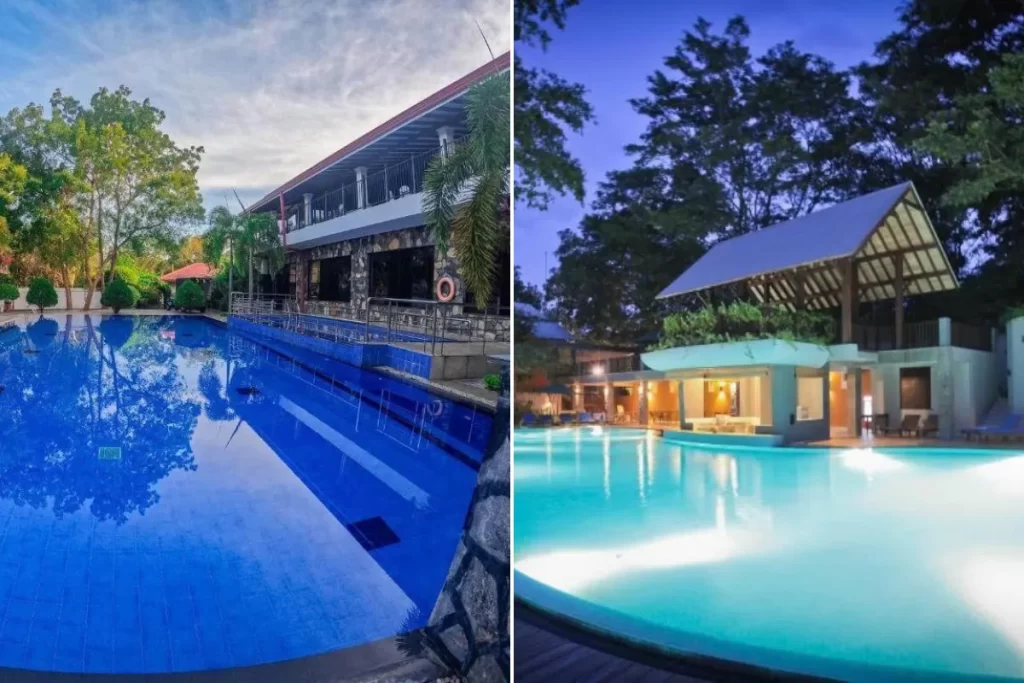
- Centauria Wild – Spacious rooms and pool
- Grand Udawalawe Safari Resort – Comfortable stay with safari arrangements
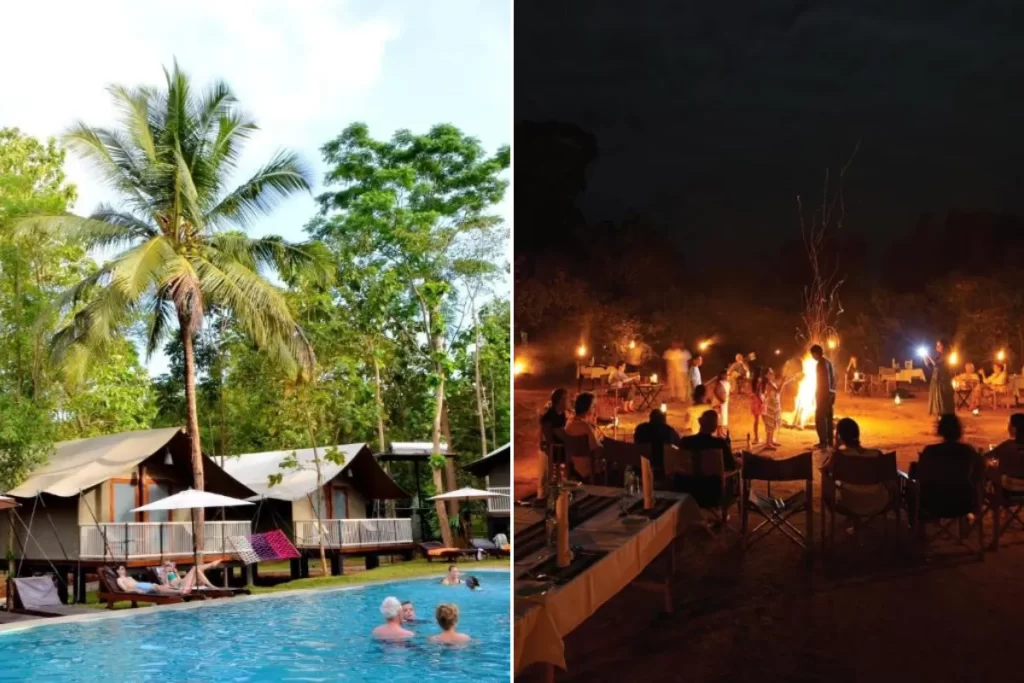
Kottawatta Village – Quiet, green, and personal
- Big Game Camp Udawalawe – Eco-focused and intimate
Royal Tusker Hotel is also worth a mention, mainly because it throws in complimentary bike rentals for riding out through the surrounding sugarcane fields, a nice way to fill an afternoon between safaris.
Food and Dining Near Udawalawe
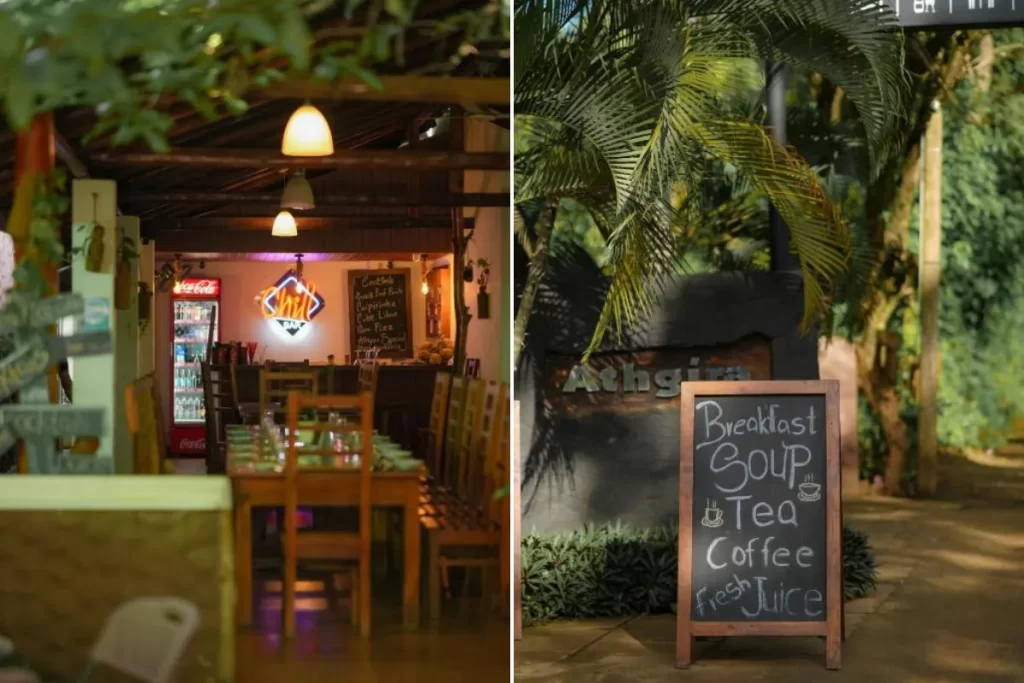
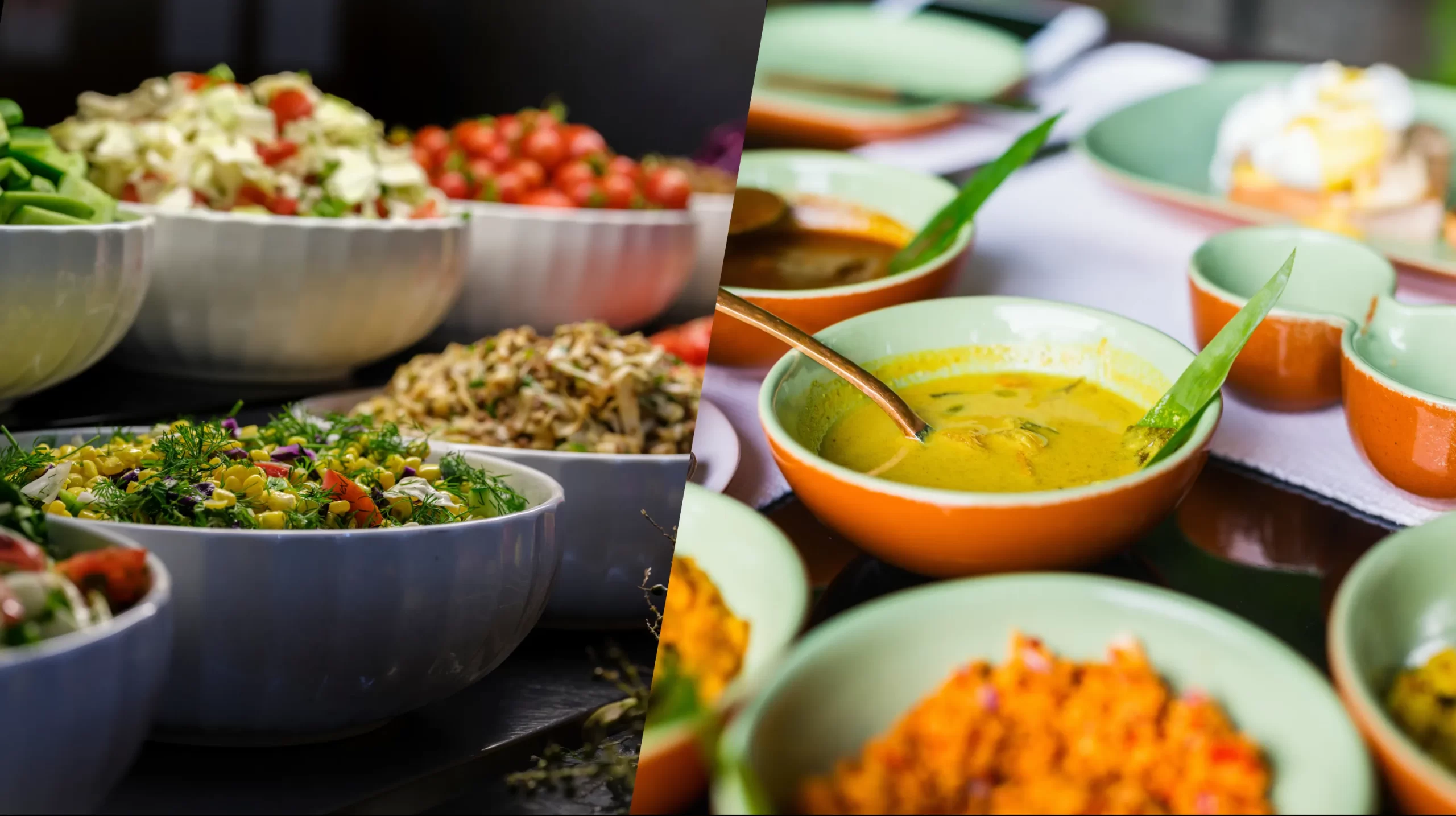
Dining options are simple and local rather than varied. Bath Gedara and Hotel Athgira both serve reliable rice and curry, and most hotels and lodges include meals as part of the stay anyway, which is the easier route if you’ve been out on a dusty safari all day.

Hungry Monkey is a decent option if you want something a bit more casual between drives.
How Many Days to Spend in Udawalawe
A half day covers the park well, and one night in the area is enough for most travelers to do a morning or afternoon safari plus a visit to the Elephant Transit Home without feeling rushed. Two nights only really make sense if you want both a morning and an afternoon drive, or you’re adding one of the nearby cultural stops below.
Nearby Cultural and Scenic Stops
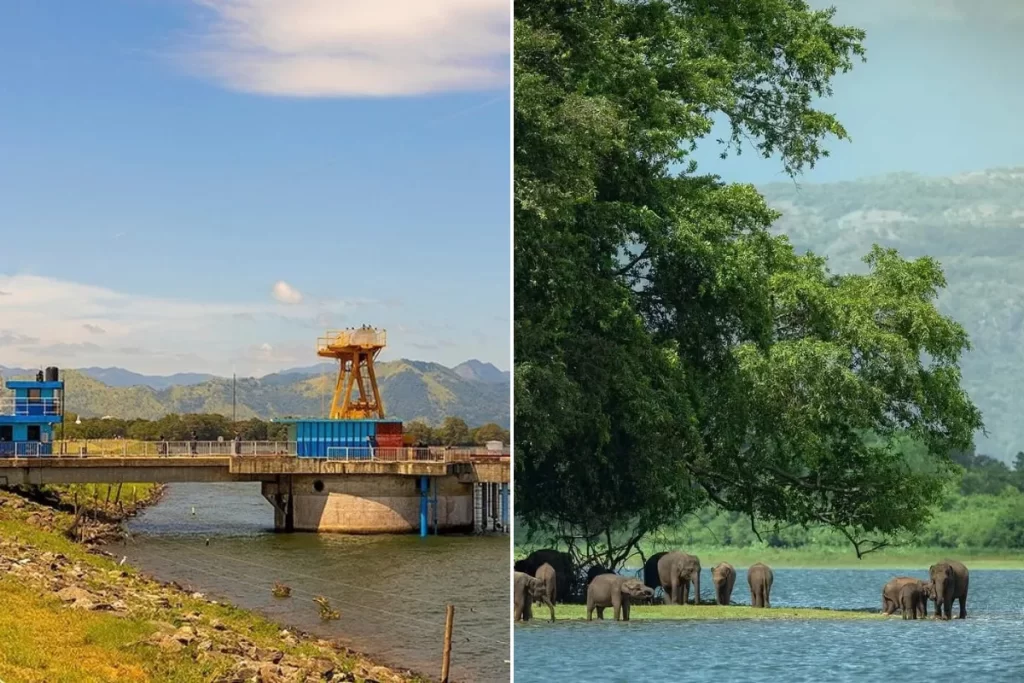
If you have time beyond the park itself, a few spots are worth building into the trip. The Udawalawe Reservoir Dam sits right outside the main gate and is a genuinely good sunset spot, with elephants, deer, and waterbirds often gathering along the shoreline in the evening. Sri Sankapala Rajamaha Viharaya is an old rock temple worth a quick stop along the main approach road. Further afield, Wavulpane is a 5.1 km limestone cave system with underground streams, though it requires a local guide and proper footwear. History buffs can detour to Maduwanwela Walawwa, a 17th-century ancestral manor house, and travelers heading toward the hill country can stop at Kirindi Ella Falls and the gem-trading town of Ratnapura along the way.
Udawalawe vs Other Safari Parks

| Feature | Udawalawe | Yala (Block 1) |
|---|---|---|
| Main draw | Asian elephants, 500 to 700 resident | Sri Lankan leopards, among the world’s highest densities |
| Terrain and visibility | Open savannah, high visibility | Mixed dense scrub and dry jungle |
| Jeep crowding | Moderate, vehicles spread out easily | Can get heavy, with convoys clustering around leopard sightings |
| Elephant sightings | Near-guaranteed, year round | Frequent but more variable in the dense brush |
| Leopard sightings | Rare | High probability |
| Seasonal closures | Open 365 days a year | Closes for roughly 4 to 5 weeks, usually September to October |
Wilpattu is worth a mention too: it’s denser, quieter, and sees far fewer visitors than either park, though sightings of anything in particular are less reliable because of the thicker cover.
Crowds, Ethics & Common Mistakes

The most common mistake is going in expecting leopards and leaving disappointed. The second is picking the cheapest driver available without checking how they actually behave around animals, which can mean off-road driving or crowding wildlife for a better photo. The third is visiting only in the flat midday light and heat, when animals are less active and photos come out worse anyway. An early morning or late afternoon safari consistently beats a midday one.
Safety and Practical Safari Tips
- Stay seated inside the jeep at all times, never step out onto the track
- Keep your voice down and don’t feed any wildlife
- Pack a telephoto lens or decent zoom if you want real photos, plus compact binoculars
- Bring sunscreen, insect repellent, a dust scarf or buff, and a reusable water bottle
- A light jacket is worth packing too, mornings can be genuinely chilly before the sun is up
- Dust gets everywhere on the open tracks, so lens covers for camera gear are worth the extra weight.
Is Udawalawe National Park Worth Visiting?

Yes, especially if reliable elephant sightings matter more to you than chasing a leopard. It’s less dramatic than Yala in some ways, but it’s also calmer, less crowded, and genuinely consistent, which counts for a lot when you’ve only got one safari to spend. Pair it with a wider wildlife itinerary if you have the time, or treat it as a standalone half-day stop between the hill country and the south coast.
Frequently Asked Questions About Udawalawe National Park
Is Udawalawe National Park worth visiting?
Yes, especially for reliable elephant sightings. The open terrain makes spotting wildlife easier than at most other Sri Lankan parks, and it’s a strong choice for first-time safari visitors and families.
What is Udawalawe National Park famous for?
It’s best known for its large resident population of wild Asian elephants, estimated between 500 and 700, and for the Elephant Transit Home nearby, which rehabilitates orphaned calves.
How much does it cost to enter Udawalawe National Park?
A foreign adult pays a $25 base ticket, but once the group service fee, vehicle fee, and 18% tax are added, the real total comes to roughly $43 per person. Children aged 6 to 12 pay $15 at the base rate, and children under 6 enter free.
How much does a safari jeep cost in Udawalawe?
A half-day safari, 3 to 4 hours, typically runs $25 to $35 per person or around $110 to $120 for a private jeep. A full-day safari, 6 to 7 hours, costs roughly $45 to $65 per person. This is separate from the park entrance fee.
What animals can I see in Udawalawe?
Wild elephants are the main draw, alongside water buffalo, spotted deer, wild boar, crocodiles, monitor lizards, and over 150 bird species. Leopards and sloth bears are present but rarely seen.
What is the best time to visit Udawalawe National Park?
May to September and December to March are the driest, most reliable months. October to January tends to bring the most rain to the region.
Should I go on a morning or afternoon safari?
Both work well. Mornings are cooler and quieter, while afternoons end with softer light and the option to watch the sunset over the reservoir afterward.
How long should a Udawalawe safari be?
A half-day safari of 3 to 4 hours is enough for most visitors and covers the core reservoir and grassland areas with the highest elephant concentration. A full day is really only worth it for serious birdwatchers or photographers.
Do I need a full day in Udawalawe?
No, not usually. A half-day safari covers the highlights well, and one night in the area is typically enough to fit in a safari plus a visit to the Elephant Transit Home.
Is Udawalawe suitable for families and children?
Yes. The shorter drives, high visibility, and near-guaranteed elephant sightings make it an easier, less demanding safari for families with children than Yala or Wilpattu.
Where should I stay when visiting Udawalawe?
Udawalawe town is the most convenient base, with options ranging from budget guesthouses to boutique eco-lodges. Embilipitiya is a reasonable alternative a bit further out.
What is the Elephant Transit Home?
It’s a Department of Wildlife Conservation facility that rehabilitates orphaned elephant calves and releases them back into the wild around age 5. Visitors watch scheduled bottle-feeding sessions from a raised public platform, with no direct contact allowed.
Are the safaris crowded?
Moderately, but jeeps tend to spread out across the open terrain rather than clustering the way they can around a leopard sighting at Yala, so it generally feels calmer.
Is Udawalawe better than Yala?
They suit different priorities rather than one being better outright. Udawalawe is the stronger choice for consistent elephant sightings and a calmer, shorter safari. Yala is the better choice if leopards are the main goal.

2 Comments