Picture this: it’s 6 AM, the mist is still clinging to the treetops, and your jeep crawls slowly down a dusty track in Yala National Park. Then, without warning, a Sri Lankan leopard drops from a rocky ledge just 20 metres ahead and locks eyes with you for a long, breathless second before melting into the scrub. Your guide glances back with a quiet smile. “Welcome to Sri Lanka,” he says.
That moment that specific kind of magic is why wildlife lovers from every corner of the world are choosing Sri Lanka over more familiar safari destinations. And once you experience it, you’ll understand completely.

Sri Lanka punches far above its weight when it comes to wildlife. This teardrop-shaped island, barely the size of Ireland, packs in tropical rainforests, ancient dry-zone jungles, misty cloud forests, and warm Indian Ocean waters all within a few hours of each other. The result is a concentration of biodiversity that genuinely astounds biologists, wildlife photographers, and first-time visitors alike.
In this guide, we’ll walk you through everything you need to plan an unforgettable Sri Lanka wildlife safari from the iconic national parks and the Sri Lankan Big Five, to hidden marine treasures, safari types, ethical travel tips, and a practical 5-day itinerary you can actually use.
Let’s get into it.
Why Sri Lanka is One of the World's Top Wildlife Destinations

Sri Lanka is officially recognized as one of Asia’s premier biodiversity hotspots and that’s not marketing language, it’s science. The island is home to over 90 mammal species, more than 240 bird species (of which 33 are endemic), and hundreds of reptile and amphibian species found nowhere else on Earth.
What makes Sri Lanka truly exceptional, though, isn’t just the numbers it’s the density. In Africa, you might drive for hours between sightings. In Sri Lanka, a single morning safari in Yala can deliver leopard tracks, elephant herds, mugger crocodiles, water buffalo, and dozens of bird species all before breakfast.

The island’s geography is the secret behind this richness. Four distinct ecological zones create entirely different wildlife habitats:
- The Dry Zone (North, East, and Southeast) — home to the great national parks: Yala, Wilpattu, Minneriya, and Kaudulla. Characterised by open scrub jungle, ancient reservoirs, and vast grasslands.
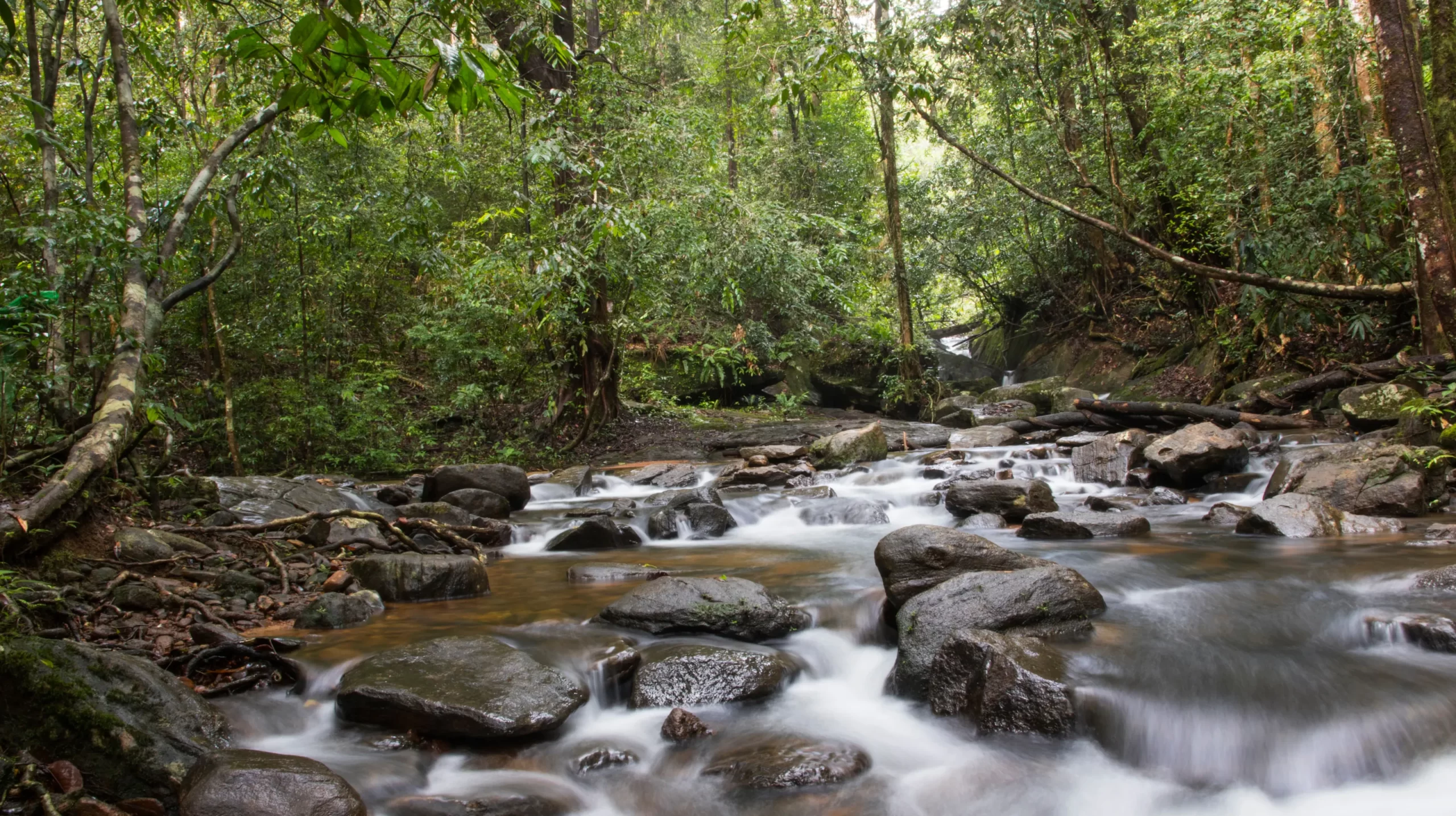
- The Wet Zone and Rainforests (Southwest) — where the ancient Sinharaja rainforest shelters Sri Lanka’s rarest endemic species.
- The Hill Country (Central Highlands) — cloud forests, plunging waterfalls, and the windswept plateau of Horton Plains, where the landscape feels closer to Scotland than South Asia.
- The Coastline and Ocean — where marine giants like blue whales and sperm whales pass close enough to shore to leave you completely speechless.
Sri Lanka also has one of the highest rates of wildlife endemism in Asia. Roughly 16% of its flowering plants, 21% of its mammals, and nearly 14% of its birds exist only here. Nowhere else on the planet.
Meet the Sri Lankan Big Five
Africa has its famous Big Five lion, leopard, elephant, rhino, and buffalo. Sri Lanka has its own version, and arguably a more diverse one, because it spans both land and open ocean.
1. Sri Lankan Leopard

The undisputed star of Sri Lanka’s wildlife scene. The Sri Lankan leopard (Panthera pardus kotiya) is a distinct subspecies larger and more heavily built than its Indian cousin and because there are no lions or tigers competing for the apex predator position, leopards here are surprisingly bold and visible during daylight hours.
Yala National Park holds one of the highest recorded leopard densities in the world, making it arguably the single best place on Earth to observe a wild leopard in its natural habitat.
- Best parks: Yala (Block 1), Wilpattu
- Best time: May to September (dry season)
2. Asian Elephant

Sri Lanka is home to the largest concentration of Asian elephants (Elephas maximus maximus) on the planet. The Sri Lankan subspecies is also the largest of all three Asian elephant subspecies. Watching a herd of 200 or more elephants move across an open plain during the famous Elephant Gathering at Minneriya is one of those wildlife experiences that no photograph can fully do justice to.
- Best parks: Minneriya, Kaudulla, Udawalawe
- Best time: July to October (Elephant Gathering peak)
3. Sloth Bear

Shy, shaggy, and entirely unique to the island the Sri Lankan sloth bear (Melursus ursinus inornatus) is one of the most sought-after but rarely spotted mammals in Asia. Wilpattu National Park offers the best chance of a sighting, particularly near fruit-bearing trees and termite mounds in the early morning. Seeing one in the wild is a genuine privilege that even experienced safari guides get excited about.
- Best parks: Wilpattu, Wasgamuwa
- Best time: May to August
4. Blue Whale

Here is where Sri Lanka completely separates itself from every other wildlife destination in the world. The waters off Mirissa on the south coast and Trincomalee on the east coast offer some of the most accessible Blue whale (Balaenoptera musculus) watching on Earth. We’re talking about the largest animal to have ever existed on this planet and you can encounter it on a day trip from the beach.
- Best locations: Mirissa (November–April), Trincomalee (April–September)
- Best time: November to April off the south coast
5. Sperm Whale

Sri Lanka sits along a natural deepwater channel in the Indian Ocean that sperm whales (Physeter macrocephalus) use year-round. These deep-diving giants are a regular sighting on whale-watching tours from both Mirissa and Trincomalee, often spotted alongside blue whales. Reliable sperm whale sightings here are more consistent than almost anywhere else in the Indian Ocean.
- Best locations: Mirissa, Trincomalee
- Best time: Year-round, peak November to April
The Big Four National Parks: Where Safari Dreams Come True
1. Yala National Park — The Leopard Capital of the World
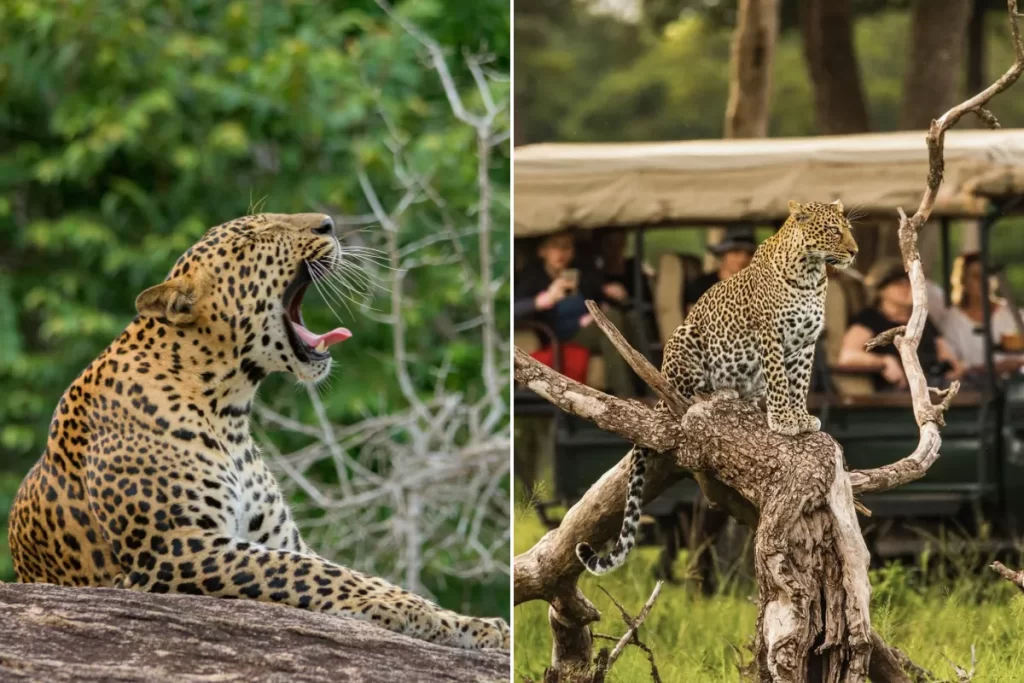
If you only visit one national park in Sri Lanka, make it Yala. It is the country’s most celebrated wildlife destination for very good reason Block 1 has the world’s highest recorded density of wild leopards, and wildlife sightings here are almost guaranteed during the dry season.
Yala covers over 97,000 hectares of monsoon forest, open grassland, lagoons, and rocky outcroppings that support an extraordinary range of species. Beyond leopards, expect regular encounters with elephants, mugger crocodiles, water buffalo, spotted deer, golden jackals, sloth bears (if fortune is on your side), and a spectacular variety of waterbirds and raptors.
A practical tip: book a 6 AM start, choose a guide with genuine park knowledge rather than just a licence, and avoid the park between 10 AM and 3 PM when animals retreat into shade and vehicle numbers peak. For a more private and dramatic experience, Block 5 requires a specialist operator but rewards you with far fewer competing vehicles.
| Question | Answer |
|---|---|
| Best time to visit | May to September (dry season) |
| Closest base town | Tissamaharama |
| Don’t miss | Leopard sightings at dawn near the rocky outcrops of Block 1 |
2. Wilpattu National Park — Sri Lanka's Wild, Uncrowded Side

Wilpattu is Sri Lanka’s largest national park and its best-kept secret. While Yala draws most of the tourist traffic, Wilpattu offers something arguably more rewarding: genuine solitude. The park’s defining natural feature is its network of natural lakes called villus rain-fed, sandy-bottomed basins that create extraordinary wildlife-watching conditions along their banks.
Leopards and sloth bears are both present in solid numbers, and without Yala’s volume of vehicles, a morning drive through Wilpattu regularly feels as though you have the entire jungle to yourself. The park also tells a quieter historical story it closed for nearly two decades during Sri Lanka’s civil war and has since seen a remarkable natural recovery. Wildlife populations have rebounded strongly, and the park has an atmosphere of genuine wildness that is very hard to replicate.
If you value authenticity, privacy, and the feeling of real exploration, Wilpattu should be at the top of your list.
👉 Full breakdown: Wilpattu National Park Travel Guide: Safari Experience, Best Time to Visit & Easy Tips
| Question | Answer |
|---|---|
| Best time to visit | February to October |
| Closest base towns | Puttalam / Anuradhapura |
| Don’t miss | Sloth bear sightings at villu edges in the early morning |
3. Udawalawe National Park — The Elephant Park

For near-guaranteed elephant sightings, no park in Sri Lanka or arguably anywhere in Asia beats Udawalawe. The park was created when the Udawalawe Reservoir was completed in 1972, and the elephants displaced from the surrounding jungle never truly left. Today, the park is home to a permanent resident population of over 600 wild elephants.
Unlike Yala’s dense scrub, which can make wildlife spotting feel like solving a puzzle, Udawalawe’s open grasslands and reservoir shoreline mean elephants are almost always visible, often in large family herds. Morning safaris here regularly encounter groups of 50 or more moving through the open landscape.
A must-visit addition is the Elephant Transit Home a rehabilitation facility run by the Sri Lanka Wildlife Conservation Society that rescues orphaned elephant calves and prepares them for reintroduction into the wild. Feeding sessions are open to visitors and are genuinely moving to observe.
👉 Full breakdown: Udawalawe National Park Travel Guide: Elephant Safari, Best Time to Visit & Easy Tips
| Question | Answer |
|---|---|
| Best time to visit | Year-round (June–September for dry weather) |
| Closest base town | Embilipitiya |
| Don’t miss | Feeding session at the Elephant Transit Home |
4. Minneriya & Kaudulla National Parks — Home of The Great Elephant Gathering

Every August and September, something extraordinary unfolds at Minneriya National Park. As the surrounding jungle dries out during Sri Lanka’s drought months, hundreds of elephants sometimes over 300 in a single gathering converge on the receding Minneriya Tank to graze on the exposed fresh grass, bathe, and socialise. This seasonal event, known as The Elephant Gathering, is widely considered the largest congregation of wild Asian elephants on Earth.
It is not merely a spectacular scene. It is a genuine ecological phenomenon a seasonal movement driven by water and food availability across a vast landscape and witnessing it changes the way you think about nature and animal intelligence.
When Minneriya closes for scheduled maintenance (typically around October), its neighbour Kaudulla National Park takes over as the primary gathering ground, with equally impressive elephant concentrations around Kaudulla Tank.
Both parks also offer excellent year-round wildlife viewing, including painted storks, grey herons, lesser adjutants, crocodiles, and sambar deer along the tank margins.
| Question | Answer |
|---|---|
| Best time for The Gathering | August to October |
| Closest base town | Habarana / Polonnaruwa |
| Don’t miss | The full Gathering at golden hour — 4 PM onwards |
Highland, Rainforest & Marine Treasures: Beyond the Safari Parks
The classic dry-zone parks are world-class but Sri Lanka’s wildlife story stretches far beyond them. Some of the island’s most extraordinary natural encounters happen in places that don’t even have jeep tracks.
Sinharaja Forest Reserve — The Jewel of Sri Lanka's Rainforests

Sinharaja is unlike anywhere else in Sri Lanka. A UNESCO World Heritage Site and one of Asia’s last remaining intact lowland tropical rainforests, it is a dense, dripping, ancient jungle that hums with layered life from the forest floor to the canopy. This is the heartland of Sri Lanka’s endemic species over 50% of the island’s endemic birds can be found here, including the Sri Lanka blue magpie, red-faced malkoha, green-billed coucal, and Sri Lanka spurfowl.
There are no jeep safaris in Sinharaja. The only way to experience it properly is on foot with a knowledgeable local guide, moving quietly through the understorey while bird calls build up around you in layers. It is quiet, immersive, and entirely different from the dry-zone safari experience and many serious wildlife travellers consider it the most memorable part of their Sri Lanka trip.
👉 Plan your birding trip: Birdwatching in Sri Lanka: Where to Spot Rare Species
| Question | Answer |
|---|---|
| Best time to visit | January–March and August–September |
| Closest base town | Deniyaya / Ratnapura |
| Don’t miss | Mixed-species bird flocks following army ant columns |
Horton Plains National Park — The Roof of Sri Lanka

Most first-time visitors skip Horton Plains entirely. That is a genuine mistake. Situated at 2,100 metres above sea level in the Central Highlands, Horton Plains is a windswept plateau of cloud forest, montane grasslands, and rushing trout streams and it looks nothing like the rest of Sri Lanka.
The main draw is World’s End a sheer cliff edge that drops nearly 870 meters straight down, with views sweeping all the way to the southern coastline on a clear morning. The key is arriving at the trailhead before 9 AM; after that, cloud rolls in and closes the view completely.
Wildlife in the park includes sambar deer (often in large herds on the open grasslands), purple-faced langur, giant squirrel, leopard (present but very rarely seen), and over 20 bird species found only at highland altitudes. Horton Plains is also a critical watershed three of Sri Lanka’s major rivers originate here.
| Question | Answer |
|---|---|
| Best time to visit | January to March (clearest skies) |
| Closest base town | Nuwara Eliya / Haputale |
| Don’t miss | World’s End at sunrise, before the clouds arrive |
Marine Safaris: Mirissa, Trincomalee & Pigeon Island
Sri Lanka’s wildlife experience extends well beyond the shoreline. The island sits on the edge of a natural deepwater channel in the Indian Ocean, and the marine life here can genuinely rival anything on land.

Whale and Dolphin Watching:
- Mirissa (south coast) — The top destination for blue whale and sperm whale watching in Sri Lanka. Peak season runs November to April. Spinner dolphins are an almost daily sighting, and on a good morning you can encounter multiple blue whale sightings within a few hours. Choose operators who follow international whale-watching guidelines and cap approach distances.
- Trincomalee (east coast) — Equally rewarding from April to September, with both blue and sperm whales using the deep offshore channel. Trincomalee’s natural harbour is one of the finest in the world, and the calm east-coast waters from April onward make for comfortable viewing conditions.
Pigeon Island Marine National Park:

Located a short boat ride off Nilaveli beach near Trincomalee, Pigeon Island is one of Sri Lanka’s two marine national parks and one of the best snorkelling sites in Asia. The coral reefs here are among the healthiest on the island, home to blacktip reef sharks, hawksbill turtles, moray eels, and over 300 reef fish species. Visibility is typically excellent between April and September.
Sea Turtle Watching:

Five of the world’s seven sea turtle species nest on Sri Lanka’s beaches. Between November and April, the beaches near Rekawa (south coast) and Kosgoda (west coast) host regular nesting activity. Ethical, ranger-guided night watches are available at both sites these are quiet, close-up encounters that are impossible to forget.
Lesser-Known Parks Worth Adding to Your Itinerary
- Wasgamuwa National Park — Quieter than Yala with good elephant and leopard populations and almost no tourist vehicles. An ideal choice if solitude matters to you.
- Gal Oya National Park — Sri Lanka’s only boat safari. You drift across a vast reservoir watching elephants swim between forested islands. Genuinely unlike anything else in the country.
- Kumana National Park (Yala East) — A waterbird paradise, particularly from May to July when tens of thousands of migratory and resident birds nest in the mangroves and lagoons.
Types of Safari Experiences in Sri Lanka
Jeep Safaris

The classic format. All major national parks are accessed by 4WD jeep with a certified wildlife guide. Morning sessions (6 AM–10 AM) and afternoon sessions (3 PM–6 PM) are standard. A genuinely good guide will know territorial boundaries, animal behaviour patterns, and where particular individuals are likely to be at different times of day that knowledge separates an average safari from an extraordinary one.
Walking Safaris

Available in Sinharaja, the Knuckles Mountain Range, and sections of Horton Plains. Walking changes the experience completely you notice what you miss from a moving vehicle, you hear the environment properly, and the sense of immersion is on a different level entirely.
Boat Safaris

Unique to Gal Oya and partially available around the tanks at Minneriya and Kaudulla. Watching a breeding herd of elephants enter the water from a small motorboat is genuinely unlike anything in conventional land-based game viewing.
Whale Watching Tours

Half-day or full-day departures from Mirissa or Trincomalee. Quality varies significantly between operators. Choose one that follows the Sri Lanka government’s responsible whale-watching code, limits the number of boats at each sighting, and provides a certified marine naturalist on board.
Where to Stay: Safari Accommodation Near Sri Lanka's National Parks
Where you sleep on a Sri Lanka wildlife trip matters more than most people realise. Staying on or near a park boundary rather than commuting from a town hotel gives you earlier access, quieter surroundings, and a completely different atmosphere after day visitors leave. Here is a quick park-by-park guide.
Yala — The Most Options, Every Budget

Yala has Sri Lanka’s strongest safari accommodation scene with something for every budget. For the ultimate splurge, Wild Coast Tented Lodge (teak floors, copper bathtubs, wildlife roaming the property) and Uga Chena Huts (private plunge pools, daily safaris included) are the go-to special-occasion properties. Jetwing Yala and Hilton Yala Resort are the flagship full-service luxury options polished, well-located, and reliably excellent. For a solid mid-range stay, Wild Culture Yala, Cinnamon Wild Yala, and Jetwing Jungle Lodge all earn strong reviews for food, guiding, and atmosphere without the premium price tag.
Wilpattu — Intimate Camps for Real Wilderness

Thamaravilla is the standout here five tented chalets with mini private pools and naturalist-guided safaris included. Leopard Trails Camp offers just four tents for a genuinely private experience. Both suit travellers who want the wilderness feeling without sacrificing comfort.
Minneriya & Kaudulla — Culture Meets Wildlife

Base yourself in Habarana. Jetwing Vil Uyana villas on stilts over a private wetland, excellent birdwatching, short drive to both parks is the top pick. Heritance Kandalama, designed by legendary architect Geoffrey Bawa, offers dramatic reservoir views and naturalist-led excursions with Minneriya and Kaudulla both nearby.
Udawalawe — Keep It Simple

Most visitors here are focused on elephants rather than resort luxury. Banyan Camp on Lake Hambegamuwa is the atmospheric choice eco-built, run by wildlife enthusiasts, with lake boat trips included. Mid-range hotels in Embilipitiya work perfectly well as a no-fuss base.
| Budget Level | Approx. Cost | Best Examples |
|---|---|---|
| Ultra-Luxury | USD 700–1,300+/night | Wild Coast Tented Lodge, Uga Chena Huts |
| Luxury | USD 250–600/night | Hilton Yala Resort, Jetwing Yala, Jetwing Jungle Lodge |
| Boutique / Mid-Range | USD 100–250/night | Wild Culture Yala, Cinnamon Wild Yala, Banyan Camp,Thamaravilla |
| Budget | USD 15–60/night | Guesthouses |
Sri Lanka Safari vs. Africa Safari: An Honest Comparison

This question comes up constantly, and it deserves a straight answer.
| Sri Lanka | Africa (Kenya/Tanzania) | |
|---|---|---|
| Top predator | Leopard | Lion, Leopard, Cheetah |
| Elephant experience | ✅ World-class | ✅ World-class |
| Marine wildlife | ✅ Blue & sperm whales | ❌ Very limited |
| Compactness | ✅ 3 parks in 5 days is easy | ❌ Long drives between parks |
| Cost | ✅ Significantly more affordable | ❌ Premium pricing at top camps |
| Crowd levels | Moderate at Yala | Varies widely |
| Endemic bird species | ✅ 33 endemics | ✅ Vast overall numbers |
| Big cat variety | Leopard only | Lion, Leopard, Cheetah, Caracal |
The honest verdict: If watching lions hunt at dawn is your primary dream, go to Africa. But if you want density, diversity across land and open ocean, strong value for money, and the ability to track leopards, watch 300 elephants, and encounter blue whales all within a single week Sri Lanka is in a category entirely its own.
The Ultimate 5-Day Sri Lanka Wildlife Itinerary

This itinerary is built to cover the highlights while remaining logistically honest no exhausting 6-hour drives on the same day as a 5 AM safari start.
- Day 1 — Arrive Colombo → Drive to Habarana (3.5–4 hours) Settle into your lodge. Late afternoon: visit Minneriya Tank at golden hour elephant herds regularly descend to the water’s edge from 4 PM onward.
- Day 2 — Minneriya National Park (Full Day) Morning safari at 6 AM. Focus on the Elephant Gathering herd movements and the tank shoreline. Afternoon safari (3 PM) for waterbird photography. Optional evening: Sigiriya Rock Fortress is a 30-minute drive and well worth adding.
- Day 3 — Habarana to Yala (3.5 hours south) Drive south via the cultural triangle or along the east coast if birding interests you. Check into your Yala lodge by mid-afternoon. Evening jeep safari: 3 PM–6 PM. First encounter with Block 1’s leopard territories.
- Day 4 — Yala National Park (Full Day) 6 AM morning safari the single most productive window for leopard sightings, particularly around the rocky outcrops near the lagoons. Rest during the midday heat. 3 PM afternoon safari different leopards become active as temperatures drop and prey animals return to open ground.
- Day 5 — Yala to Mirissa (2 hours) → Whale Watching Whale watching boat departs Mirissa harbour at 6:30–7 AM. Plan to be in Mirissa the night before for an easy start. Two to four hours offshore with a good operator regularly produces blue whale and spinner dolphin sightings. Return to Colombo by early evening (2.5 hours) or extend your trip with a night in Mirissa.
Optional Add-On (Day 6): Pigeon Island marine snorkelling via Trincomalee, or a full day at Udawalawe with a morning visit to the Elephant Transit Home.
Responsible and Ethical Wildlife Tourism in Sri Lanka

Sri Lanka’s wildlife is extraordinary and it is fragile. The decisions you make as a traveller directly affect the animals and ecosystems you are visiting. Here is how to make sure your presence helps rather than harms:
- Choose Operators Who Follow the Rules Look for guides and safari companies that comply with Wildlife Conservation Department regulations. Responsible operators maintain proper distances from animals, do not crowd sightings, and will calmly redirect drivers who approach too closely. Ask operators directly about their approach before you book.
- Respect Distance Guidelines No matter how tempting the shot is, never pressure your driver to move closer than regulations allow. Leopards in particular are easily stressed by vehicle crowding, and repeated disturbance alters their natural behaviour over time.
- No Flash Photography Flash photography stresses diurnal animals and is genuinely harmful to nocturnal ones. Use available light and invest in appropriate wildlife photography equipment if this matters to you.
- Say No to Elephant Riding Wild elephants are not physiologically designed to carry humans. The domestication process required for riding involves significant suffering. Visit the Elephant Transit Home at Udawalawe instead it is ethical, it is moving, and it gives you an intimate encounter with elephants that is far more meaningful than a ride.
- Leave No Trace No littering in parks, no plastic, no feeding of wildlife. Take everything you brought in back out with you.
Frequently Asked Questions
What is the best time of year for a wildlife safari in Sri Lanka?
It depends on where you are going. For Yala and the dry zone parks, May to September is ideal — the dry season concentrates animals around shrinking water sources and makes sightings more reliable. For the Elephant Gathering at Minneriya, August to October is peak. For whale watching off Mirissa, November to April is the optimal window. If you want to cover multiple experiences in one trip, July to September offers the best all-round conditions across most parks simultaneously.
How does a Sri Lanka safari compare to an African safari?
Sri Lanka cannot match Africa for big cat variety — there are no lions or cheetahs here. However, it holds its own impressively on leopards, elephant numbers, and overall wildlife density. The game-changing advantage is scale: Sri Lanka is compact enough that you can witness 300 wild elephants at Minneriya, track leopards at Yala, and watch blue whales off Mirissa all within a single 5–7 day itinerary. That combination exists nowhere else on Earth. It is also considerably more affordable than East Africa at equivalent quality levels.
Which national park is best for families with children?
Udawalawe is the top recommendation for families. Elephant sightings are near-guaranteed, the open landscape makes spotting straightforward, and the Elephant Transit Home provides an educational layer that children genuinely connect with. Minneriya is also excellent for families during the Elephant Gathering season — the sheer scale of the herd is something children remember for life.
Are safaris in Sri Lanka safe?
Yes, very much so. Sri Lanka has a well-established tourism infrastructure, and national parks are properly managed with licensed guides and clear visitor regulations. Standard precautions apply — remain inside your vehicle unless your guide specifically instructs otherwise, maintain safe distances from elephants and buffalo, and follow all park rules without exception. There are no dangerous predators in Sri Lanka that present a realistic risk to visitors on a standard jeep safari.
Is Sri Lanka good for birdwatching?
Sri Lanka is one of Asia’s premier birdwatching destinations, with 33 endemic bird species found nowhere else in the world. Sinharaja Forest Reserve, Horton Plains, the Kitulgala rainforest, and the Kumana lagoon system are among the top birding sites. For a full dedicated guide, see our article on Birdwatching in Sri Lanka: Where to Spot Rare Species.
Do I need to book safaris in advance?
During peak season July to September for most parks, November to April for whale watching booking in advance is strongly recommended, particularly for accommodation and whale watching tours. Yala Block 1 has a strict vehicle limit per session and fills quickly in August. Outside peak months, you have considerably more flexibility and often negotiate better rates directly with local operators.
Final Thoughts: Sri Lanka's Wildlife is Worth Every Mile

Sri Lanka will not give you the wide-open savanna drama of the Serengeti. What it will give you if you plan it right is a wildlife experience more compressed, more diverse, and more surprising than almost anywhere else on Earth.
A leopard staring you down at 20 metres. Two hundred elephants filling the horizon at sunset. A blue whale surfacing close enough that you can hear the breath. Endemic birds singing from trees that do not exist anywhere outside this one island. All of that, in one place, within a week.
That is the Sri Lanka promise and it delivers every single time.
Ready to start planning? Browse our full Sri Lanka Wildlife Guide collection for park-by-park breakdowns, booking tips, and everything else you need to make your trip exceptional.
Further Readings
- Yala National Park Travel Guide: Safari Tips, Best Time to Visit & What to Expect
- Wilpattu National Park Travel Guide: Safari Experience, Best Time to Visit & Easy Tips
- Udawalawe National Park Travel Guide: Elephant Safari, Best Time to Visit & Easy Tips
- Birdwatching in Sri Lanka: Where to Spot Rare Species
- Trincomalee Travel Guide: Best Time to Visit, Beaches, Snorkeling & Easy Tips
- Mirissa Travel Guide: Whale Watching and Beach Hopping in Sri Lanka