Anuradhapura is Sri Lanka’s first capital and a UNESCO World Heritage Site in the North Central Province, still active as a Buddhist pilgrimage site today. The ruins spread across roughly 40 square kilometers, so most visitors get around by bicycle or tuk-tuk rather than on foot. A general admission ticket costs $30 USD and covers most of the major stupas and monasteries. Plan for one full day if you are short on time, or two days if you want to see the highlights without rushing and add a half-day trip to nearby Mihintale.
This guide helps you plan Anuradhapura the right way. You’ll know when to go, how long to stay, how to get value from the ticket, and how to explore without wearing yourself out. Simple steps. Clear expectations.
Is Anuradhapura Worth Visiting?
Yes, if you go in with the right mindset. Anuradhapura was Sri Lanka’s first capital and is a UNESCO World Heritage Site. It is also a living pilgrimage city. People come here to pray, not just to look, and that mix of history and faith is what sets it apart from a typical ruins site.
Anuradhapura suits you if:
- You enjoy history and open-air sites
- You are comfortable spending time outdoors
- You like quiet, reflective places
- You are happy moving at a slow pace
If you want a quick attraction or dislike heat and long distances, this may feel demanding unless you plan carefully.
Where Is Anuradhapura & How to Get There
Anuradhapura sits in Sri Lanka’s North Central Province, inside the Cultural Triangle. It is farther north than Dambulla and Polonnaruwa, so getting there takes real travel time. Build a full day around the trip if you are coming from Colombo.
Getting There
- From Colombo (205 to 210 km): The train from Colombo Fort takes roughly 4 to 5 hours on the faster services, and more on slower ones. The bus takes about 5.5 to 6 hours depending on traffic. Both run several times a day. An early start helps either way.
- From Kandy (150 to 165 km): A direct bus takes around 4 hours. If there is no direct service running, take a bus to Dambulla and transfer to an Anuradhapura-bound bus from there.
- From Dambulla or Sigiriya (72 to 78 km): About 2 to 3 hours by road. Frequent local buses run north from the main Dambulla bus stand.
- From Polonnaruwa(108 km): Around 1.5 hours.
Once you arrive, the town itself is easy to navigate. The sacred sites are spread out, not clustered, which is exactly why transport planning matters here more than at most other Sri Lankan ruins.
Understand the Scale Before You Go (Very Important)
Anuradhapura is huge. The sacred city covers around 40 square kilometers, and walking the whole thing is unrealistic for most visitors, especially under the sun. This is where many people get frustrated. The key is choosing the right way to move around, and that decision shapes the entire experience. See the section on exploring the site below.
Best Time to Visit Anuradhapura
Best Months
May to September is the dry season here, which makes cycling and walking noticeably easier.
Other Good Months
November to February runs cooler, but the site is busier with visitors and pilgrims, and this window also carries more rain risk than the May to September stretch.
Month to Be Careful With
October often brings rain. Paths get muddy, and visits feel harder.
Best Time of Day
- Early morning (6 to 10 am): Cooler, quieter, and more spiritual
- Late afternoon (4 to 6 pm): Soft light and fewer crowds
Midday heat is intense, and temperatures that feel like 40°C are common even when the thermometer reads closer to 32°C. Plan breaks or avoid that window entirely.
Tickets, Costs and Is It Worth the Price?
The main archaeological ticket costs $30 USD per person and covers most of the major stupas and monastery ruins, including Ruwanwelisaya, Abhayagiri, Jetavanarama, Thuparamaya, Kuttam Pokuna, and several smaller sites. It is valid for more than one day, and many visitors do not realize this, so they rush everything into one hot afternoon.
Two sites are not included in that main ticket: the Sri Maha Bodhi and Isurumuniya each charge their own separate entry fee, roughly 200 to 500 LKR (about $1 to $1.50 USD). The Archaeological Museum also charges separately, around 500 LKR (about $1.50 USD). Keep a bit of cash on hand for these.
If you want a cheaper day, hire a tuk-tuk with a driver for 3 hours and visit the free temples and minor sites scattered around the complex instead of the ticketed core. It will not replace the main sites, but it is a reasonable way to get a feel for the place on a tight budget.
The value of the main ticket comes down to how you use it:
- Spending enough time
- Moving slowly
- Using a bike or tuk-tuk instead of walking
If you rush, it feels expensive. If you spread the visit across a full day or two, it makes sense.
Best Way to Explore Anuradhapura
Cycling (Recommended)
Cycling is the best way to see Anuradhapura. The distances feel manageable, you control the pace, and you can stop for shade or prayer whenever you like. Bike rentals are easy to find near the sacred area and cost around between LKR 1,000 and LKR 3,000 (about $3 USD – $10 USD) per day. Roads are flat, but the sun is strong, so start early.
Split your cycling into two shifts if the heat gets to you: an early run starting around 7 am, and a second one from about 4 pm once the worst of the afternoon sun has passed. If you are staying somewhere for the sake of cycling, book a room close to the ancient complex. Staying farther out can add up to 14 km of extra pedaling in the heat each way.
Tuk-Tuk or Car
This works if you do not want to cycle or if you are visiting with elders. It is less immersive but far more comfortable in the heat, and it is the practical choice for covering the full 40 square kilometer site without exhausting yourself. A car is faster and more comfortable again, though pricier and even less immersive than a tuk-tuk.
Walking
Walking short sections is fine. Walking the full site is tiring and not advised.
Do You Need a Guide at Anuradhapura?
A guide is optional.
- With a guide: You will understand symbolism, timelines, and meaning. Helpful if history matters to you.
- Without a guide: You can still enjoy the place by observing, reading signs, and taking your time.
Some informal guides may approach you. A polite refusal is enough if you are not interested.
Anuradhapura Highlights You Shouldn’t Miss
Ruwanwelisaya Stupa
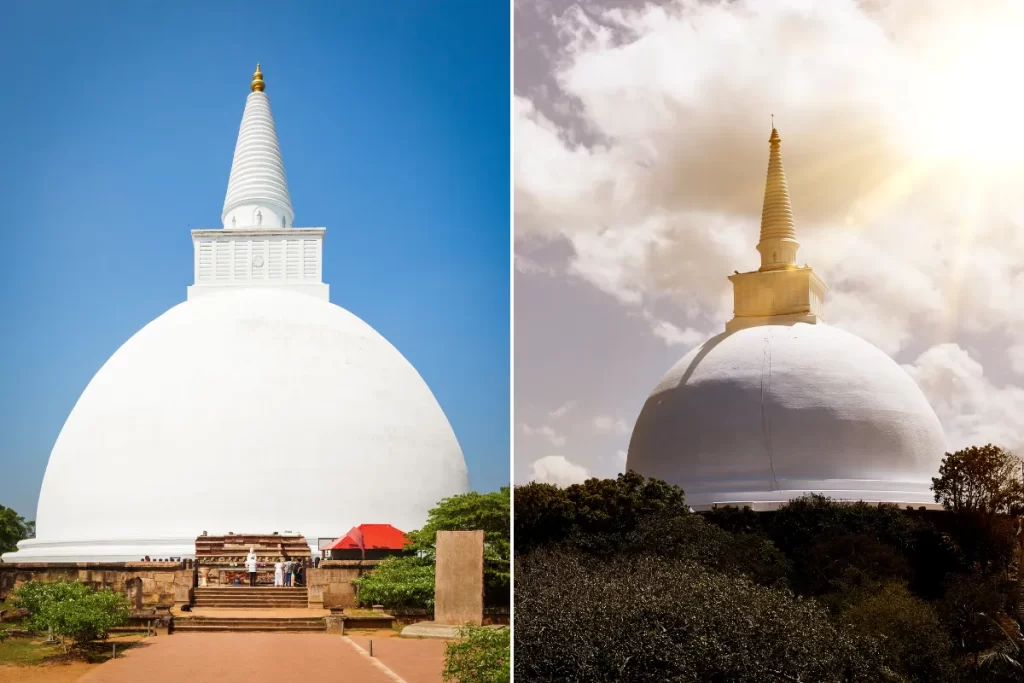
Bright, massive, and calm, this is one of the most important stupas in Sri Lanka, ringed by a wall of 344 carved stone elephants. Many visitors feel its impact immediately. Dress modestly, walk clockwise, and keep your voice down.
Jaya Sri Maha Bodhi
A sacred tree grown from a cutting of the original Bodhi Tree. It is over 2,000 years old and still alive. This is a place of devotion, and a separate entry fee applies here on top of the main ticket. Move slowly and respectfully.
Thuparamaya
The oldest stupa in Sri Lanka. Small, but deeply important, and an easy stop that adds context before you move on to the larger sites.
Abhayagiri Monastery and Moonstone
Wider ruins with more shade, and a good place to slow down between the larger stupas. Look for the moonstone at the entrance, a semi-circular carved step considered one of the finest examples of this Sri Lankan art form. It is worth stopping to look at closely rather than walking straight over it.
Jetavanarama Stupa
Once among the tallest structures in the ancient world. Its scale is hard to grasp until you are standing right next to it.
Samadhi Buddha Statue
A seated Buddha statue from around the 4th to 6th century, carved from dolomite marble, showing the Buddha in meditation with his palms turned upward. Visitors often mention that the face looks slightly different from each side: a little more at peace from one angle, a touch more solemn from the other. It sits in a quiet, shaded spot near the Bodhi tree and is easy to miss if you do not know to look for it.
Rathna Prasadaya
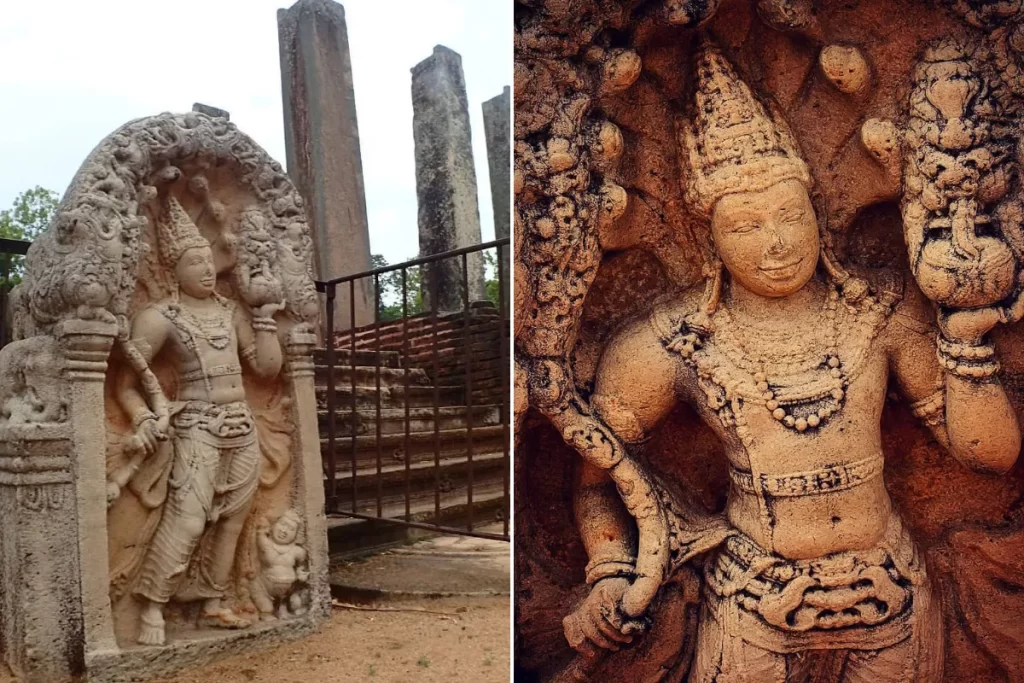
The ruins of a seven-story palace, now reduced to its stone foundations and pillars. The reason to come here is the guard stone at the entrance, a carved dragon, a seven-headed cobra, and dwarf attendants worked into a single slab. It is considered one of the finest carved guard stones anywhere in Anuradhapura.
Mirisawetiya and Lankarama
Two large white stupas that see far fewer visitors than Ruwanwelisaya, which makes them a good stop if you want a quiet moment. Lankarama still has its surrounding stone pillars, and the nearby Elephant Pond is fed by an underground canal system that, remarkably, still works today.
Isurumuniya Rock Temple
Compact and artistic, carved partly from a natural rock outcrop above the Tissa Wewa reservoir, with a reclining Buddha and detailed stone carvings inside. A nice contrast to the larger stupas and a good final stop for the day. It has its own entry fee, separate from the main ticket, and it is worth timing your visit for the light over the reservoir in the late afternoon.
Ranmasu Uyana: The Royal Pleasure Garden
Ranmasu Uyana sits in the southwestern corner of the sacred city, between the Tissa Wewa embankment and Isurumuniya, and it does not get anywhere near the traffic that the main stupas do. It was the royal pleasure garden in ancient times, and today it is a shaded walk with a few specific things worth seeking out. Go early morning, around 7:30 to 9:30 am, or late afternoon, to stay out of the midday sun under the tree canopy.
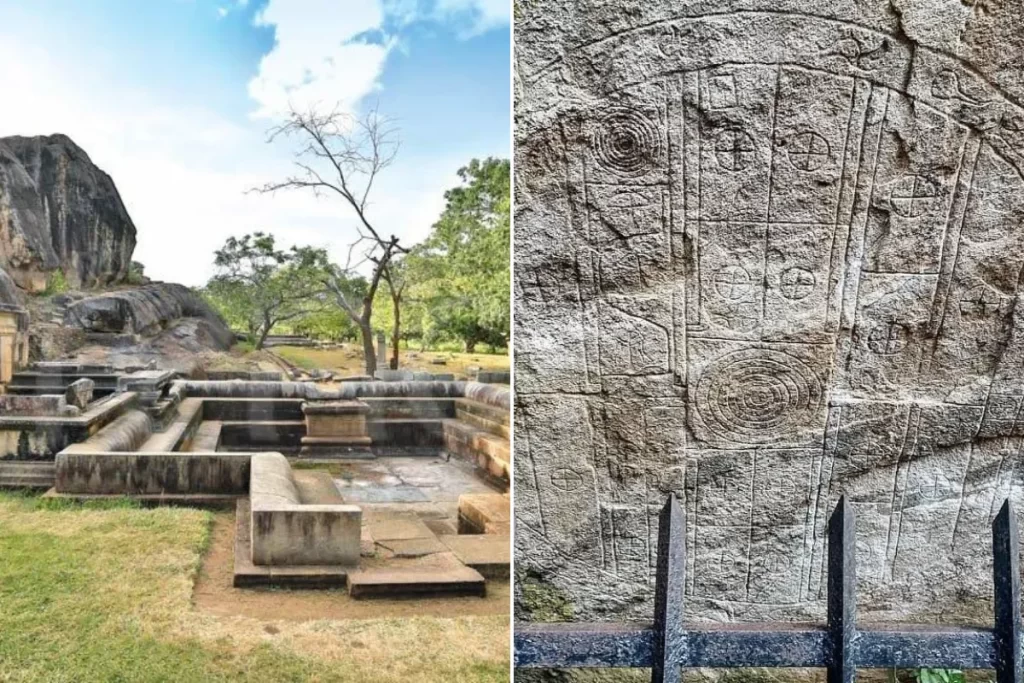
- Sakwala Chakraya: A 6-foot circular petroglyph carved into the cliff face near the reservoir embankment, with rock-cut seats nearby where monks or royalty are thought to have sat.
- Royal bathing pools: Well-preserved granite tanks with carved steps and water inlets fed by an ancient pressure system.
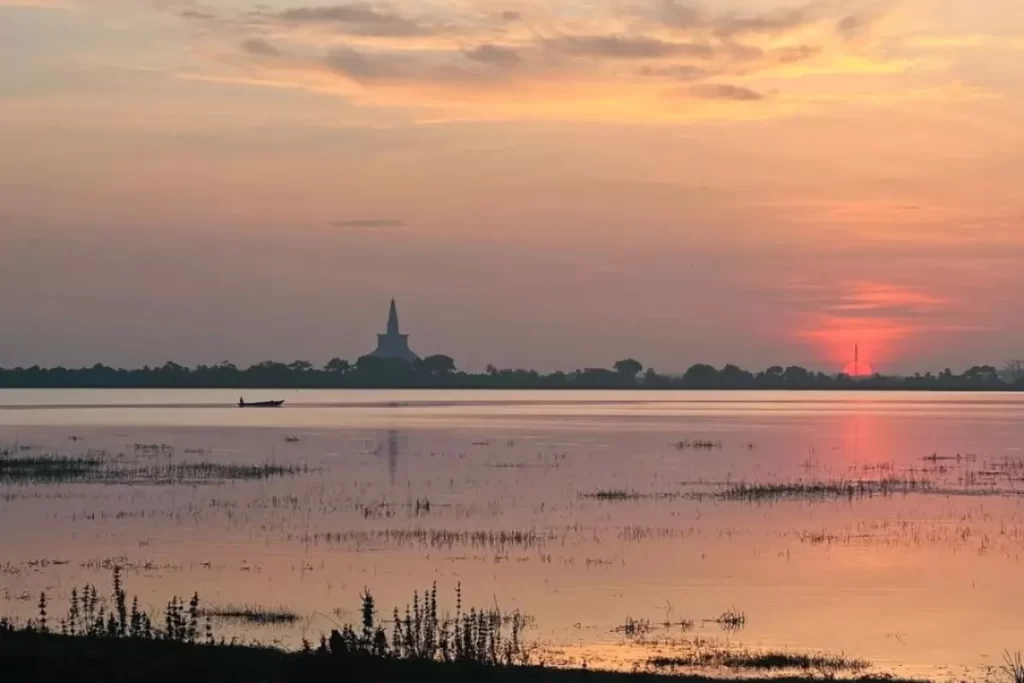
- Tissa Wewa views: A walk up to the elevated reservoir bank gives a wide view over the water, especially good at sunset.
Tissa Wewa and Basawakkulama Tank
These two reservoir lakes are worth a slow evening walk rather than a dedicated stop. Both attract birdlife, and Tissa Wewa in particular is a good sunset spot, with the water catching the light behind Isurumuniya.
Suggested Route Order (To Save Energy)
Start early. Begin near Ruwanwelisaya and Jaya Sri Maha Bodhi. Move outward toward Abhayagiri, its moonstone, and Jetavanarama. If you have the energy, add Kuttam Pokuna and the Samadhi Buddha Statue on the same loop, since both sit near the Abhayagiri area. Save Isurumuniya and Ranmasu Uyana for the end of the day, when crowds thin and the light softens over Tissa Wewa. This flow reduces backtracking and heat exposure.
Mihintale Day Trip from Anuradhapura
Why Mihintale Matters
Mihintale, about 12 km from Anuradhapura, is where Buddhism was introduced to Sri Lanka. It is deeply symbolic and draws large numbers of pilgrims, especially around the Poson full moon festival in June.
The Climb
The summit is reached by around 1,840 stone steps, though you do not need to climb all of them if you start from the upper car park. Most visitors reach the top in about 20 to 30 minutes at an easy pace. Early morning is best, both for the light and for avoiding the heat. Plan Mihintale as a half-day visit, separate from your main Anuradhapura exploration.
Wilpattu National Park: A Safari Add-On
If you have an extra half day and want wildlife alongside the ruins, Wilpattu National Park is about 55 km from Anuradhapura, roughly 50 minutes by road. It is Sri Lanka’s largest national park and known for leopards and elephants, with noticeably smaller crowds than the southern parks like Yala. It works well as an early morning add-on before or after your temple days, rather than something to combine with a full day of cycling.
Where to Stay in Anuradhapura
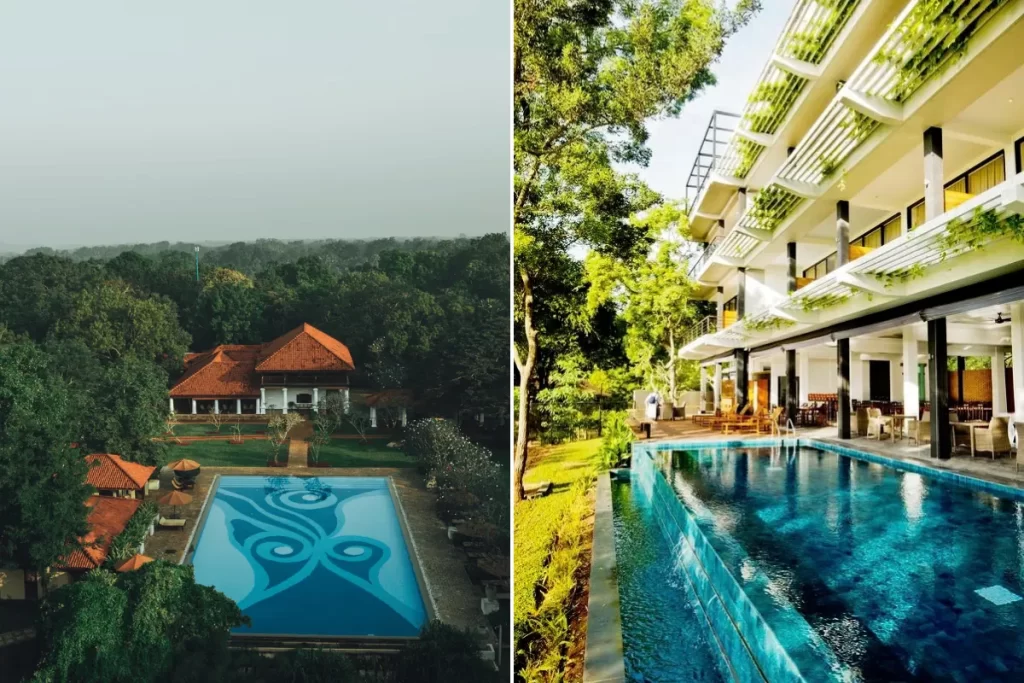
Anuradhapura is spread out, so where you stay affects how easy your visit feels. Most travelers choose places close to the Sacred City or just outside the town center. Quiet nights and early mornings matter here.
Guesthouses & Budget Stays (Great Value)
Family-run guesthouses are common and work well here. Rooms are simple and clean, and hosts are often used to guests leaving early. Kubura Resort, Milano Tourist Rest, and Sacred City Tourist Resort are commonly recommended options.
Mid-Range Hotels (Comfort + Location)
Mid-range hotels offer more space, better cooling, and breakfast, which helps after long days in the sun. Abhaya Mandapa Hotel and Heritage Hotel Anuradhapura are both central, well-known choices for comfort without resort pricing.
Resorts & Higher-End Stays
If you prefer landscaped gardens, pools, and full service, Uga Ulagalla is a luxury eco-resort with large private villas, and The Lake Forest Hotel offers a more modern take on the same comfort level. Both work best for stays of two nights or more.
Location Tip
Staying near the Sacred City saves time for early morning visits. Staying slightly outside town offers more space and quiet but usually needs a tuk-tuk or car to get around.
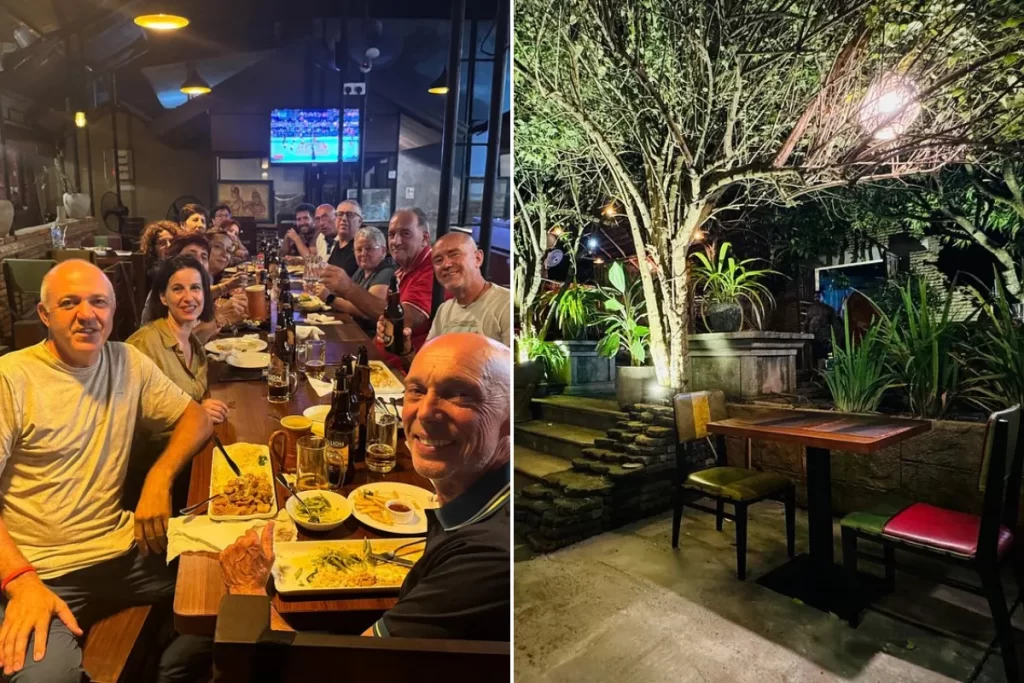
Food & Restaurants in Anuradhapura
Food here is simple, filling, and focused on local flavors. Many places close early, so plan dinner accordingly.
Local Sri Lankan Food (Best Choice)
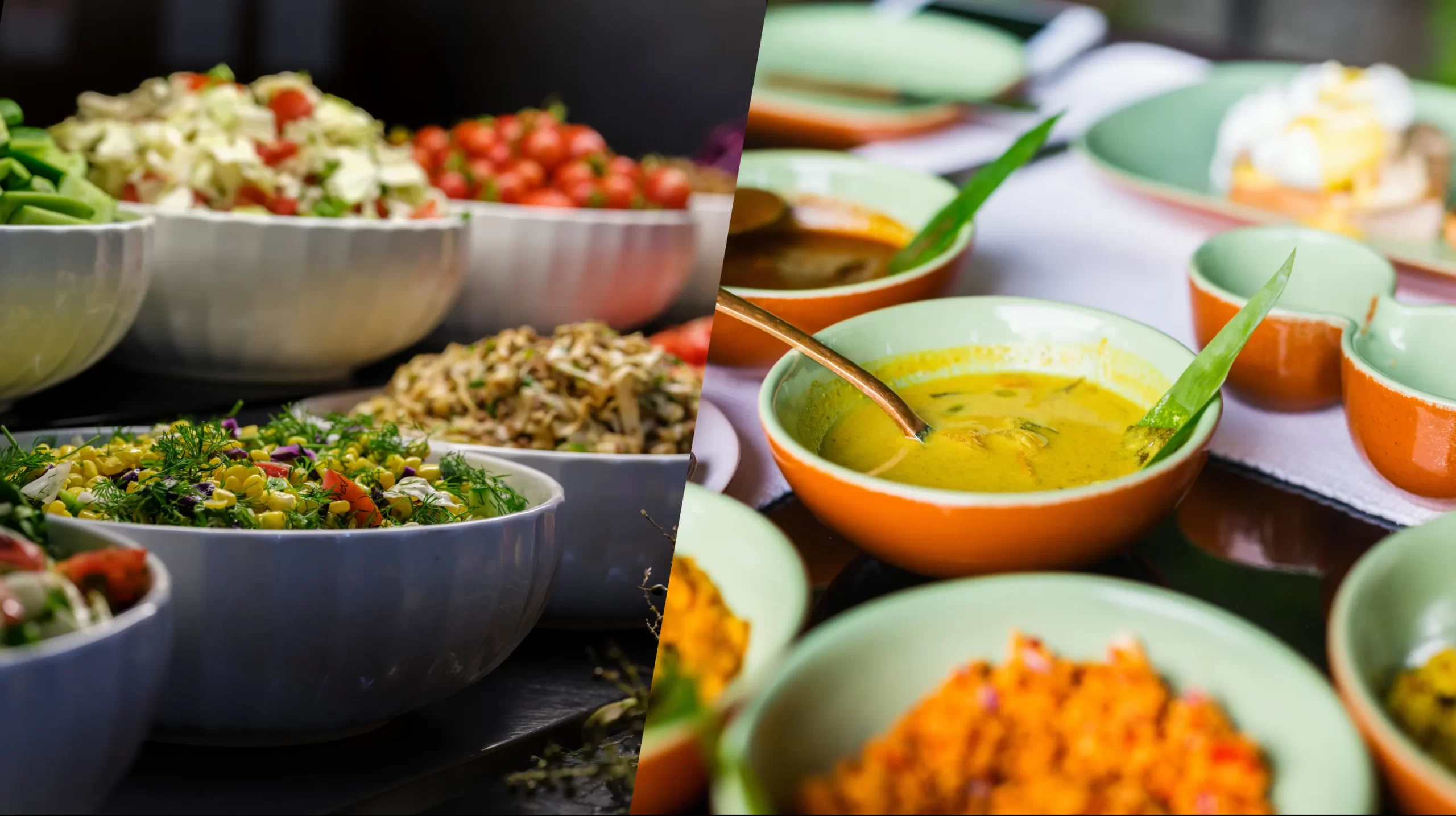
Rice and curry meals are the highlight here. They’re affordable, fresh, and ideal after cycling or walking all day.
Popular spots include:
- Seedevi Family Restaurant – Well-known for variety and cleanliness
- Ceylan Lodge Restaurant – Tasty local dishes in a relaxed setting
Expect generous portions and mild-to-medium spice (you can always ask).
Casual Dining & Mixed Menus
If you want something lighter or familiar, a few restaurants offer mixed Sri Lankan and Western dishes.
Good options include:
- Palhena Restaurant – Calm environment and consistent food
- Little Paradise Restaurant – Popular with travelers for variety
These are comfortable choices after long days outdoors.
Café-Style & Quick Bites
Café culture is limited, but small bakeries and hotel cafés cover the basics: tea, coffee, and snacks. One local touch worth knowing about: mobile bakers, sometimes called tuk-tuk bakers, drive around playing a tune and selling cheap pastries, pizza rolls, and curry buns through the day. It is a good, low-cost way to refuel between sites.
Dining Tips
- Eat dinner early; many places close by 9 pm
- Stay hydrated; heat affects appetite
- Don’t skip lunch, even on cycling days
Anuradhapura vs Polonnaruwa
Anuradhapura is larger and more spiritual. Polonnaruwa is more compact and easier to cover in a short visit. If time and energy are limited, Polonnaruwa feels simpler. If depth and history matter more to you, Anuradhapura rewards the extra patience it asks for.
Crowds, Etiquette & Common Mistakes
- Pilgrimage days bring crowds, especially around Poson in June
- Midday heat drains energy fast
- Rushing ruins the experience
The biggest mistake is treating Anuradhapura like a quick stop. It is not.
Safety & Practical Tips
- Wear light, modest clothing that covers your shoulders and knees. White is the traditional color for Buddhist pilgrims here, especially on poya full moon days, and wearing it is seen as a respectful gesture, though it is not required of visitors.
- Remove your shoes and any hat before entering temple areas. Bring a pair of socks. The stone floors get hot enough in the sun to be genuinely uncomfortable on bare feet.
- Protect yourself from the sun with a hat and sunscreen
- Stay hydrated, and carry more water than you think you need
- Respect sacred spaces and keep your voice down near active shrines
- Move slowly. This is the one piece of advice that applies to almost everything above.
Frequently Asked Questions About Anuradhapura
Is Anuradhapura worth visiting?
Yes. Anuradhapura is worth visiting if you enjoy history, culture, and calm places. It offers real depth and space to explore at your own pace. It is not a quick attraction, but it rewards patience.
Why is Anuradhapura important?
Anuradhapura was Sri Lanka’s first capital and one of the oldest continuously inhabited cities in the world. It is also a major pilgrimage site for Buddhists.
How much does it cost to visit Anuradhapura?
The main ticket is $30 USD and covers most of the major sites. The Sri Maha Bodhi, Isurumuniya, and the Archaeological Museum each charge a small separate fee, roughly 200 to 500 LKR apiece.
How many days should I spend in Anuradhapura?
Two days is ideal for most travelers. One day feels rushed because of the size of the site. Two days allow time to explore slowly and visit Mihintale as well.
What is the best time to visit Anuradhapura?
The best time to visit is from May to September, the dry season here. Early mornings and late afternoons are the most comfortable times of day.
Is Anuradhapura very large?
Yes. The sacred city covers around 40 square kilometers. Walking everything is not realistic for most visitors, so planning transport, usually a bicycle or tuk-tuk, matters.
What is the best way to explore Anuradhapura?
Cycling is the most popular and practical option. It lets you move at your own pace and cover long distances. Tuk-tuks are a good alternative if you do not want to cycle, especially with elders.
Do I need a guide in Anuradhapura?
A guide is optional. Guides help explain history and religious meaning, but many travelers enjoy exploring independently using maps and signboards.
Is the entrance ticket worth the price?
Yes, if you spend enough time. The ticket covers many major sites and is valid for more than one day. Rushing makes it feel expensive, but a slow visit offers good value.
What should I wear in Anuradhapura?
Dress modestly, covering your shoulders and knees, especially at religious sites. Light, breathable clothing works best in the heat. White is the traditional, most respectful choice for temple visits, though it is not mandatory.
What are the must-see sites beyond the main stupas?
Kuttam Pokuna, the Samadhi Buddha Statue, and the guard stone at Rathna Prasadaya are three highlights that get far less attention than Ruwanwelisaya or the Bodhi tree, despite being some of the finest craftsmanship in the sacred city.
Is Anuradhapura suitable for families?
Yes, especially for families with older children. Cycling and early visits help manage heat and distances.
What is Mihintale, and should I visit it?
Mihintale is where Buddhism was introduced to Sri Lanka. It sits about 12 km from Anuradhapura and is worth visiting if you have extra time. Go early in the morning to avoid heat and crowds.
Is Anuradhapura safe for tourists?
Yes. Anuradhapura is generally safe. Stay hydrated, protect yourself from the sun, and respect local customs and sacred areas.