Morning waves lap at Nilaveli beach as fishermen pull in their nets. A few hundred kilometers away, sunlight strikes the lighthouse in Galle Fort, where tourists sip iced coffee in shaded cafés. Both are coastal, both historic, but the feeling could not be more different. If you’re torn between Trincomalee and Galle, here’s what you need to know to choose (or enjoy both).
Vibe and Atmosphere

- Trincomalee (Trinco): A working port city with temples, markets, and everyday bustle. It feels lived-in, less polished, and more authentic. Walk through the bus station area and you’ll see tailors, textile shops, and spice stalls used by locals.
- Galle: A UNESCO-listed colonial town, restored and curated. Inside the Fort, cobblestone lanes lead to art galleries, gem shops, and boutique cafés. It feels like a time capsule—more tourist-friendly, but less raw.
(Tip: If you want a “real Sri Lankan city with beach access,” choose Trinco. If you want history wrapped in comfort, Galle delivers.)
Food and Dining

- Trinco: Local “hotels” (basic restaurants) serve hearty rice and curry, spiced boldly and piled high. Along Uppuveli and Nilaveli, you’ll find beachfront cafés mixing seafood grills with Western menus. Prices are low, portions generous.
- Galle: Inside the Fort, expect curated dining. Fusion restaurants, high-end seafood spots, and chic cafés line Pedlar Street. The food is excellent but at higher prices.
Markets and Shopping
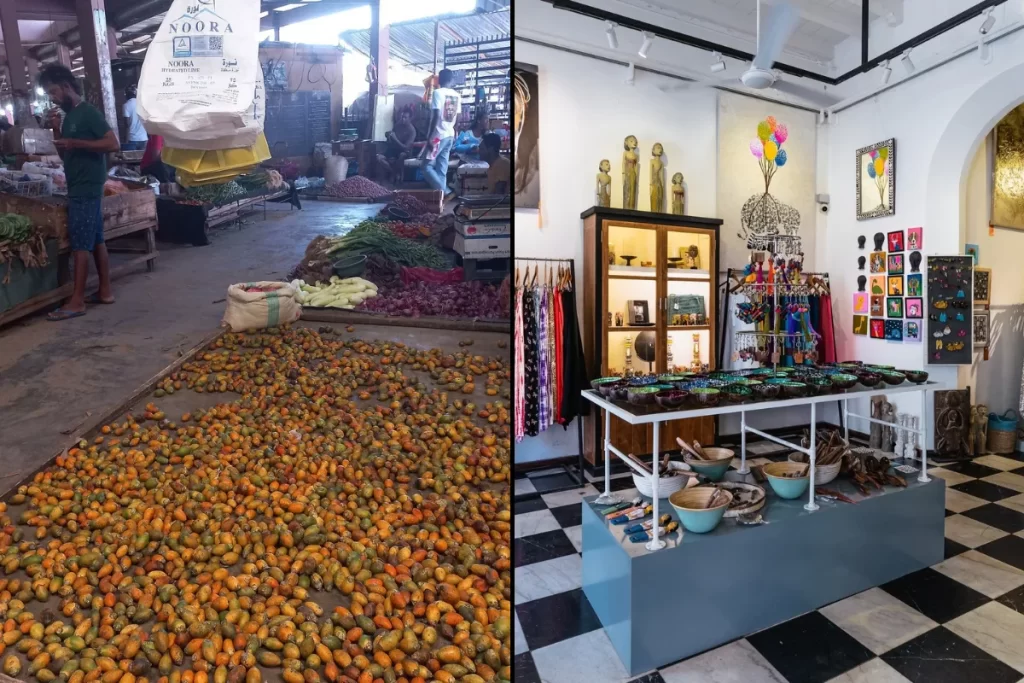
- Trinco: The Public Market is a noisy, colorful sprawl. Nearby, the fish market starts at dawn, with fresh catch laid out on the floor. Hygiene is basic (ice and storage are limited), but it’s vivid and real. Tailors and fabric shops cluster near the clock tower—great for hand-sewn souvenirs.
- Galle: The Fort is built for strolling and shopping. Boutiques sell batik, Beeralu lace, handloom, certified gems, and lacquerware. It’s cleaner, easier, and designed for visitors, though less spontaneous than Trinco’s markets.
Souvenirs: What’s Unique

- Trinco: Coconut-shell crafts, simple wood carvings, handwoven textiles, and bright dresses from local fabric stalls. These feel rustic, tied to daily coastal life.
- Galle: Boutique-quality art prints, jewelry, gemstones, premium batik, and carefully packaged handloom. These are upscale keepsakes, easy to carry home.
Culture and History

- Trinco highlights:
- Koneswaram Temple: A Hindu shrine perched on Swami Rock, overlooking the bay.
- Pathirakali Amman Temple: Brilliantly painted effigies in Dravidian style.
- Velgam Vehera: An ancient Buddhist site also respected by Hindus.
- Fort Fredrick: Built in 1623 by the Portuguese, later used by the Dutch and British. Still active with military presence, but you can visit for views.
- Trincomalee War Cemetery: Quiet reminder of WWII.
- Koneswaram Temple: A Hindu shrine perched on Swami Rock, overlooking the bay.
- Galle highlights:
- Galle Fort: Originated with the Portuguese, expanded by the Dutch, adapted by the British. Today it’s a living colonial town—churches, museums, ramparts, lighthouse, and boutique culture.
- Galle Fort: Originated with the Portuguese, expanded by the Dutch, adapted by the British. Today it’s a living colonial town—churches, museums, ramparts, lighthouse, and boutique culture.
(Fort Fredrick was mainly a naval outpost; Galle Fort was a fortified mercantile city. Both show different sides of Sri Lanka’s layered history.)
Hygiene and Comfort

- Trinco markets: Open-air, lively, sometimes messy. Fish sold on tables without much refrigeration—fresh but rustic.
- Galle markets (and Fort area): Cleaner, better organized, with modern facilities and higher food-safety standards.
How to Experience Local Life in Trinco

- Join a temple ritual at Koneswaram or Pathirakali Amman.
- Wander the public market, try snacks like vada or samosas from street stalls.
- Watch fishermen on Uppuveli or Nilaveli in the morning.
- Take a snorkel trip to Pigeon Island and return for sunset on the beach.
These moments give you a local flavor you won’t find inside Galle Fort.
Practical Travel Tips
- Best time for markets: Early morning for the fish stalls; late afternoon for cooler browsing.
- Temple etiquette: Modest dress, shoes off, quiet voices; photos allowed with respect.
- Cash: Carry small notes for markets and local eateries.
- Day plan examples:
- Trinco: Morning at Koneswaram → Fort Fredrick → curry lunch in town → Uppuveli sunset
- Galle: Morning ramparts walk → boutique shopping → seafood lunch → lighthouse at dusk
- Trinco: Morning at Koneswaram → Fort Fredrick → curry lunch in town → Uppuveli sunset
Final Word: Which Should You Choose?

Pick Trincomalee if you want a more authentic, less polished slice of Sri Lanka—temples, markets, spicy food, and nearby beaches where locals live and work. Pick Galle if you prefer history with comfort—colonial streets, chic cafés, curated shops, and easy coastal charm.
👉 Next step: Decide what matters most to you—raw authenticity or polished colonial elegance. Either way, you’ll walk away with stories (and souvenirs) that stick.
FAQs: Trincomalee vs Galle
Which is better to visit, Trincomalee or Galle?
It depends on your travel style. Trincomalee is better if you want a more local, authentic experience with temples, markets, and quiet beaches. Galle is ideal if you prefer a more polished, tourist-friendly destination with colonial charm and boutique experiences.
Is Trincomalee less touristy than Galle?
Yes. Trincomalee feels more local and less commercialized. You’ll see everyday Sri Lankan life, especially in markets and temples. Galle, particularly inside the Fort, is more developed for tourism with curated shops and cafés.
Which place has better beaches?
Both have beautiful beaches, but they offer different experiences:
- Trincomalee (Nilaveli, Uppuveli) has quieter, less crowded beaches.
- Galle has scenic coastline views, but nearby beaches like Unawatuna are more touristy.
Is Galle more expensive than Trincomalee?
Yes. Galle, especially inside the Fort, has higher prices for food, shopping, and accommodation. Trincomalee is more budget-friendly with larger portions and lower-cost dining options.
Where can I experience authentic Sri Lankan culture?
Trincomalee offers a more authentic cultural experience. Visiting temples, local markets, and fishing areas gives a real sense of daily life. Galle offers more curated cultural experiences within a restored colonial setting.
What are the must-visit attractions in Trincomalee?
Some key highlights include:
- Koneswaram Temple
- Fort Fredrick
- Pigeon Island
- Nilaveli and Uppuveli beaches
These spots combine culture, history, and nature.
Is Trincomalee suitable for luxury travel?
Trincomalee has some good beachfront stays, but it is generally more simple and less luxury-focused. Galle offers more high-end hotels, boutique villas, and fine dining options.
Which destination is better for shopping?
- Trincomalee: Local markets, handmade crafts, and textiles
- Galle: Boutique shopping, gemstones, batik, and curated souvenirs
Galle is easier and more polished, while Trincomalee feels more raw and traditional.
Can I visit both Trincomalee and Galle in one trip?
Yes, but they are far apart (opposite coasts). If you have enough time (10–14 days), you can include both to experience two very different sides of Sri Lanka.
Which destination is better for first-time visitors?
Galle is generally easier for first-time visitors due to better infrastructure, cleaner surroundings, and more tourist-friendly services. Trincomalee is better for travelers who want something more unique and less commercial.
What is the main difference between Trincomalee and Galle?
The main difference is the experience:
- Trincomalee = raw, local, authentic Sri Lanka
- Galle = polished, colonial, and tourist-friendly
Both offer coastal beauty, but in completely different ways.