
There are few places in Sri Lanka that earn the word “legendary” without exaggeration. Arugam Bay is one of them. Tucked along the southeast coast, this small stretch of sand has built a global reputation on the back of world-class waves, a relaxed bohemian atmosphere, and wildlife that roams closer than most people expect. Surfers discovered it decades ago. Backpackers followed. Now couples, solo travelers, and adventure seekers from across Europe, Australia and beyond make the long journey east every year, and most of them leave already planning a return trip.
What sets Arugam Bay apart from Sri Lanka’s more polished resort towns is its character. It is unfiltered, a little rough around the edges, and completely charming because of it. The main strip is short enough to walk in ten minutes, yet somehow it holds enough cafes, surf schools, yoga studios, and local eateries to fill a week without effort. Beyond the bay itself, ancient monasteries sit hidden in jungle, elephants wander near the road at dusk, and one of Sri Lanka’s most underrated national parks waits just a short drive away.
This guide covers everything a visitor needs: when to go, how to get there, what to do, where to surf, where to eat, and where to sleep.
Best Time to Visit Arugam Bay
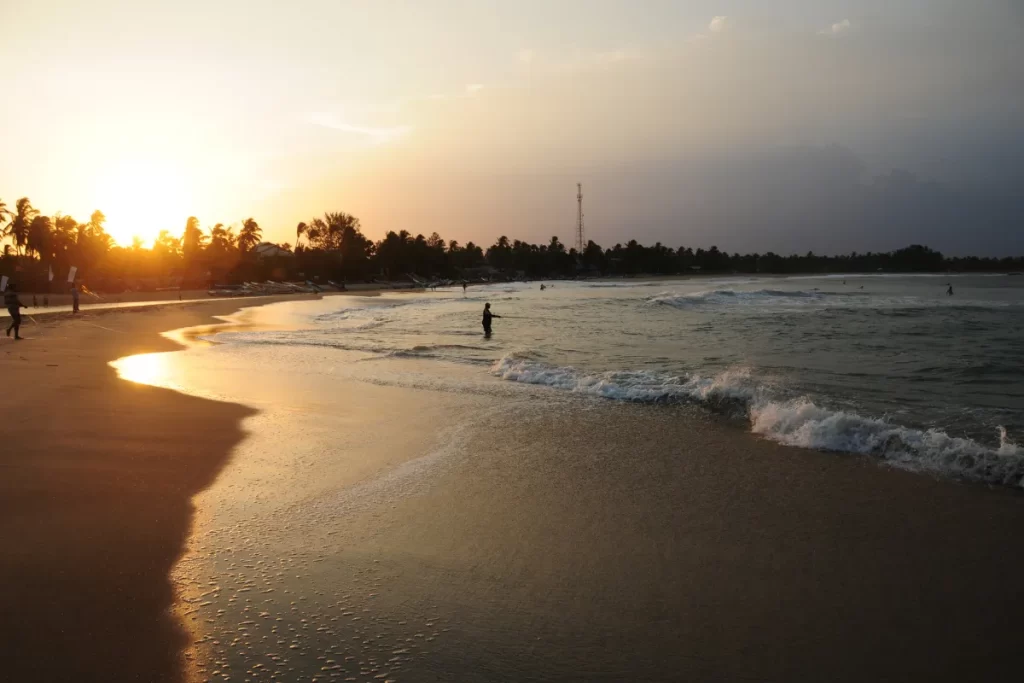
The east coast of Sri Lanka operates on a different weather cycle to the west and south. While Colombo and Galle get drenched during the southwest monsoon from May to September, the east coast enjoys its best weather during exactly that window. For Arugam Bay, the prime season runs from May through September, with June, July, and August being the busiest and most energetic months.
During peak season, the surf is consistent, the skies are largely clear, and the town is fully alive. Every restaurant is open, surf schools are running daily lessons, and the beach fills with a mix of travellers from around the world.
The shoulder months of May and September offer a good balance. Crowds are thinner, accommodation prices tend to be lower, and the waves are still reliable.
October marks the start of the Maha monsoon, and the change is dramatic. Rain arrives, swells shift direction, and the surf that made the bay famous largely disappears. Many guesthouses, restaurants, and tour operators close entirely between October and March. Some years, select businesses stay open through November for late-season travellers, but visitors planning an off-season trip should confirm availability in advance. Arriving to find half the town shuttered is a real possibility during these months.
How to Get to Arugam Bay
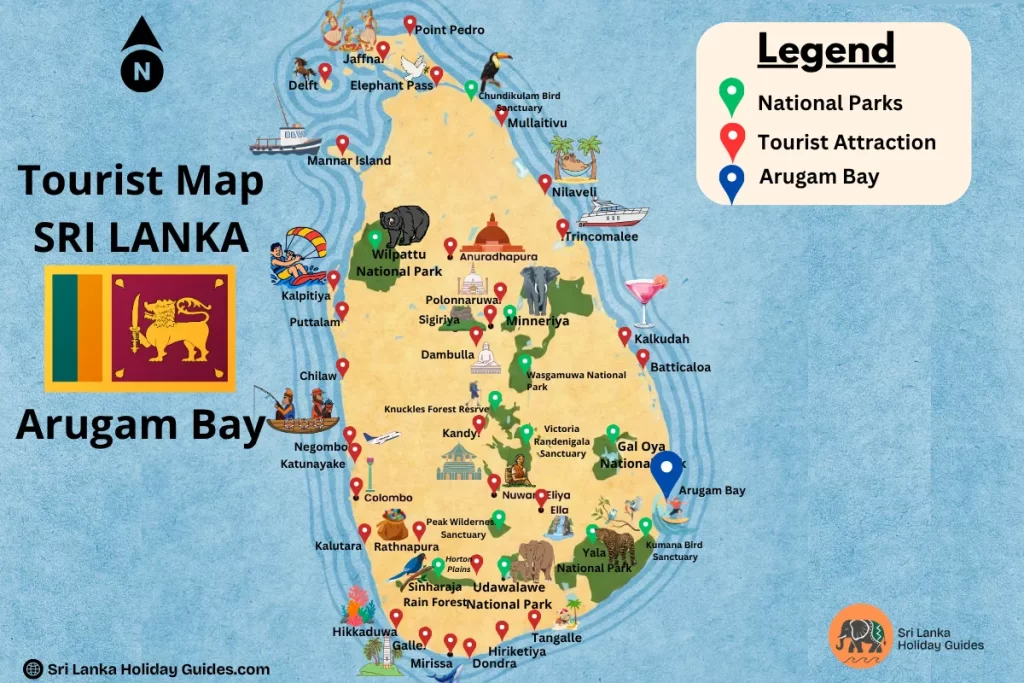
Getting to Arugam Bay requires some effort, and that is part of what keeps it from feeling overrun. There is no direct highway from Colombo, no airport nearby, and no train that pulls up at the edge of the beach. The journey is part of the experience.
From Colombo or Bandaranaike International Airport
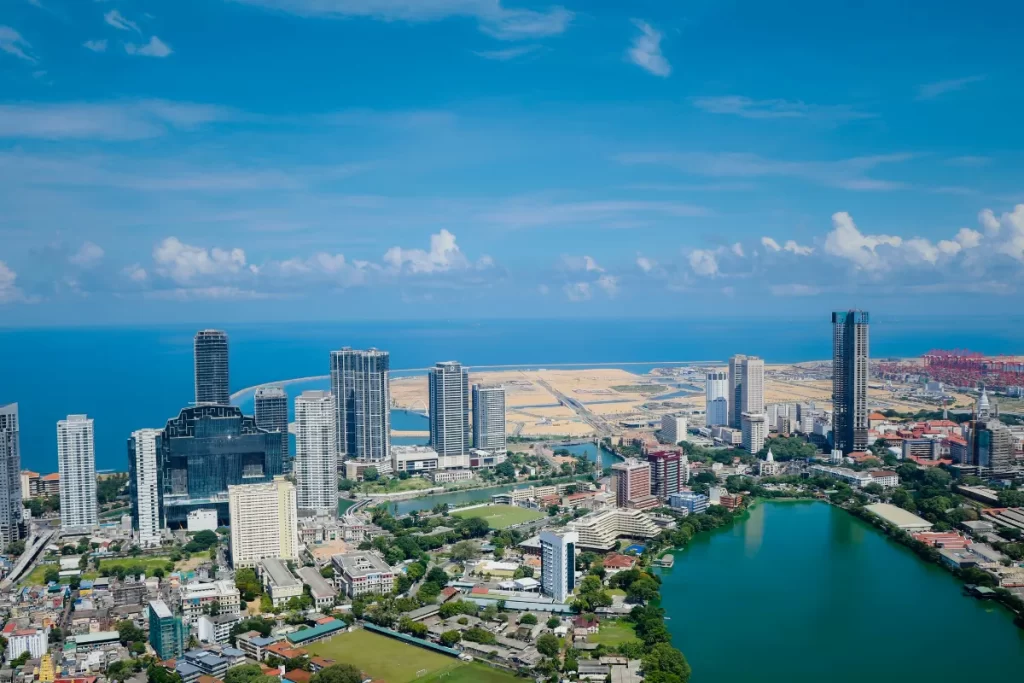
The most straightforward option is a private taxi or van hire direct from Colombo or the airport. The drive takes roughly eight to nine hours depending on traffic and road conditions. Costs vary significantly between operators.
For budget travellers, the public bus network works but requires patience. The typical route involves travelling to Colombo’s Pettah bus terminal, taking a bus to Monaragala, and then connecting onward to Pottuvil, the small town immediately north of Arugam Bay. From Pottuvil, tuk-tuks make the short run down to the bay itself.
From Ella and the Hill Country
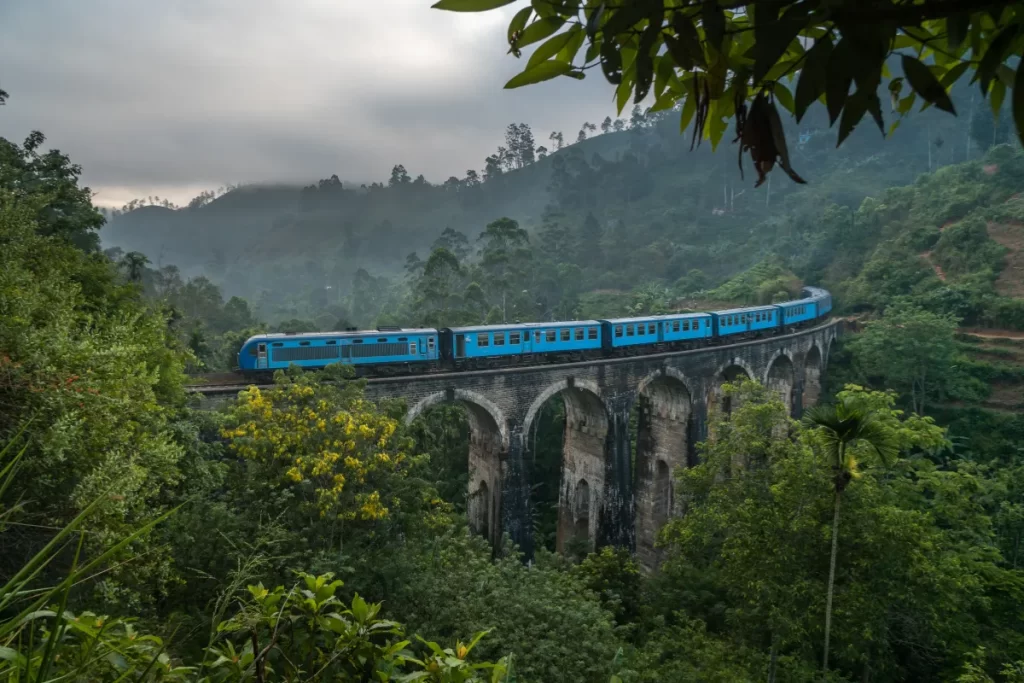
The hill country route is one of the most popular approaches, especially for travellers already exploring the tea country and waterfalls inland. The public bus route from Ella passes through Wellawaya and Monaragala before reaching Pottuvil. The full journey takes approximately five to six hours, sometimes longer. Bus timings change seasonally, so checking locally in Ella on the day of travel is advisable.
For those with more budget flexibility, private car hire from Ella directly to Arugam Bay is a comfortable and scenic alternative.
For travellers coming from the hill country, check out the Ella Travel Guide for tips on getting around that region before heading east.
From the South Coast
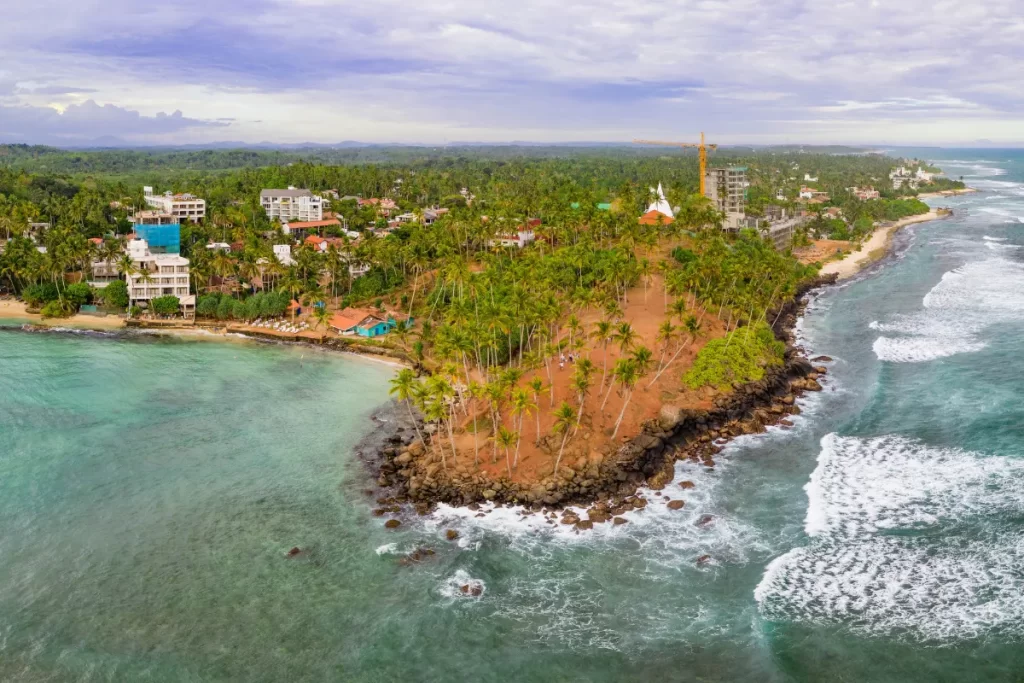
From Matara or Mirissa on the south coast, the route typically runs through Wellawaya and then connects to Monaragala and Pottuvil. Journey times by public transport can stretch to seven or eight hours depending on connections. A private taxi cuts that time and removes the uncertainty of bus transfers.
Top Things to Do in Arugam Bay
Surfing dominates the conversation around Arugam Bay, but there is more to the area than the waves. Some of the most memorable experiences here happen away from the beach entirely.
Go on a Safari at Kumana National Park
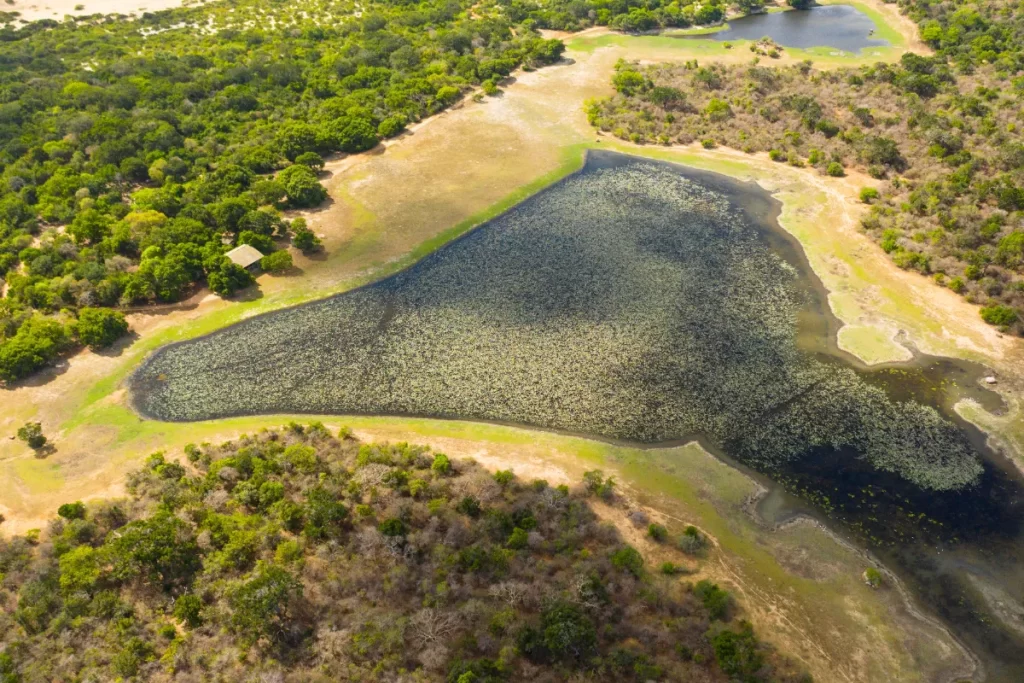
Kumana National Park sits roughly 40 kilometres south of Arugam Bay and remains far less visited than the famous Yala National Park to its west. That relative obscurity is its greatest asset. The park protects a vast area of lagoons, mangroves, and dry-zone forest, and wildlife encounters tend to feel more intimate and less rushed than at Yala, where jeep congestion around sightings has become a genuine problem.
Kumana is especially notable for birdlife, with hundreds of species recorded including large breeding colonies of water birds in the Kumana Villu lagoon. Elephants, leopards, water buffalo, mugger crocodiles, and sloth bears are also present, though sightings vary by season and are never guaranteed.
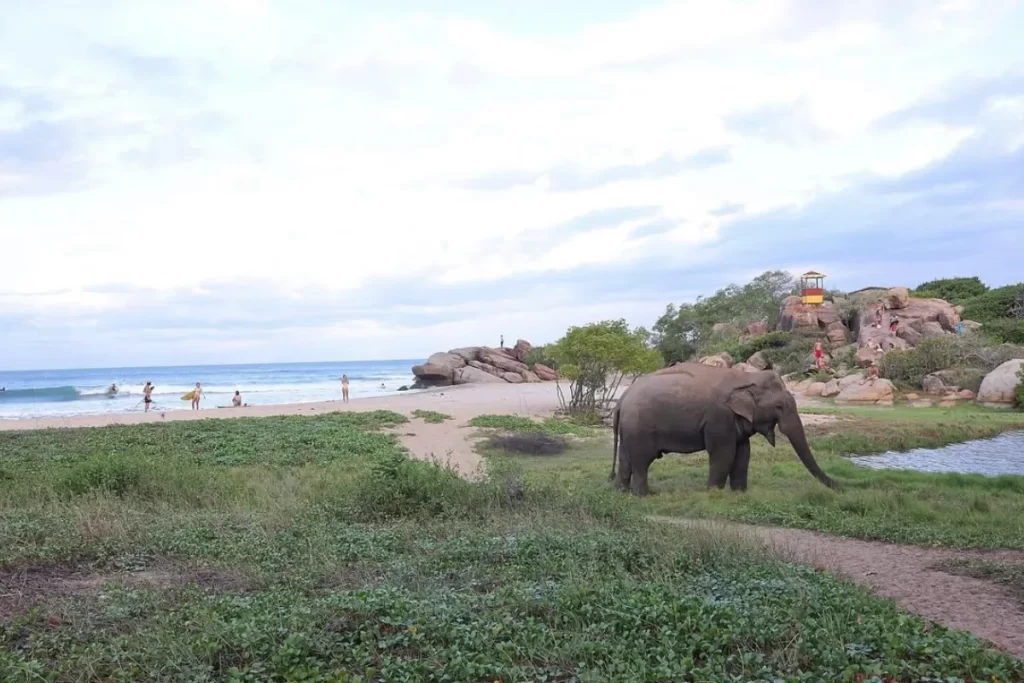
A more casual alternative is the DIY scooter route south toward Panama and beyond, where wild elephants are commonly spotted near the road, particularly at dawn and dusk.
Climb Elephant Rock for Sunset

Elephant Rock is one of those spots that every visitor to Arugam Bay eventually finds their way to. The climb itself takes around ten to fifteen minutes and requires some basic scrambling, but the view from the top is genuinely impressive. Looking west at sunset, the sky turns over the jungle and lagoon in a way that is difficult to photograph well but very easy to remember.
The area around Elephant Rock is also where the Pottuvil Lagoon meets the land, and crocodiles are present in the water below. Wild elephants roam near this stretch of the road, particularly as the light fades. Visitors should stay aware of their surroundings, keep a safe distance from wildlife, and not attempt the climb at night.
Take a Pottuvil Lagoon Boat Tour
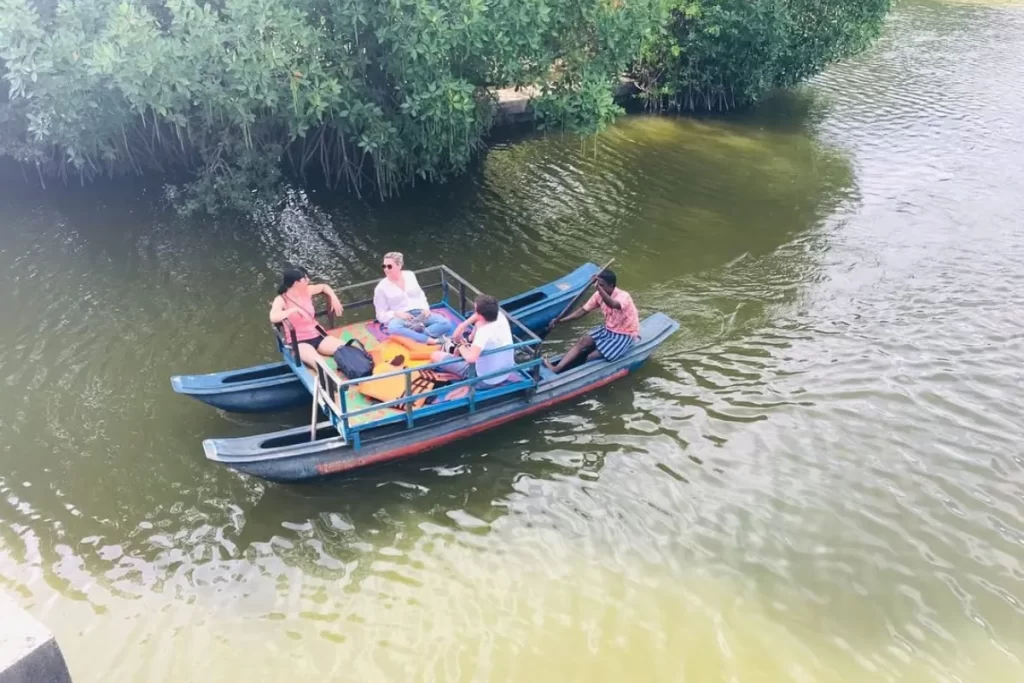
The lagoon that stretches between Pottuvil town and the bay is a calm, mangrove-lined waterway that rewards slower exploration. Local boat tours navigate the channels in the late afternoon, offering a chance to spot mugger crocodiles basking on the banks, kingfishers, various herons, and monitor lizards moving through the tree roots.
Discover Ancient History
Most visitors come to Arugam Bay for the surf and stay for the sunsets, but the area holds historical depth that often goes unexplored.
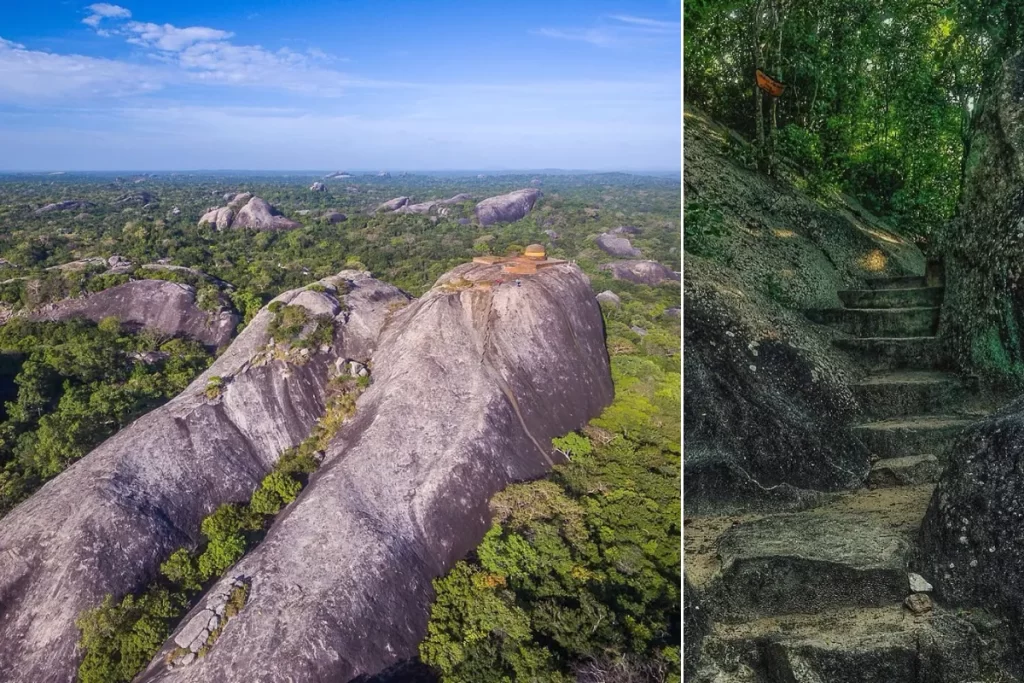
Kudumbigala Monastery, reportedly dating back to around 246 BC, sits deep in the forest south of the bay near Panama. The site consists of ancient rock caves and meditation cells used by Buddhist monks for centuries, and monks still reside there today. Reaching it involves a drive through jungle terrain, and visitors should dress modestly and behave respectfully as it is an active religious site.
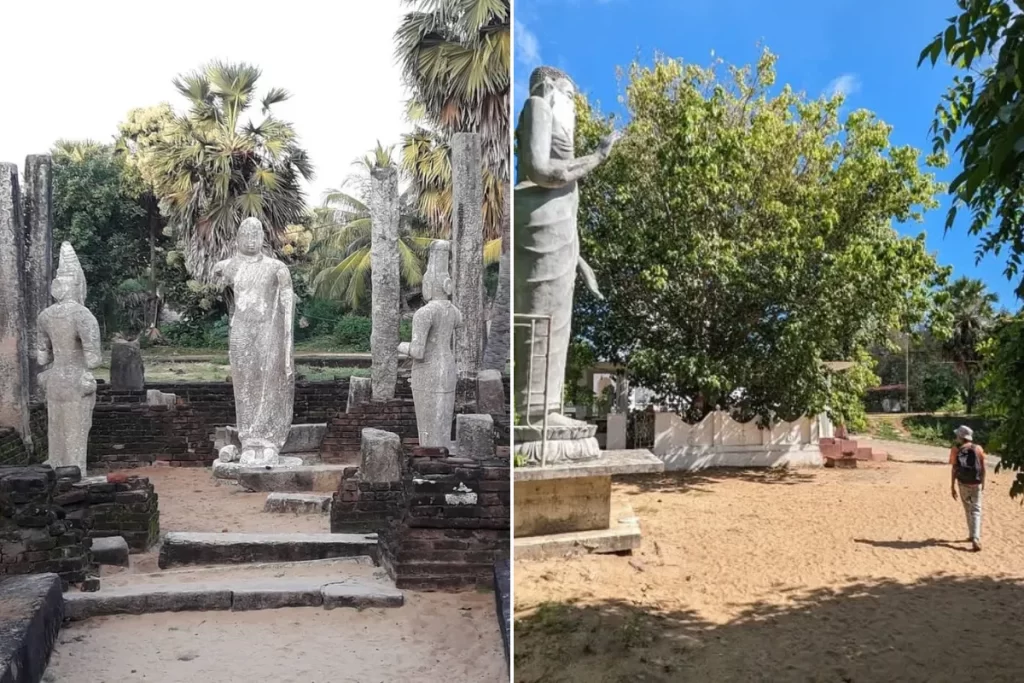
Closer to the beach, the Muhudu Maha Viharaya temple sits on the sand dunes near Pottuvil Lagoon. Believed to be over 2,000 years old, the site carries significant cultural and religious importance. The setting, right at the edge of the coast, makes it visually striking as well as historically notable.
Join a Morning Yoga Class

The laid-back pace of Arugam Bay has attracted a steady wellness crowd alongside the surf community, and morning yoga sessions have become a regular feature of the town’s daily rhythm. Several guesthouses and retreat spaces offer classes, with Stay Golden and Hideaway Resort among those commonly mentioned by travellers. Sessions typically run early in the morning before the heat builds.
The Complete Arugam Bay Surf Guide
Arugam Bay holds one of Asia’s most respected surf lineups. The Indian Ocean delivers warm water year-round, meaning wetsuits are unnecessary, and the bay’s geography produces a variety of break types that suit surfers from first-timers to seasoned competitors. The season runs May to September, peaking in July and August.
Best Breaks for Beginners
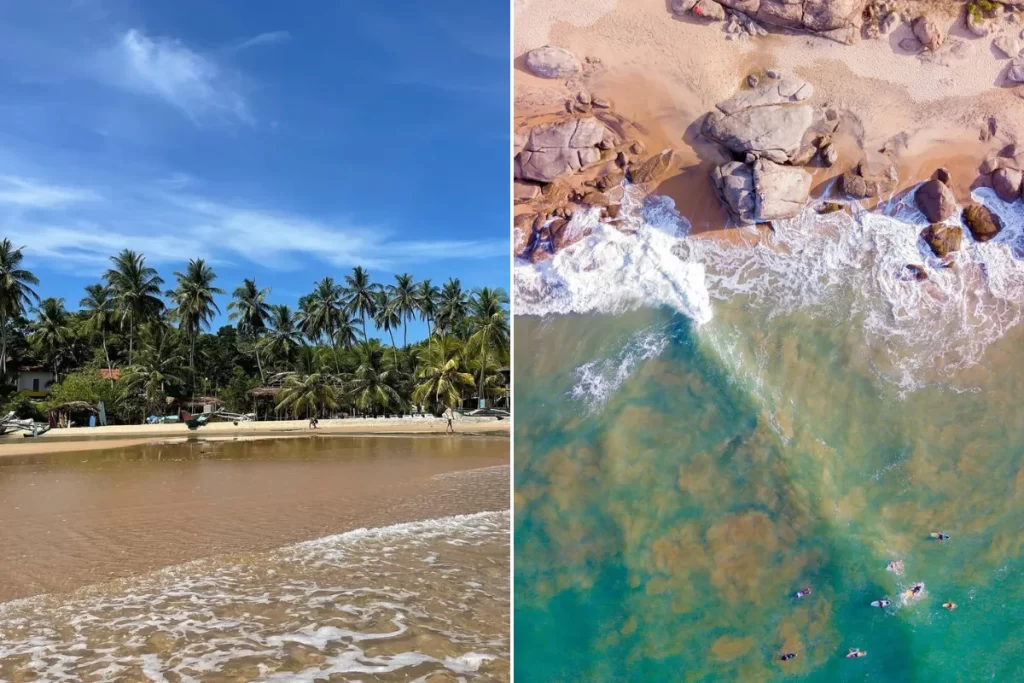
- Baby Point sits at the northern end of the main beach and offers a gentle, forgiving wave that rolls in slowly enough for beginners to practice standing up without too much consequence. Surf schools often use this break for lessons.
- Peanut Farm, a short tuk-tuk ride north of the main bay, is a fun A-frame break with both left and right-hand options. It is less crowded than the main point and well suited to those building confidence after a few lessons.
- Elephant Rock near the lagoon also produces mellow waves on smaller swells and is generally forgiving underfoot.
Best Breaks for Intermediate Surfers
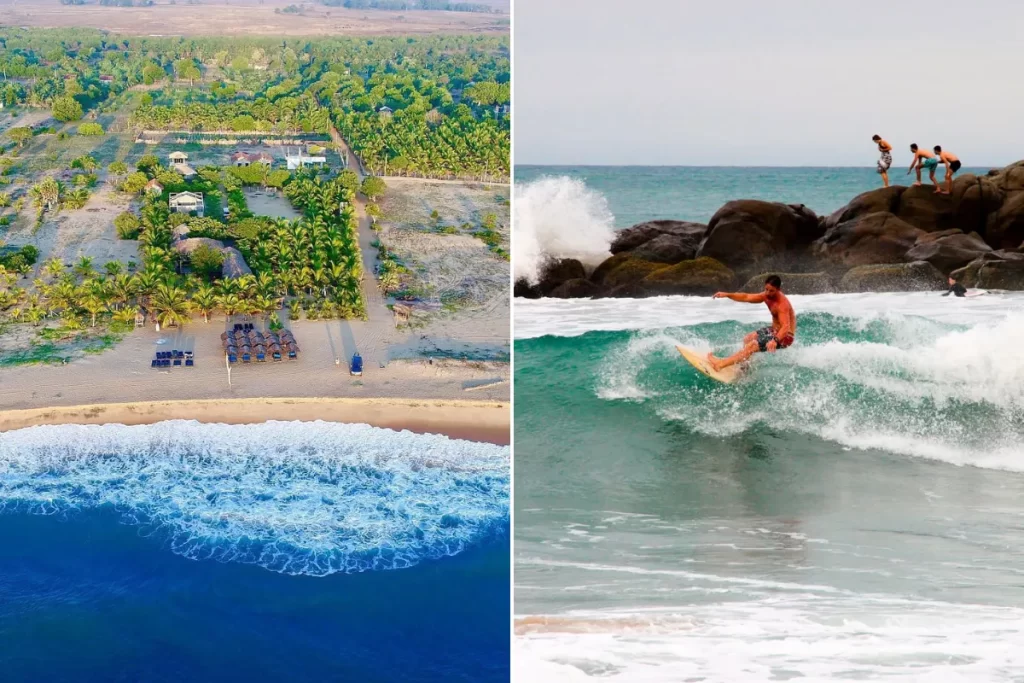
- Whiskey Point, located several kilometres north past Pottuvil, is a right-hand point break that gets better with size. It is significantly less crowded than the main breaks and rewards those willing to make the journey. The beach itself is beautiful and relatively quiet even at the height of the season.
- Lighthouse offers a solid option for intermediate surfers looking for more punch than Baby Point without the intensity of the main poin
Best Breaks for Advanced Surfers

- Main Point is the wave that put Arugam Bay on the global surf map. A long, fast right-hander that can hold size and produce walls long enough for multiple manoeuvres, it draws experienced surfers from around the world during peak season. The break can get crowded in July and August, and the lineup has a pecking order that visitors should read carefully before paddling out.
- Pottuvil Point offers another quality right-hand option for experienced surfers, with a more exposed position that picks up swell well.
- Okanda, further south near the edge of Kumana National Park, is a remote and rarely surfed break that requires a long drive over rough terrain. The reward is near-empty waves in a setting that feels genuinely wild.
Where to Eat in Arugam Bay
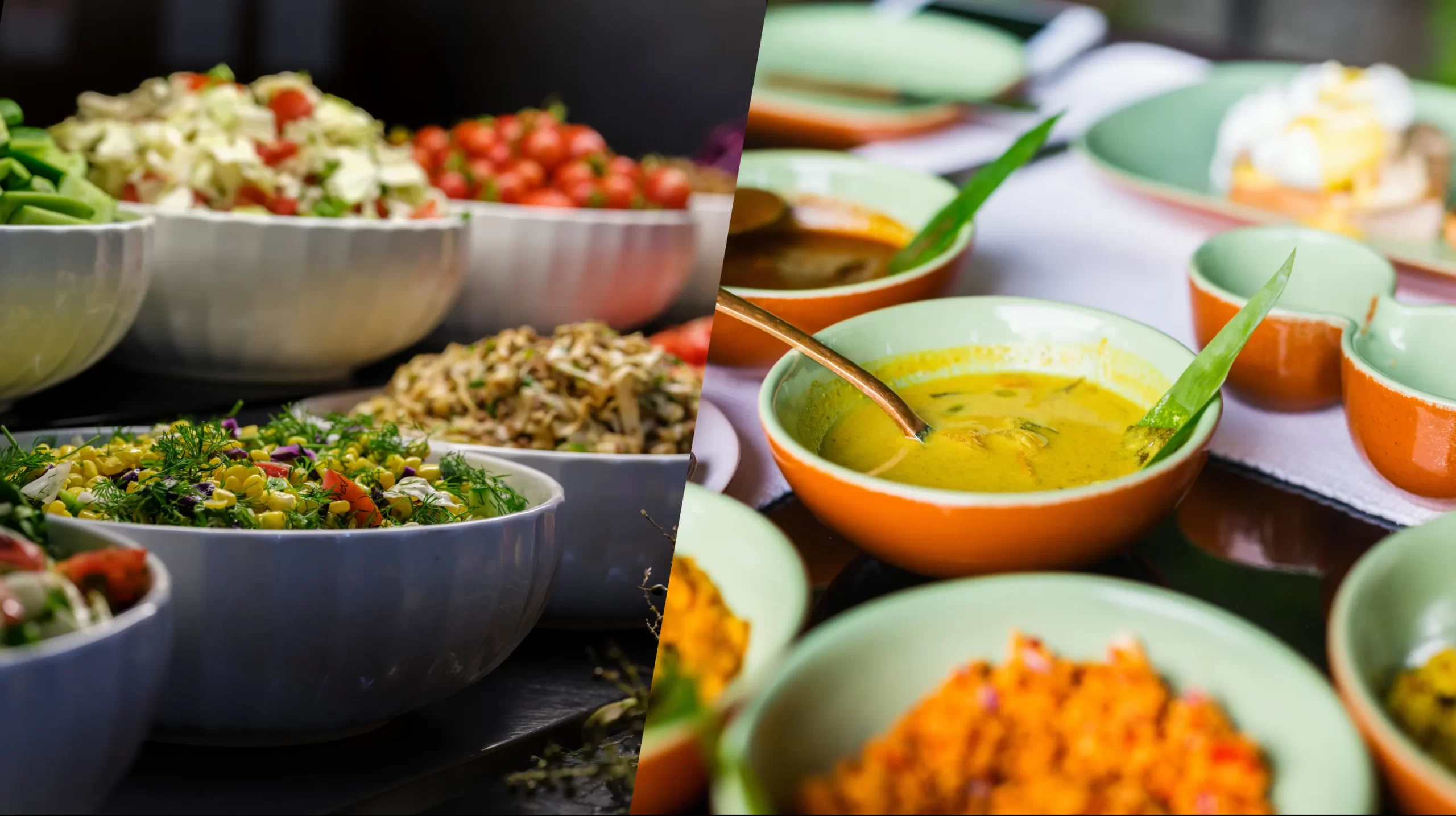
The food scene in Arugam Bay punches well above its size. The town has attracted enough international visitors over the years to develop a dining culture that spans everything from Sri Lankan rice and curry to wood-fired pizza and European-style brunch spots, all within walking distance of each other.
Cafes and Brunch

- Shady Lane has become a firm favourite for its smoothie bowls, fresh juices, and relaxed daytime atmosphere. It draws a steady crowd of surfers and travellers looking for a healthy start to the morning.
- Kaffi is well regarded among the cafe crowd for its coffee and lighter meals, with a setting that encourages lingering.
Local and Budget Dining
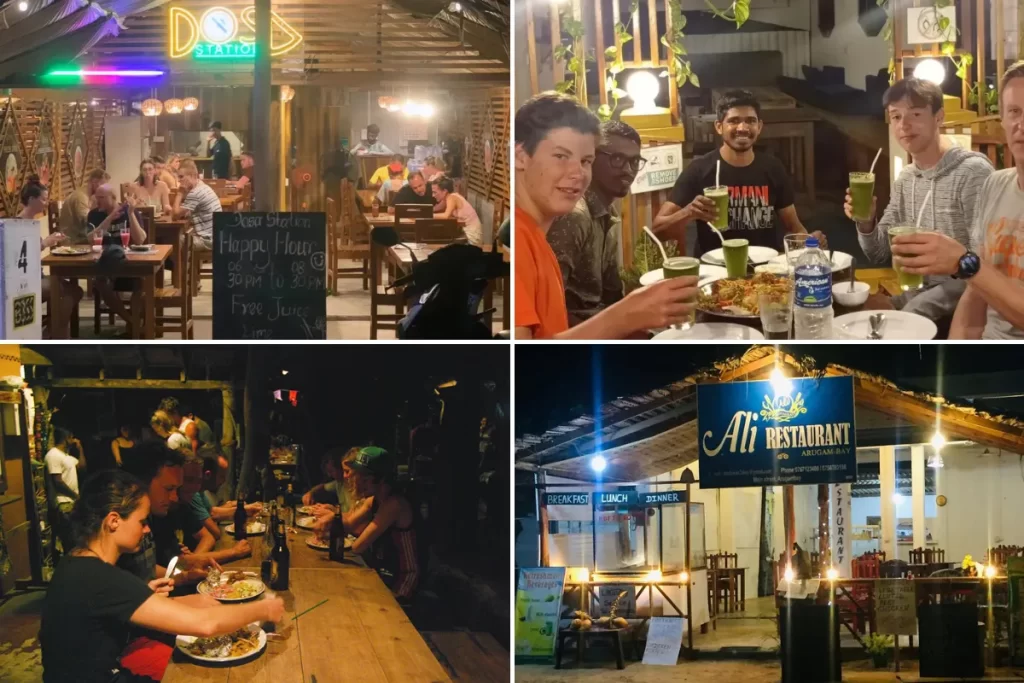
- Dosa Station delivers exactly what it promises: South Indian-style dosas at prices that make it a natural choice for budget-conscious travellers and those craving something authentically local.
- Moon Garden Restaurant and Beach Hut both serve a mix of Sri Lankan and Western dishes at accessible prices and are consistent picks among longer-stay visitors.
- Ali Restaurant is a long-standing local favourite, known for straightforward Sri Lankan food done well.
Evening Dining and Drinks

- The Hangout is one of the most popular spots after dark, serving food alongside drinks in a social setting that brings together most of the nationalities currently staying in the bay.
- Hideaway offers a more relaxed dinner setting with a menu that leans toward fresh seafood and international dishes.
- Pizza Hub fills a reliable niche for those evenings when only pizza will do.
Costs in Arugam Bay tend to run higher than equivalent establishments in Colombo or the south coast, particularly for imported goods and international-style food. Visitors on a tight budget will find better value eating at local spots in Pottuvil town rather than on the main beach strip.
Where to Stay in Arugam Bay
Accommodation in Arugam Bay ranges from no-frills surf hostels to boutique beachfront stays, and the experience varies considerably between them. Booking ahead is strongly recommended for July and August. Outside of those peak months, walk-in availability is generally easier to find.
Budget and Backpacker
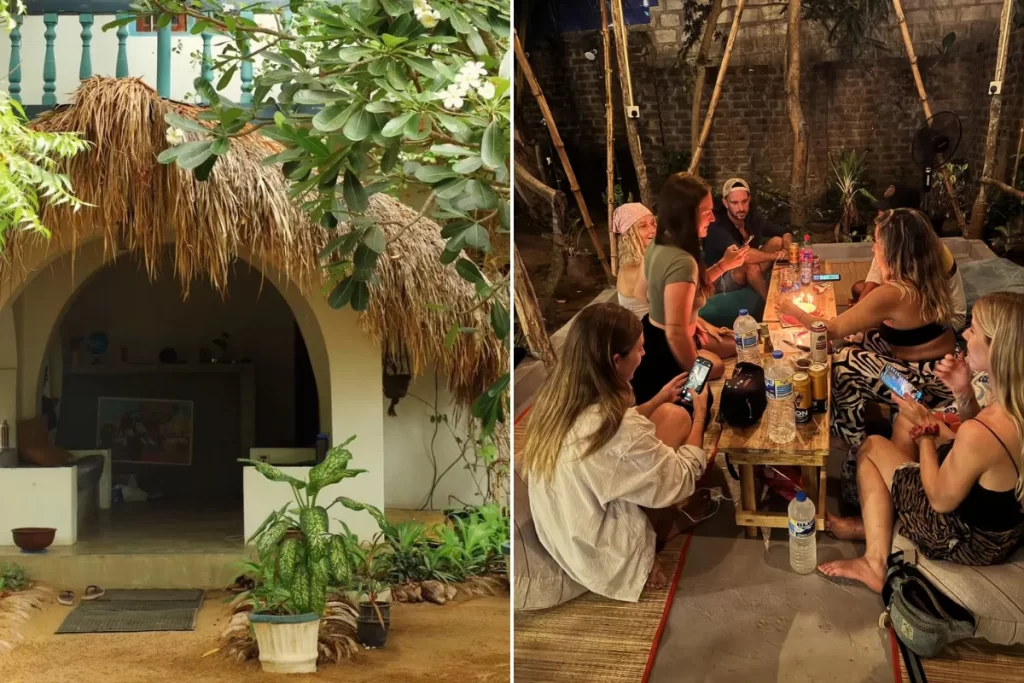
Waypoint Hostel and Moonlight Surf Hostel are among the most consistently mentioned options for budget travellers and solo surfers. Both offer dormitory and basic private room options close to the action.
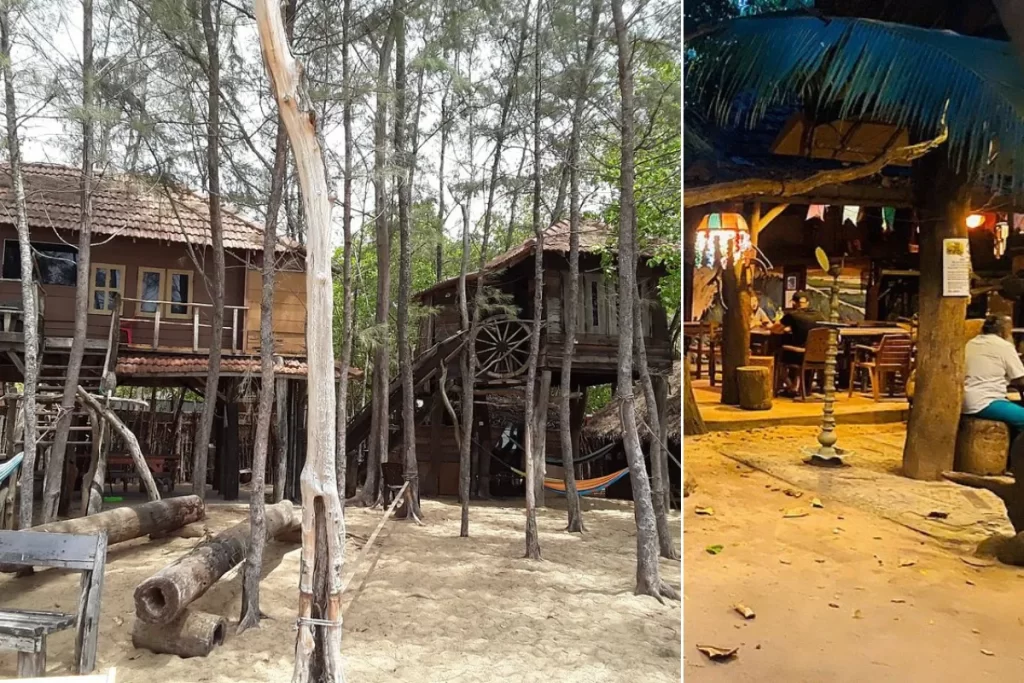
Beach Hut covers multiple bases as both accommodation and a restaurant, making it a convenient choice for those wanting everything in one place.
Mid-Range
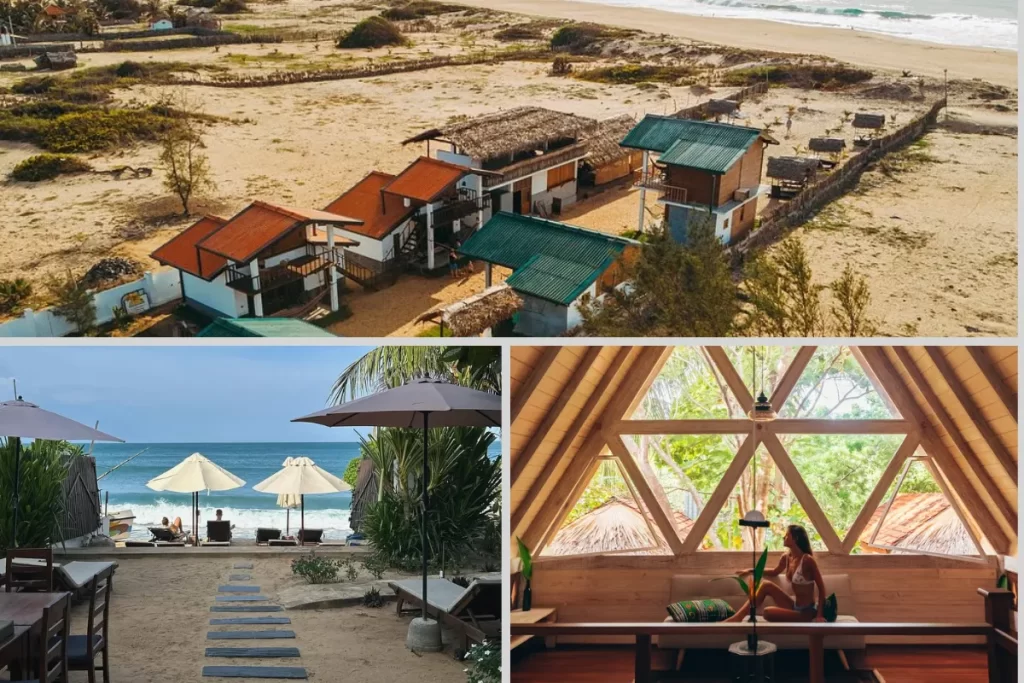
Bay Vista, Surf N Sun, and Stay Golden sit in the mid-range bracket and offer private rooms with more comfort without climbing to resort-level pricing. Stay Golden in particular has built a reputation for its welcoming atmosphere and yoga offerings.
Boutique and Luxury
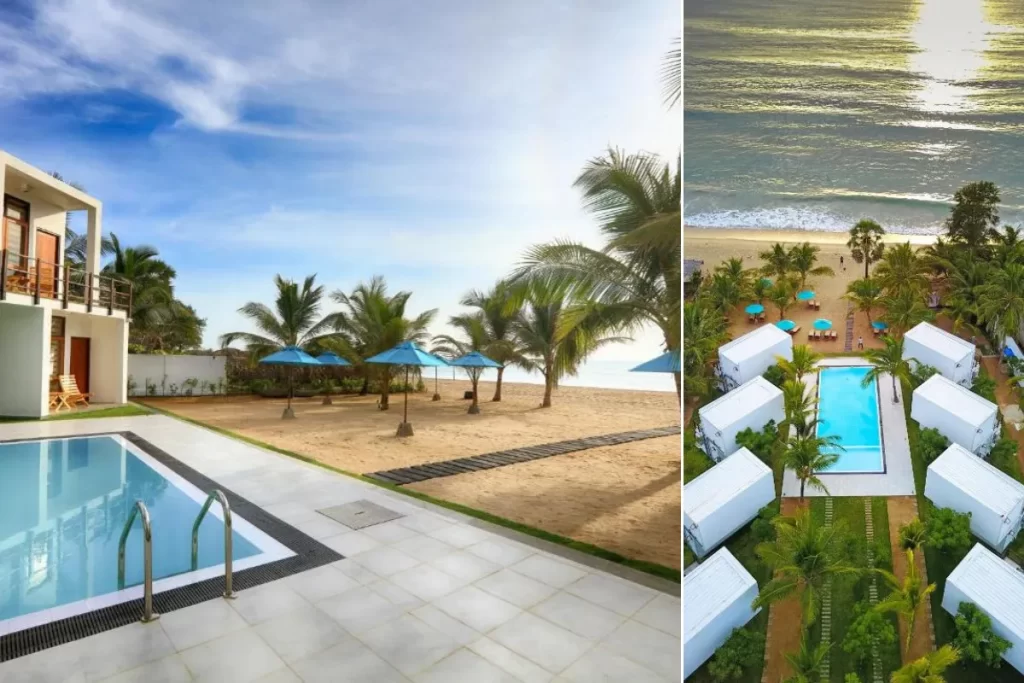
Arugambay Roccos is among the most talked-about upmarket options in the bay, known for its beachfront pool and design-led rooms. For travellers wanting something beyond the standard guesthouse experience, it represents one of the stronger choices currently available.
Rates shift significantly between peak season and shoulder months, and many properties price dynamically. Always confirm current rates directly with the property.
Essential Travel Tips for Arugam Bay
- Getting around: Scooter rental is the most popular way to explore the area beyond the main strip, particularly for reaching northern surf breaks or driving south toward Panama and Kumana. It is widely reported that surfboard racks are not permitted on rental scooters in the area, a practice believed to protect the local tuk-tuk economy. Tuk-tuks remain the standard option for moving boards between breaks, and drivers are plentiful.
Budget expectations: Arugam Bay is notably more expensive than many other parts of Sri Lanka, particularly during peak season. Imported items such as reef-safe sunscreen, western snacks, and branded toiletries carry significant markups. Bringing supplies from Colombo or a larger town before arriving will save money. Budget travellers can reduce costs meaningfully by eating in Pottuvil town rather than on the main beach strip, where tourist pricing applies more heavily.
Wildlife awareness: Wild elephants are a genuine presence in this part of Sri Lanka, not a tourist attraction staged at a safe distance. They roam near roads south of the bay, particularly at dawn and dusk. Travellers on scooters should slow down and give elephants a wide berth. Do not stop close to them, do not use flash photography, and do not approach on foot.
Sustainable travel: The small organisation WasteLess Arugam Bay has been working to address the plastic waste issue in the area. Bringing a reusable water bottle and being mindful of single-use plastics is a simple step that makes a real difference in a town of this size.
Frequently Asked Questions
Is Arugam Bay worth visiting?
Yes, genuinely. It is one of the few places in Sri Lanka that combines world-class surfing, accessible wildlife encounters, ancient history, and a genuinely relaxed social atmosphere in one compact location. Even travellers who do not surf tend to find more to do here than they expected.
Can you swim at Arugam Bay?
The main beach and some of the beginner break areas are swimmable, but strong currents are present at various points along the coast and conditions change with the swell. Non-surfers should ask locally about safe swimming areas before entering the water. The calmer lagoon areas are a better option for those wanting a swim without dealing with ocean current.
How many days should you spend in Arugam Bay?
Three days covers the essentials comfortably. Five days allows for a safari, a lagoon tour, a temple visit, some surfing, and still time to sit and do very little, which is the point. Many travellers arrive planning three days and extend to a week.
What should you do about the off-season?
If visiting between October and March, confirm everything in advance. Many businesses close entirely, transport connections thin out, and the surf is largely absent. A small number of guesthouses stay open, and the town has a very different, quieter character. Some travellers appreciate that version of Arugam Bay. Most prefer the energy of the main season.
Is Arugam Bay suitable for families?
Families with older children who surf or enjoy wildlife will find plenty to do. The remote setting, unpredictable wildlife presence near roads, and the general infrastructure of the town make it less straightforward for families with very young children compared to more developed resort areas on the west or south coast.
Further Readings
- Can You Swim at Arugam Bay if You Don’t Surf?
- Best Beaches to Visit in Sri Lanka
- The Ultimate Sri Lanka Wildlife Guide: Safaris, Parks & The Big 5
- Hiriketiya Beach Travel Guide: Best Surf Spots, Cafes and Things to Do
- Mirissa Travel Guide: Whale Watching and Beach Hopping in Sri Lanka
- Solo Travel in Sri Lanka: Best Places, Safety, and Tips


1 Comment