Sri Lanka has been producing world-class tea for over 160 years. The Central Highlands, with their high altitudes, mineral-rich soil, and near-constant mist, create growing conditions that are genuinely difficult to replicate anywhere else on earth. That environment produces a cup that is bright, brisk, and clean in a way that stands apart from teas grown in other parts of Asia.
If you are looking for the best Ceylon tea brands to try, this guide covers seven of the most respected names in the industry. Some are global icons. Others are heritage estates that most international buyers have never heard of. All of them reflect what makes Sri Lanka’s tea industry genuinely exceptional.
What Makes Ceylon Tea Special?

Ceylon tea is grown across several distinct regions within Sri Lanka’s Central Highlands, including Nuwara Eliya, Dimbula, Ratnapura, Badulla, and Ella. Each area produces tea with its own character, shaped by altitude, rainfall, and the specific mineral composition of the soil. High-grown teas from Nuwara Eliya tend to be lighter and more delicate. Teas from Dimbula are fuller-bodied, with a deep amber colour and a more pronounced flavour. That regional diversity is one of the things that gives Ceylon tea its enduring global appeal.
There is also something worth knowing about how the tea is produced. Sri Lanka holds the distinction of being the first country in the world to achieve certification as an Ozone Friendly Tea producer. The island’s tea industry does not use Methyl-Bromide, a chemical commonly used in agriculture worldwide but known to cause serious damage to the stratospheric ozone layer. Most Ceylon teas are also hand-plucked and packed within three weeks of harvest, which keeps the product fresh and traceable to a specific origin on the island.
The 7 Best Ceylon Tea Brands
1. Dilmah
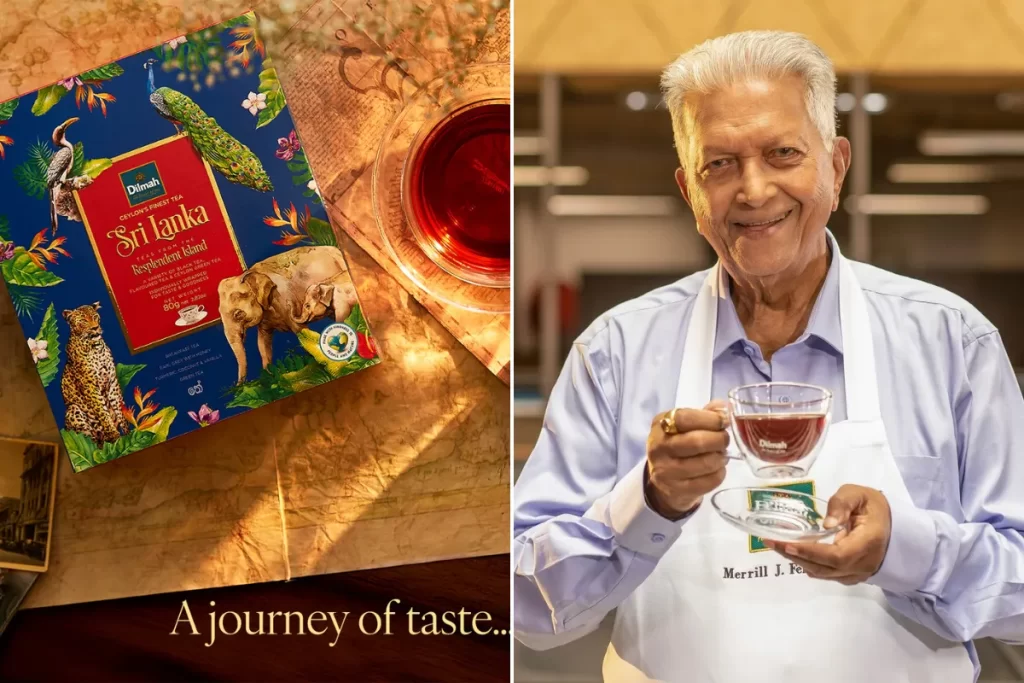
Dilmah is the most internationally recognised Ceylon tea brand, and its founding philosophy remains one of the most distinctive in the industry. Merrill J. Fernando launched the company in 1988 with a straightforward but radical idea: tea should be picked, processed, and packed in Sri Lanka, not blended and repackaged overseas under a foreign label. At the time, that went against how most of the global tea trade operated.
Today, Dilmah sells in over 100 countries and sources from its own estates with strict quality controls at every stage. The brand has accumulated a long list of international awards across several decades. For anyone exploring Dilmah for the first time, the Dimbula Single Estate Black Tea is the standout choice. It delivers the textbook Ceylon profile: brisk, full-bodied, and exceptionally clean on the finish.
2. Basilur

Basilur occupies a slightly different space to most Ceylon tea brands. The tea quality is high, but what the brand is equally known for is its presentation. Gift boxes and collector tins feature intricate botanical and heritage-inspired designs that feel closer to keepsakes than standard packaging. It is a consistent favourite for gifts and souvenirs, both locally and internationally.
Basilur sources from multiple estates across the island and has received recognition at the Great Taste Awards. For those new to the brand, the Vintage Blossoms Citrus Bliss is a reliable starting point, particularly for drinkers who enjoy floral and citrus notes alongside a classic black tea base.
3. Bogawantalawa
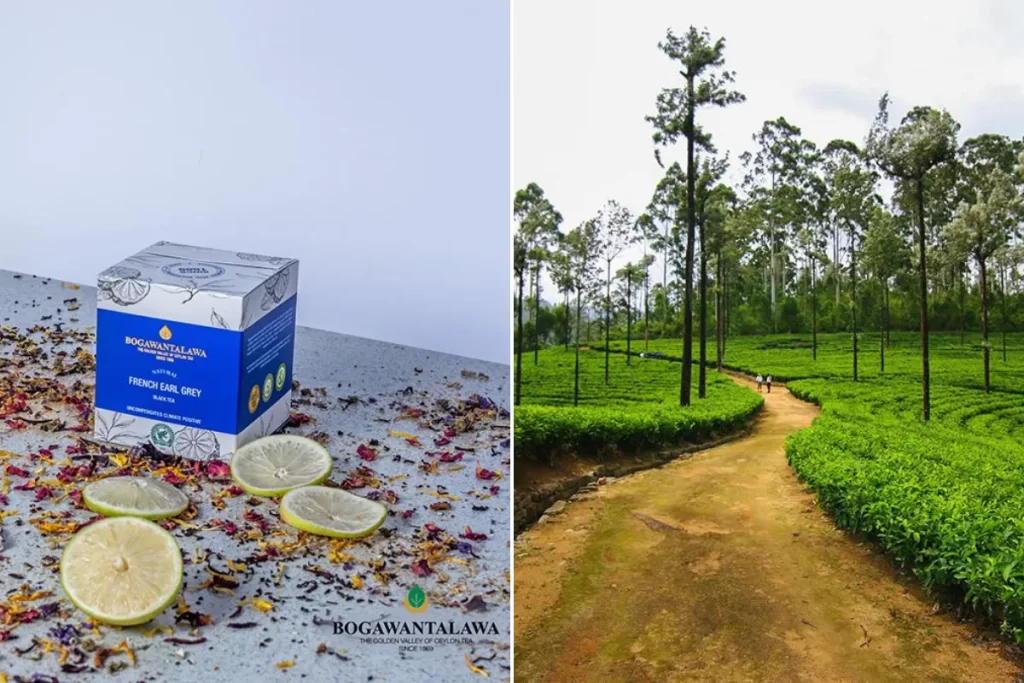
Bogawantalawa Estate sits in the stretch of land known as the Golden Valley of Ceylon, a region within the Central Highlands that produces some of the island’s most celebrated tea. The estate’s history dates back to the 19th century, and that depth of experience is reflected in the consistency of what it produces.
What distinguishes Bogawantalawa from many competitors is its commitment to sustainability. The brand has invested in climate-positive farming practices and works toward a zero-carbon footprint across its operations. For those drawn to single-origin teas with genuine estate credentials, this one is hard to overlook. The Legend Green Tea is an especially good entry point for drinkers who want to explore beyond black tea.
4. Akbar
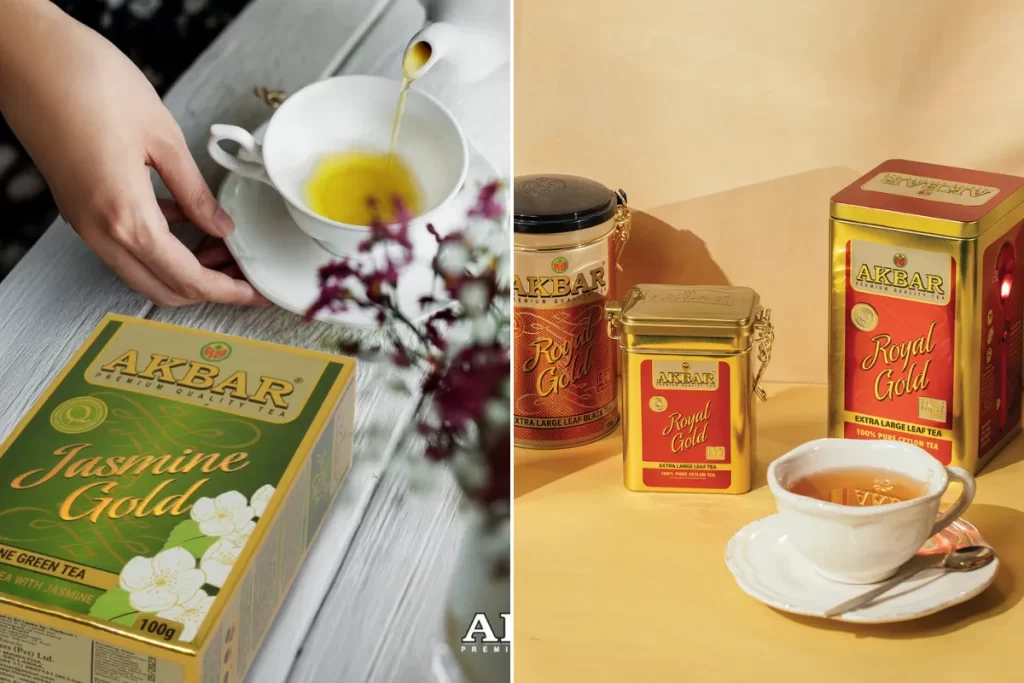
Akbar Brothers is one of Sri Lanka’s largest tea exporters, operating at a scale that few local brands can match. The company has supplied both private label and branded tea to international markets for decades. Its reputation is built on reliability and consistency rather than prestige positioning.
For everyday drinking, Akbar’s Broken Orange Pekoe blends are the most practical choice. BOP is a specific tea grade referring to smaller, broken leaf pieces that infuse quickly and produce a strong, robust cup. It is the grade favoured by people who want a dependable morning brew without much fuss. Akbar teas are broadly available across international markets and typically priced for regular use.
5. George Steuart Teas
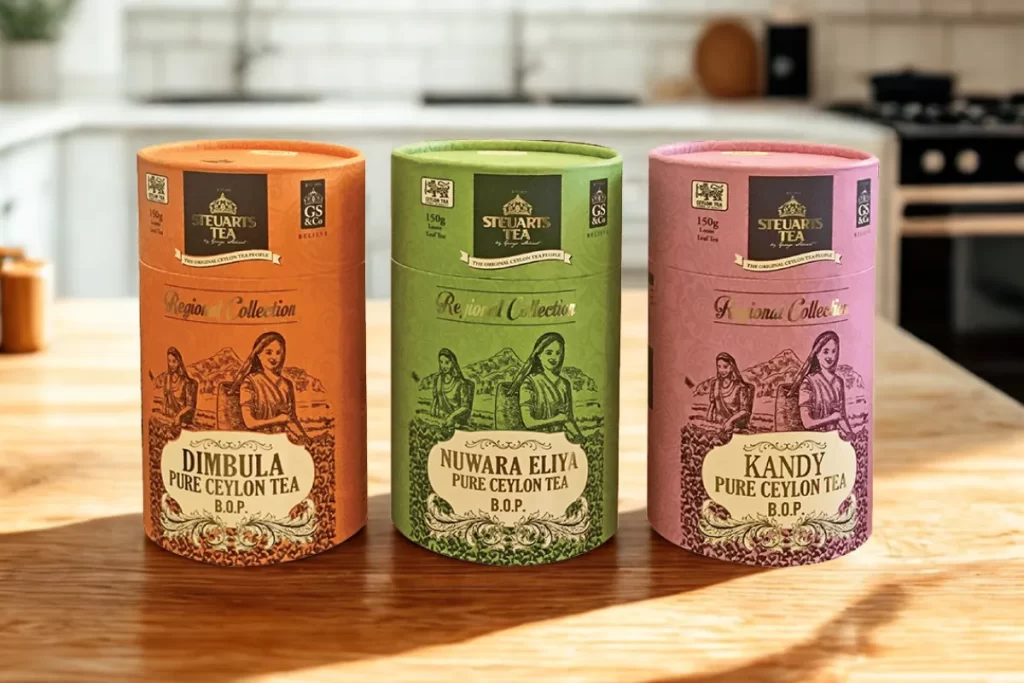
George Steuart Teas holds a distinction that no other brand in this list can claim. It is the oldest mercantile company in Sri Lanka, with origins dating back to 1835. James and George Steuart established their trading operations decades before Ceylon tea became a recognised global commodity, earning the brand the title of the Original Ceylon Tea People.
The company continues to operate with that heritage as its backbone, producing teas that carry the weight of nearly two centuries of estate knowledge. For tea enthusiasts who care about provenance as much as flavour, George Steuart Teas is a compelling choice. It remains far less visible internationally than Dilmah or Basilur, which makes it a genuinely rewarding discovery for visitors to Sri Lanka.
6. Mlesna
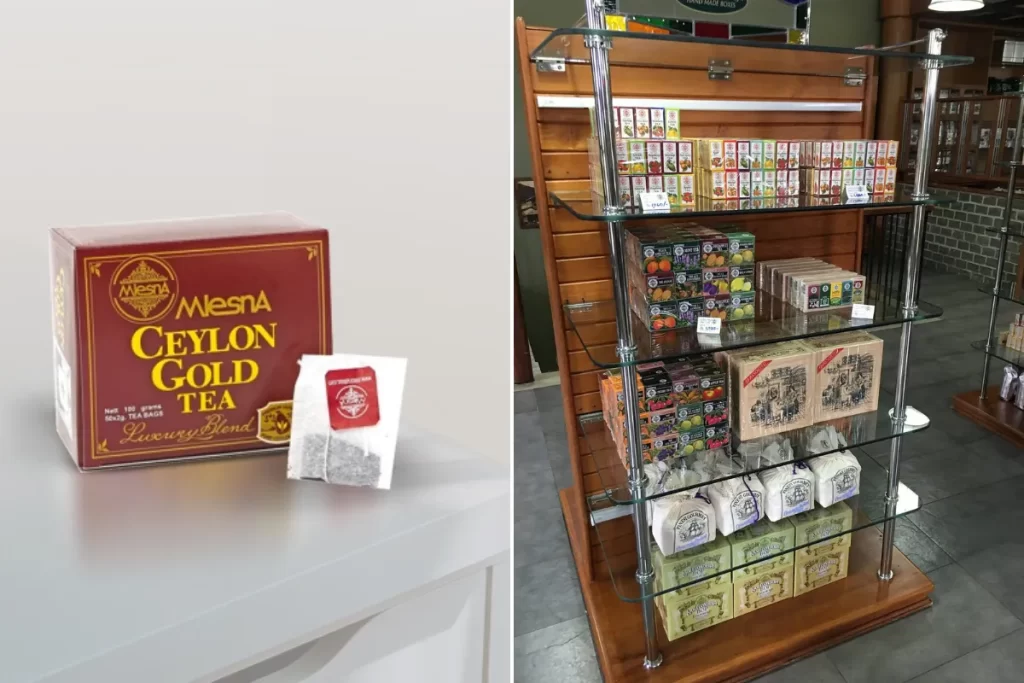
Mlesna is the brand many visitors to Sri Lanka first encounter at Bandaranaike International Airport, and that is no accident. The brand has built a strong local retail presence alongside a reputation for premium Ceylon tea with consistently beautiful packaging. It sits comfortably in the luxury segment without becoming inaccessible to general buyers.
Across its range, Mlesna sources from estates in multiple growing regions and offers an unusually wide selection of blends, including flavoured teas, single-origin options, and specialty gift collections. For visitors travelling through tea country, Mlesna products are available at shops near both Nuwara Eliya and Ella, making them easy to pick up alongside a visit to the estates themselves.
7. Ahmad Tea
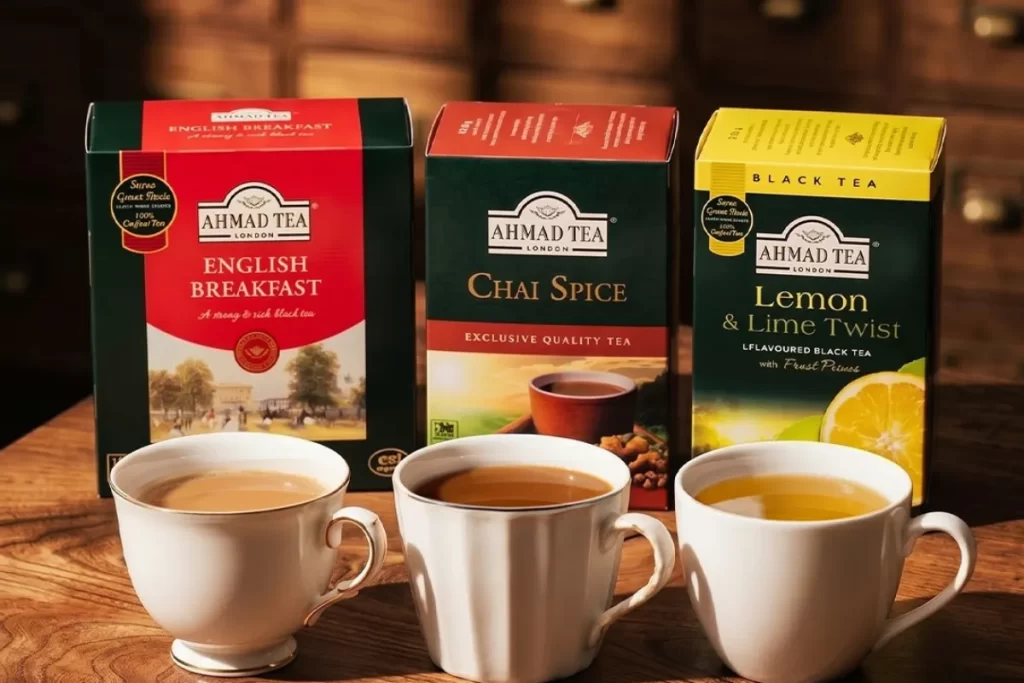
Ahmad Tea is a UK-based brand, which raises a reasonable question about its place on a list of Ceylon tea brands. The explanation is straightforward. A significant portion of Ahmad Tea’s signature blends are built on Ceylon leaves sourced directly from Sri Lanka. The brisk, crisp character the brand is known for internationally comes largely from that Ceylon foundation.
Ahmad Tea is not a single-origin product. It is a blend, packed internationally. But for buyers outside Sri Lanka who want consistent access to Ceylon-based tea, it is one of the more widely available options in supermarkets and specialty stores. The brand has a particularly strong following across the Middle East and parts of Europe.
The World's Cleanest Cup: Why Ceylon Tea Stands Apart
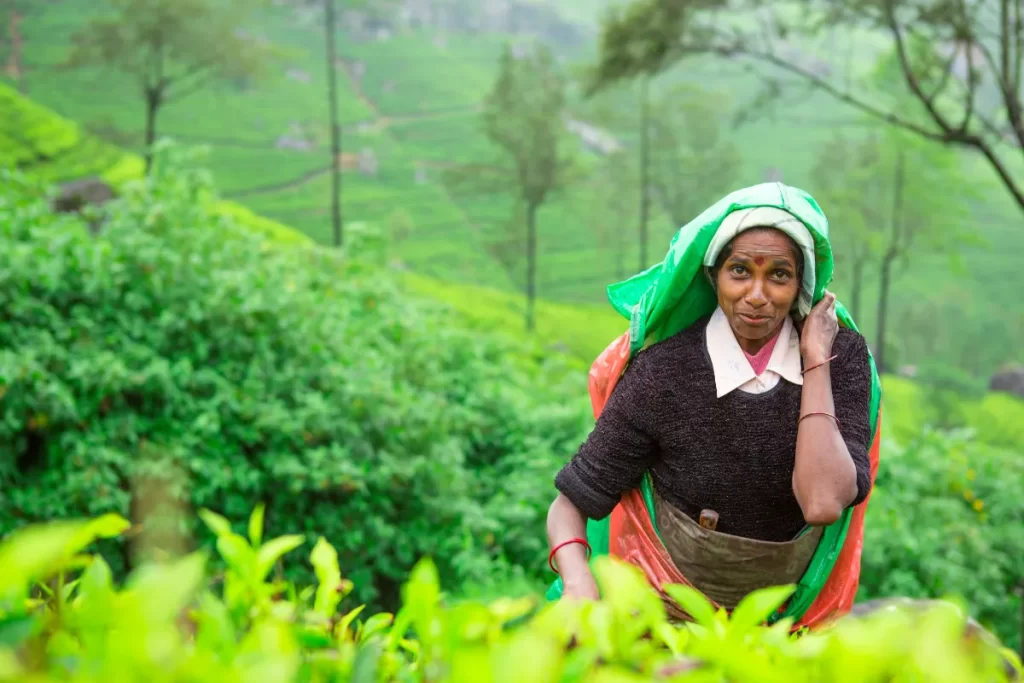
Ceylon tea’s Ozone Friendly certification is not a marketing claim. Sri Lanka was formally recognised as the world’s first Ozone Friendly Tea producer, a status earned by the industry’s long-standing refusal to use Methyl-Bromide in its agricultural processes. That chemical is widely used in other parts of the world as a soil fumigant, but its effect on the stratospheric ozone layer has led to its restriction or outright ban in many countries. Sri Lanka’s tea estates never adopted it.
The hand-plucking tradition adds another layer to this. The two-leaves-and-a-bud harvesting method, which has been standard practice on Sri Lankan estates for generations, is labour-intensive but preserves the integrity of the leaf in a way that mechanical harvesting simply cannot replicate. Combined with the practice of packing tea within three weeks of harvest, the result is a product that reaches the consumer fresher and more traceable than most alternatives on the international market.
How to Know You Are Buying Authentic Ceylon Tea
Not everything labelled Ceylon tea on an international shelf is what it appears to be. Blending practices and vague sourcing language can make it genuinely difficult to know what you are purchasing. Two indicators are worth knowing before you buy.
The Ceylon Lion Logo
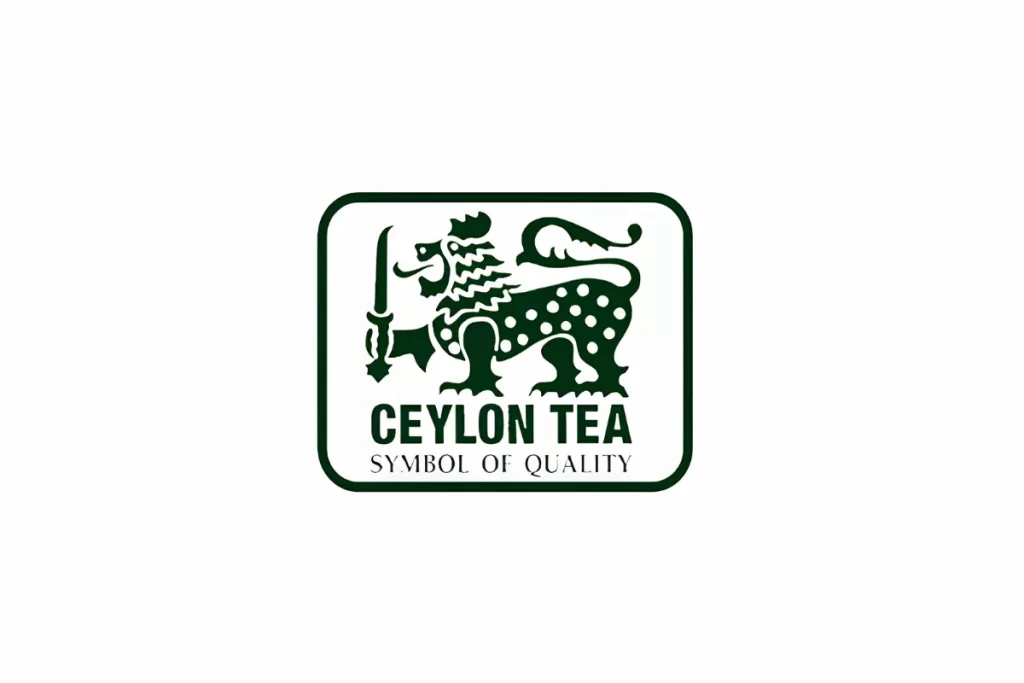
The Ceylon Lion Logo is an official certification issued by the Sri Lanka Tea Board. It features a lion holding a sword and appears only on packaging verified as 100% pure Ceylon tea, packed within Sri Lanka. When this logo is present, the product meets the Tea Board’s standards for both origin and quality. It is the simplest and most reliable authenticity check available to buyers anywhere in the world.
Single-Estate vs. Blended
Single-estate teas come from one specific garden and carry the characteristics of that location: the altitude, the soil, the season. They tend to have more distinctive flavour profiles and are generally positioned at a higher price point. Blended teas combine leaves from multiple estates or regions to achieve a consistent flavour year-round, regardless of seasonal variation.
Neither category is superior. Single-estate suits buyers who want terroir-driven complexity. Blended works well for everyday drinking where consistency matters more than origin specificity. Sri Lanka’s tea regions, from the cool highlands around Nuwara Eliya to the estate-dotted hills near Ella, each contribute something different to the cup. Knowing where your tea comes from adds a layer of appreciation that most casual buyers never get the chance to develop.
Frequently Asked Questions
What is the best Ceylon tea brand?
The best Ceylon tea brand depends on what you are looking for. Dilmah is the most widely recognised globally and a strong all-round choice for quality and availability. Basilur is the top pick for gifting. Bogawantalawa and George Steuart Teas are worth exploring for those who want single-origin estate teas with deep heritage. For everyday drinking, Akbar delivers consistent quality at an accessible price point.
What makes Ceylon tea different from other black teas?
Ceylon tea is grown at high altitudes across Sri Lanka’s Central Highlands, which produces a cup that is notably brisk and bright with a clean finish. The island’s distinct growing regions, including Nuwara Eliya, Dimbula, and Ella, each contribute their own flavour characteristics shaped by elevation and soil. Ceylon tea is also hand-plucked, packed within three weeks of harvest, and produced without Methyl-Bromide, making it one of the cleanest teas available anywhere in the world.
What does the Ceylon Lion Logo mean?
The Ceylon Lion Logo is an official quality mark issued by the Sri Lanka Tea Board. It features a lion holding a sword and appears only on products verified as 100% pure Ceylon tea, packed within Sri Lanka. If this logo is on the packaging, the tea meets strict standards for both origin and quality. It is the most reliable way to confirm you are buying authentic Ceylon tea rather than a blend with vague sourcing.
Is Ahmad Tea a real Ceylon tea brand?
Ahmad Tea is a UK-based brand, not a Sri Lankan one. However, a significant portion of its blends are built on Ceylon leaves sourced from Sri Lanka, which is what gives the brand its characteristic brisk and crisp flavour. It is not a single-origin or estate product and is packed internationally. Ahmad Tea is best understood as a Ceylon-based blend rather than a pure Ceylon tea brand in the same category as Dilmah or Bogawantalawa.
What is the difference between single-estate and blended Ceylon tea?
Single-estate Ceylon tea comes from one specific garden and carries the unique characteristics of that location, including its altitude, soil type, and seasonal conditions. The flavour tends to be more distinctive and complex. Blended Ceylon tea combines leaves from multiple estates or regions to produce a consistent flavour year-round, regardless of seasonal variation. Single-estate is suited to those who want terroir-driven character. Blended is the practical choice for everyday drinking where reliability matters more than origin specificity.
Which Ceylon tea brand is best for buying as a gift or souvenir?
Basilur and Mlesna are the two strongest options for gifting and souvenirs. Basilur is known for its beautifully designed collector tins and gift boxes that feel premium without being impractical to carry. Mlesna offers a wide range of specialty blends in elegant packaging and is widely available at airports and shops across Sri Lanka’s tea country, including near Nuwara Eliya and Ella. Both brands are regularly chosen by visitors looking to bring something authentically Sri Lankan home.